JP Nadda Launches Unified Health Interface For Seamless Healthcare Access

With UHI, requests for healthcare services made by users on any compatible application will be routed through the ABDM Gateway, developed and maintained by the National Health Authority (NHA).
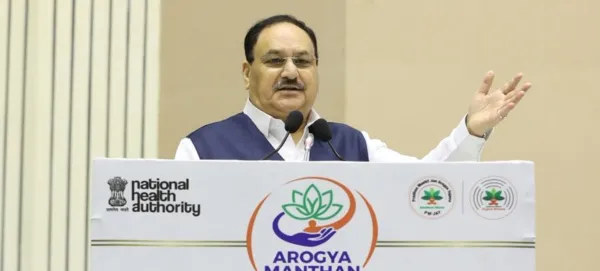
Union Health Minister JP Nadda on Monday launched the Unified Health Interface (UHI), an interoperable digital network under the Ayushman Bharat Digital Mission (ABDM), aimed at enabling citizens to discover, book, and access verified healthcare services across multiple digital platforms without being restricted to a single application.
The UHI functions as the service layer of the ABDM and has been designed to address fragmentation in India’s digital health ecosystem. Currently, patients and healthcare providers need to use the same application to interact, limiting accessibility and user choice, the Ministry of Health and Family Welfare said.
With UHI, requests for healthcare services made by users on any compatible application will be routed through the ABDM Gateway, developed and maintained by the National Health Authority (NHA). This enables discovery, booking, and service delivery through a unified technical framework.
The system relies on the Ayushman Bharat Health Account (ABHA) as the patient identifier, while healthcare providers are verified through the Healthcare Professionals Registry (HPR) and Health Facility Registry (HFR). Health data exchange under the system will remain consent-based through the Health Information Exchange framework.
According to the ministry, UHI is built on four key principles—interoperability, fair discoverability, verification, and open protocols. These principles ensure that all verified healthcare providers, regardless of size, location, or platform, have equal visibility within the network.
Officials said the platform is expected to expand healthcare access, particularly in semi-urban and rural regions, where patients often depend on informal networks to identify healthcare services. It is also expected to benefit individual doctors, clinics, and diagnostic centres by connecting them to a wider patient base without reliance on a single digital platform.
The open architecture of UHI is designed to support innovation, allowing developers to build multilingual and device-compatible healthcare applications.
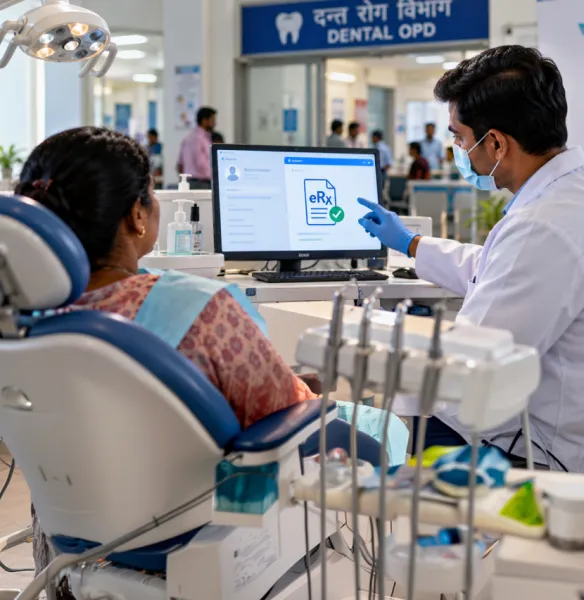
In the initial phase, four citizen services have been activated on UHI-enabled platforms. The next phase will include laboratory diagnostics, vaccination centres, licensed pharmacies, government pharmacy outlets, and services under various government health programmes.
The ministry said the long-term goal is to develop UHI into a nationwide open digital health infrastructure enabling universal access to verified healthcare services across platforms.
Stay tuned for more such updates on Digital Health News
Follow us