Govt Implements Central Scheme to Enhance Quality & Safety in Ayush Medicines: Union Minister Prataprao Jadhav

A quality certification scheme administered by the Quality Council of India (QCI) is in place to award the Ayush Mark to Ayurvedic, Siddha, and Unani products based on third-party evaluations aligned with both domestic and international benchmarks.
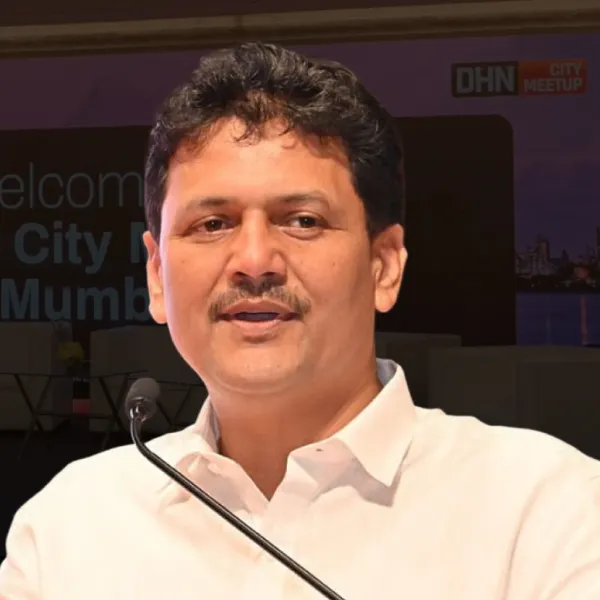
Union Minister of State for Ayush, Prataprao Jadhav, has recently informed the Rajya Sabha that the government is actively implementing a Central Sector Scheme to promote Information, Education, and Communication (IEC) in Ayush.
This includes multimedia campaigns and print outreach to raise awareness about Ayurveda, Siddha, Unani, and Homoeopathy systems across the country.
Jadhav also highlighted that Pharmacovigilance Centers for Ayush drugs, covering Ayurveda, Siddha, Unani, and Homoeopathy, have been established nationwide.
These centers are tasked with reporting adverse drug reactions to the respective State Regulatory Authorities under the scheme.
“The Drugs and Cosmetics Act, 1940 and rules made thereunder have exclusive regulatory provisions regarding manufacture for sale or distribution of Ayurvedic, Siddha, Sowa-Rigpa, Unani, and Homoeopathy drugs,” Jadhav said in a written reply.
He noted that Ayush manufacturers must meet specific licensing requirements, including proof of safety and effectiveness, adherence to Good Manufacturing Practices (GMP) under Schedule T and Schedule M-I of the Drugs Rules, 1945, and compliance with quality standards laid down in the respective pharmacopoeias.
The Pharmacopoeia Commission for Indian Medicine & Homoeopathy (PCIM&H) formulates official specifications and quality standards for Ayush drugs. These standards serve as the legal benchmark for assessing identity, purity, and strength of products and are mandatory for domestic manufacturing.
Jadhav added that the Central Sector Scheme “Ayush Oushadhi Gunavatta Evam Uttpadan Samvardhan Yojana (AOGUSY)” has been implemented for 2021–2026. One of its key objectives is the upgradation of Ayush pharmacies and drug testing laboratories to higher quality benchmarks.
He also informed the House that an Ayush vertical has been created within the Central Drugs Standard Control Organization (CDSCO) to strengthen regulatory oversight. The CDSCO now issues WHO Certificates of Pharmaceutical Product (CoPP) to Ayush drugs that meet defined quality standards.
A quality certification scheme administered by the Quality Council of India (QCI) is in place to award the Ayush Mark to Ayurvedic, Siddha, and Unani products based on third-party evaluations aligned with both domestic and international benchmarks.
To further deepen research, the government launched the AYURGYAN Scheme in 2021–22. This includes three components: Capacity Building & Continuing Medical Education (CME), Research & Innovation, and an Ayurveda Biology Integrated Health Research vertical added in 2023–24. Under the Research & Innovation stream, financial assistance is provided to eligible institutions for clinical, pharmaceutical, and medicinal plant research in extra-mural mode.
Jadhav noted that apex councils such as the CCRAS, CCRUM, CCRH, CCRS, and CCRYN have been set up under the Ministry of Ayush to conduct and promote scientific research across various systems.
Their core focus includes drug standardization, pharmacology, clinical trials, documentation, and traditional knowledge surveys. These bodies also lead public awareness campaigns at health melas, exhibitions, and camps using print and electronic media in English, Hindi, and regional languages.
In addition, the Ministry has led international efforts, including contributing to the Traditional Medicine chapter in ICD-10 and ICD-11, setting up the WHO Global Traditional Medicine Centre, launching the Ayush Export Promotion Council (AYUSHEXCIL), and celebrating International Yoga and Ayurveda Days.
India has signed 25 intergovernmental MoUs for cooperation in traditional medicine and 15 MoUs with international institutes to establish Ayush academic chairs overseas, further promoting global recognition of Indian systems of medicine.
Stay tuned for more such updates on Digital Health News
Follow us