Google Brings AI Models to Aarogya Setu 2.0, Powering Smarter Digital Health Records Across India
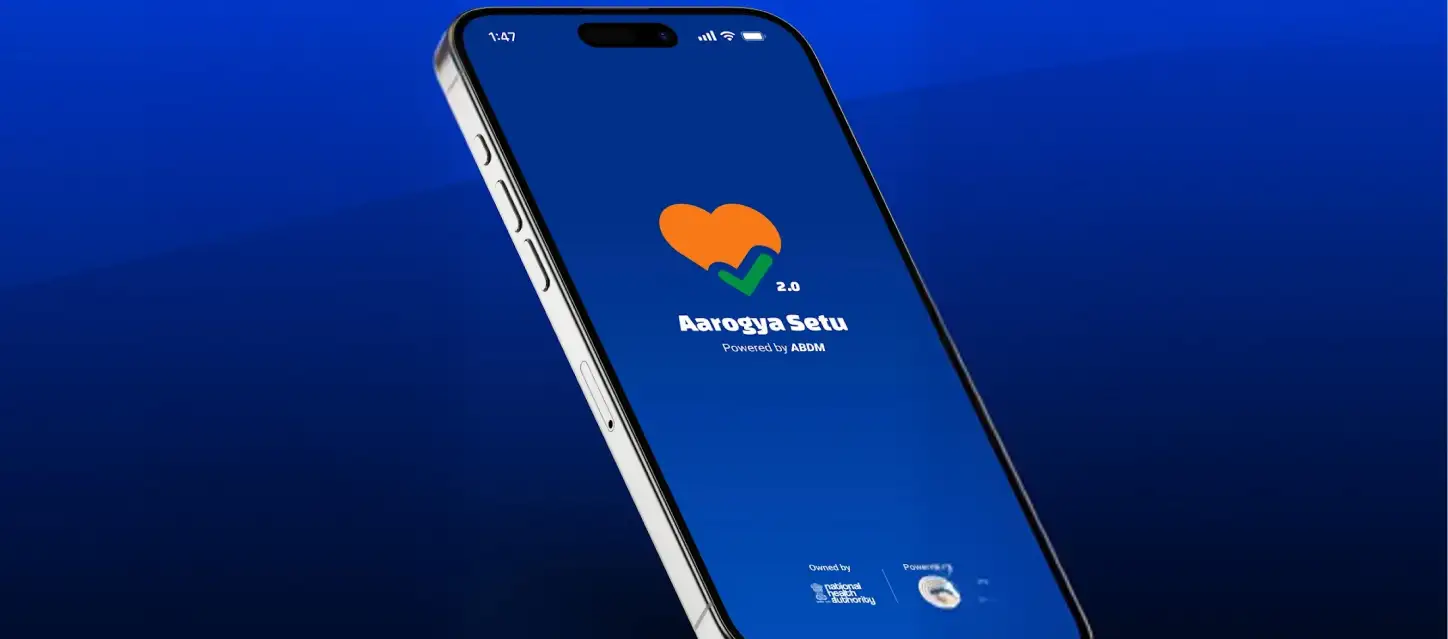
Aarogya Setu 2.0 uses Google's Gemma 4 AI models and Medical Data Toolkit to identify the type of medical record, extract important clinical information and convert it into the FHIR standard, enabling healthcare systems to exchange data more consistently.
Google has integrated its AI models into the new Aarogya Setu 2.0 app, enabling users to convert unstructured medical records into standardized digital health data while supporting seamless interoperability under the Ayushman Bharat Digital Mission.
By leveraging Google's Gemma 4 open models and Medical Data Toolkit, the app can extract information from health documents and convert it into standardized digital health records that can be securely shared across healthcare providers.
Preeti Lobana, Google India Vice President and Country Manager, said, "The tools are designed to empower Indians to more closely control their health journeys, while the release of the toolkit reduces barriers to entry for health tech innovation."
She added, "We are pleased that our AI capabilities are helping strengthen India's digital health ecosystem and Digital Public Infrastructure, and we look forward to Indian developers building new healthcare solutions that address both domestic and global health challenges."
Medical records are often stored in different formats, including scanned reports, handwritten notes, PDFs, and images, making them difficult to interpret and exchange digitally.
To address this challenge, Aarogya Setu 2.0 uses Google's Gemma 4 AI models alongside the Medical Data Toolkit to identify the type of medical record and extract important clinical information, including laboratory test names, testing methods, and results from both text- and image-based documents.
The extracted information is then converted into the Fast Healthcare Interoperability Resources (FHIR) standard, an internationally recognized framework that enables healthcare systems to exchange data more consistently.
Standardizing health information in this format supports continuity of care by allowing medical records to move more easily when patients visit different hospitals or healthcare providers.
According to Google, the Medical Data Toolkit uses a rule-based approach to organise extracted information, while users retain full control over their personal health records within the Aarogya Setu 2.0 app.
Alongside the integration, Google has also open-sourced its Medical Data Toolkit at no cost for developers and healthcare organizations. The toolkit is designed to help digitize legacy medical records while maintaining compatibility with ABDM interoperability standards.
Its initial release supports commonly used health documents, such as laboratory reports and clinical observations, and can be expanded to additional record types over time.
Stay tuned for more such updates on Digital Health News
Follow us