Eka Care Launches India’s First AI Medical Scribe, Powered by Its Own Purpose-Built LLM ‘Parrotlet’
How Al scribes can transform the doctor-patient interaction in India's multilingual, complex healthcare ecosystem
Eka Care has unveiled EkaScribe, India’s first AI medical scribe designed specifically for the country’s complex, multilingual healthcare environment.
Built on its proprietary large language model ‘Parrotlet,’ the tool aims to revolutionize clinical documentation by automatically converting doctor-patient conversations into structured medical notes and prescriptions.
Founded with the mission to empower doctors and patients through connected health records, Eka Care has been at the forefront of digital healthcare innovation, building ABDM-compliant health IDs, smart OPD tools, and AI-driven medical record systems trusted by thousands of clinicians across India.
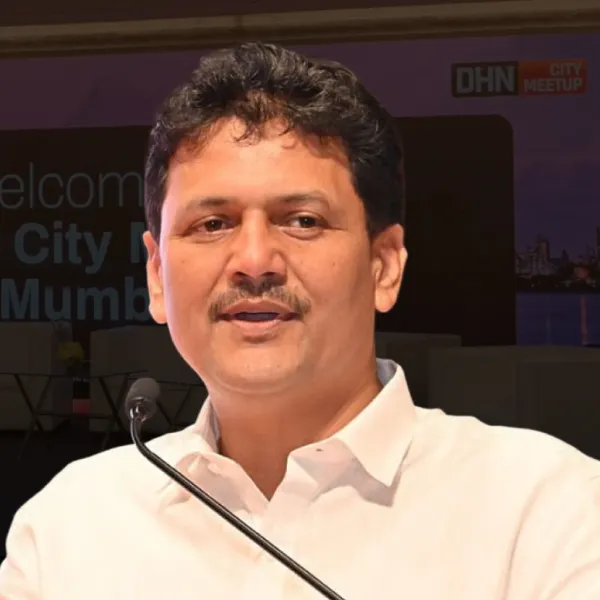
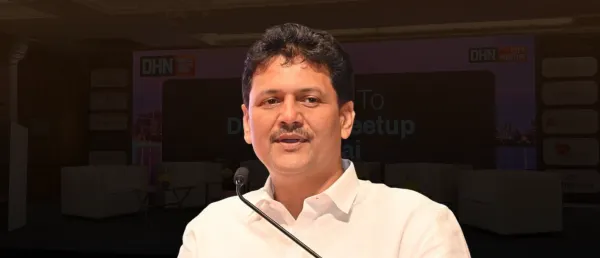
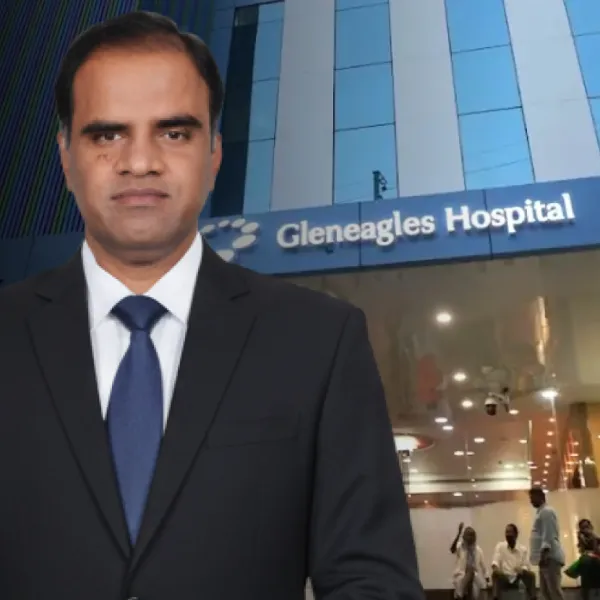
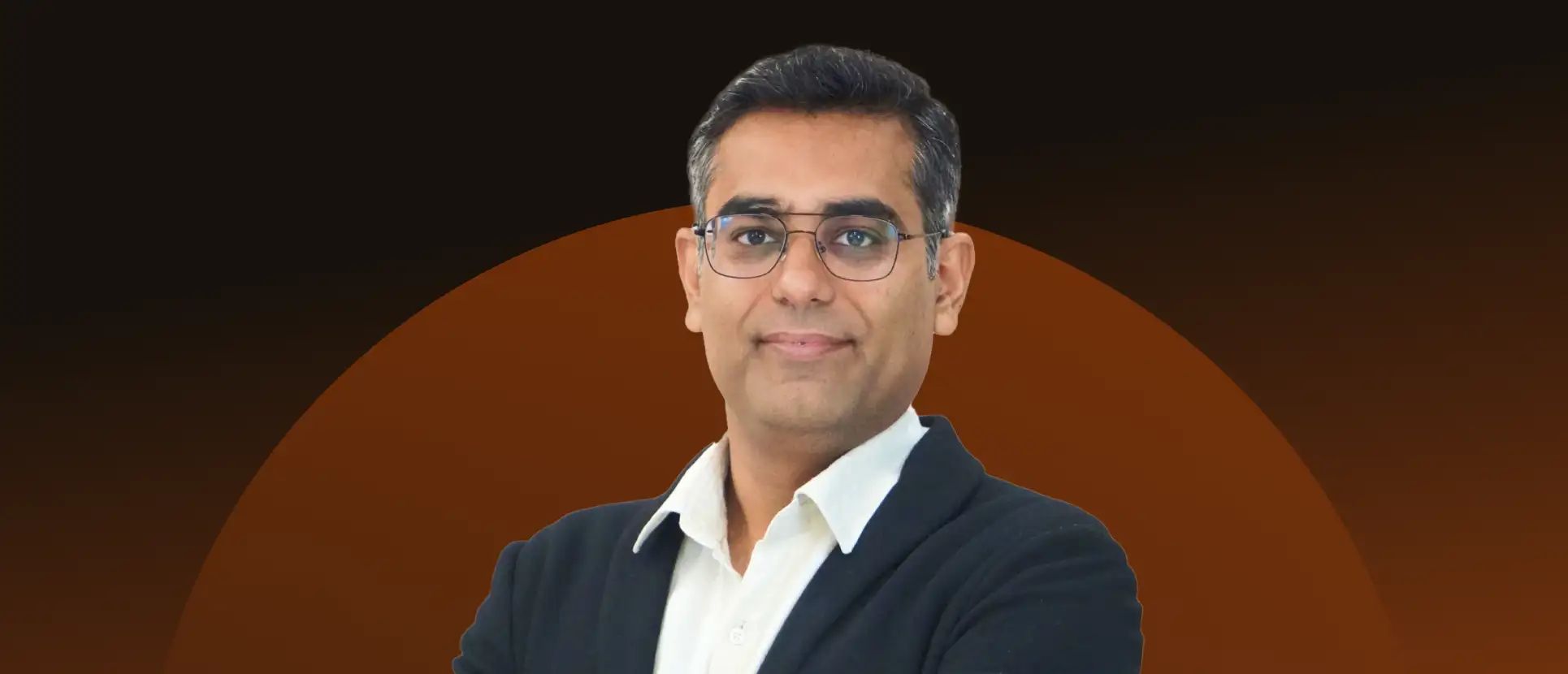
In an exclusive conversation with Digital Health News (DHN), Sankalp Gulati, Chief Data Science Officer at Eka Care, shares insights into the making of EkaScribe, how it’s redefining doctor-patient interactions, and what lies ahead for AI in Indian healthcare.
Eka Care is calling EkaScribe India’s first AI medical scrib, what makes it “first” in this space, and how is it tailored for the Indian clinical context compared to global AI scribes?
While voice-based dictation tools have existed in India, they don’t address the real-world complexity of doctor-patient consultations here. EkaScribe is the first ambient AI medical scribe purpose-built for India, designed to listen to free-flowing conversations in crowded, noisy OPDs and translate them into structured medical records.
In India, the expectation isn’t just a SOAP note, it’s a doctor-ready prescription format with discrete data points like drug brand names, dosage, follow-ups, and medical codes. That’s what EkaScribe delivers.
It’s also tuned to Indian realities, mixed Hindi-English speech, regional accents, interruptions, high background noise, all of which global scribes struggle with. In that sense, EkaScribe isn’t just the “first” chronologically; it’s the first one that actually works for Indian doctors and patients.
Doctors in India often complain about spending more time on screens than with patients. How much of that problem can EkaScribe realistically solve?
This is exactly the pain point EkaScribe was designed for.
Today, doctors spend a disproportionate amount of time typing notes, scrolling through EMRs, and adjusting templates. That’s not why they became doctors. With EkaScribe, we’ve seen early users shift back to face-to-face interaction with patients, because the system is doing the heavy lifting of capturing and structuring their words.
The impact is two-fold: first, time saved per consultation, since doctors only make light edits rather than typing from scratch; and second, more comprehensive documentation, because EkaScribe doesn’t skip details that a rushed human might. Over time, this richer documentation builds a longitudinal record that supports better care continuity.
So, it’s not just about efficiency, it’s about restoring the human element of care. Doctors look at patients, not keyboards. Patients feel heard, not hurried. That’s a big shift.
Why did you decide to build your own model instead of adapting global LLMs?
This was a deliberate choice. Global LLMs are impressive, but they’re not designed for India’s healthcare ecosystem. Imagine a model that misinterprets “Zin 10” as a zinc supplement instead of the anti-histamine prescribed here, that’s not acceptable in clinical practice.
Our Parrotlet LLMs are trained specifically on Indian medical data, so they understand drug brand names, colloquial symptom descriptions, and local linguistic patterns.
There are three other reasons. First, compliance and sovereignty: global models often run on servers outside India, which raises privacy and DPDP compliance concerns. Hosting Parrotlet in India keeps data secure and sovereign.
Second, cost-efficiency: smaller, purpose-driven models are cheaper to run at scale, making them viable for doctors in Tier 2 and 3 towns, not just metros.
Third, control: by owning the model, we can continuously fine-tune it for clinical accuracy, rather than waiting for global updates.
In short, Parrotlet allows us to build for India first, while keeping a pathway open to scale globally.
India’s healthcare involves multiple languages, accents, & even mixed-language consultations. How is EkaScribe tuned to handle that complexity?
This is one of our strongest differentiators. India isn’t monolingual, and healthcare certainly isn’t either. Doctors switch between English and Hindi mid-sentence, patients describe symptoms in local dialects, and family members often chime in—all in the same consultation.
To handle this, we’ve collected and curated speech datasets across regions, languages, and specialties, often in collaboration with hospitals and medical colleges. Our annotation pipelines don’t just transcribe literally; they capture the clinical intent behind the words.
That’s why EkaScribe can handle something like: “Doctor saab, chest mein jalan hai 3 din se, par khansi bhi ho rahi hai thoda thoda”, and convert it into a structured clinical note tagged with the right medical codes.
Global scribes are built for single-language, controlled environments. EkaScribe is built for the chaotic, multilingual, real-world clinics of India, that’s what makes it uniquely suited.
What safeguards have you built to ensure accuracy and prevent AI “hallucinations” in medical notes?
We take hallucinations very seriously, there is zero tolerance for errors in medicine. Safeguards include:
● Localized training data: Parrotlet models are trained on Indian medical conversations and records, so they are grounded in real-world clinical use.
● RAG-based processing: Retrieval-augmented generation ensures vocabulary and context are checked against authoritative sources.
● Layered validation: We incorporate secondary LLM reviews to cross-check critical outputs like drug names and dosages.
● Doctor-in-the-loop: Doctors always review the generated note before finalizing. The AI reduces effort, but the human ensures safety.
This balance of automation + oversight is essential in healthcare AI.
What feedback have you received from early adopters?
Hundreds of doctors are already using EkaScribe’s Chrome extension. The feedback has been highly encouraging. Doctors appreciate that EkaScribe adapts to their style. Some want structured SOAP notes; others prefer a prescription-ready template. We’ve built in custom templates so each doctor gets what they’re comfortable with.
Hospitals emphasize codification, so we added medical concept tagging for EMR integration. High-volume OPD doctors asked for faster turnaround, so we introduced a fast mode with lower latency.
The consistent message: EkaScribe is saving them time and making documentation more reliable. The customization options are what make it stick.
As you prepare to pilot the standalone web app in large hospitals, what kind of workflows are you testing?
We’re starting with OPD workflows, where the patient load is highest and documentation burden is most painful.
But hospitals are also experimenting with EkaScribe in IP (inpatient) and OT (operation theatre) settings, where accurate and real-time notes are critical.
The versatility of the tool, its ability to integrate with EMRs or export notes in multiple formats, makes it applicable across settings. Over time, we see EkaScribe being used throughout the patient journey, from admission to discharge.
How easy is it for a hospital IT system to integrate EkaScribe? Does it plug into existing HIS/EMR platforms, or is it standalone?
We designed EkaScribe to be modular. It can run independently, or it can integrate with existing EMRs. It outputs in multiple formats, structured text, coded notes, or even PDF summaries.
This makes integration straightforward. If the EMR supports import, it plugs in directly. If not, minimal transformation is required. Hospitals don’t need to rip out existing systems; they can simply layer EkaScribe on top to boost efficiency
Do you see AI scribes evolving beyond documentation?
Yes, definitely we want to extend scribe capabilities:
1. We already do a number of codification tasks and want to make them more comprehensive,
2. Definitely bring in an element of suggestions based on doctors past prescriptions etc. CDSS is definitely in the roadmap though we are yet to learn more outside scribe to be able to incorporate it within scribe.
Some doctors fear AI may eventually replace parts of their role. How do you position EkaScribe?
We’re very clear: EkaScribe is an assistant, not a replacement. Medicine is deeply human. A doctor’s judgment, empathy, and context can never be automated. What AI can do is remove the grunt work—typing, structuring, coding, so doctors can spend their energy where it matters: on patients.
We position EkaScribe as a partner to doctors, amplifying their efficiency and supporting their expertise.
For patients, will EkaScribe improve consultation time and communication with doctors?
Yes. Patients often complain that doctors don’t look at them anymore, they look at screens. With EkaScribe running in the background, that dynamic changes. Doctors can make eye contact, listen fully, and focus on the patient story.
The AI handles the note-taking invisibly. The patient only sees a more attentive doctor and a more complete prescription.
Patient data privacy is a sensitive issue in India. How do you ensure EkaScribe complies with the Digital Personal Data Protection (DPDP) laws?
We’re committed to privacy, security, and compliance. Key measures include:
● Hosting data within India to comply with sovereignty requirements.
● Anonymization and encryption of sensitive information.
● Consent-based data capture in line with ABDM protocols.
● Transparent usage policies to build trust.
As DPDP laws evolve, we’re actively aligning with them. Compliance isn’t just a requirement, it’s core to how we earn trust in healthcare.
Do you see a role for EkaScribe in public health settings, where the doctor-patient ratio is highly skewed & documentation is a bottleneck?
A massive one. In government hospitals, doctors often see hundreds of patients a day. Documentation gets sidelined, which hurts both patient care and public health data quality.
With AI scribes, every patient interaction can be captured accurately, creating a rich dataset for population health studies. Better documentation improves individual care outcomes and powers epidemiological insights at scale.
We believe scribes could be transformational in public health.
What’s the scalability vision?
That’s exactly our ambition. By building Parrotlet in-house, we control accuracy, cost, and scalability. This allows us to deliver a product that is affordable across India, from metro hospitals to small-town clinics.
We want EkaScribe to be as common as the stethoscope, a tool every doctor uses. Within 5 years, that’s the vision.
Where do you see the biggest opportunities for AI in healthcare next, beyond scribes?
We see three big opportunities:
1. Clinical decision support – surfacing evidence-based guidelines during consultations.
2. Protocol adherence – ensuring treatments align with medical standards.
3. Predictive intelligence – spotting risks earlier through longitudinal data.
AI isn’t just about efficiency; it’s about making healthcare smarter and safer.
If I asked you for one peek into Eka Care’s roadmap, what’s the next we should be watching for?
Keeping things brief on this for now, Roadmap for AI features would look a bit towards:
1. Summarization
2. More automated workflow management tools
3. More medically evolved models and improved grounding.
Stay tuned for more such updates on Digital Health News
Follow us