Cognixion Integrates Brain-Computer Interface with Apple Vision Pro in a Clinical Trial
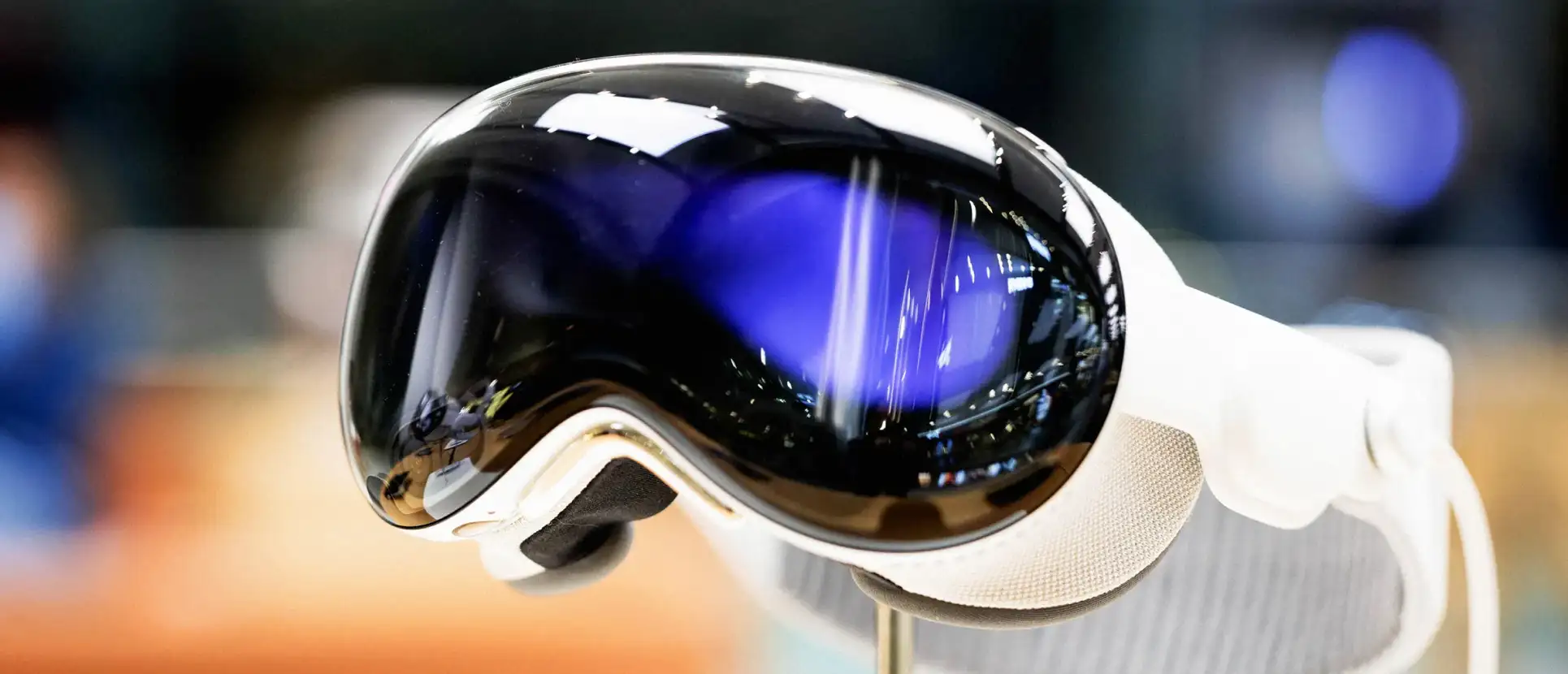
The trial aims to help individuals with conditions such as ALS, spinal cord injuries, stroke after-effects, or traumatic brain injuries by providing them with the ability to interact, communicate, and participate more fully in their lives.
California-based neurotechnology company Cognixion, a pioneer of noninvasive brain-computer interface technology, has initiated a clinical study that integrates its EEG-based brain-computer interface (BCI) with Apple Vision Pro, with no surgery required.
The clinical trial aims to assess Cognixion’s NucleusTM bio-sensing hub and advanced EEG montage combined with Apple Vision Pro’s accessibility features, including Eye Tracking and Dwell Control, to enable new ways for individuals to communicate and interact using combinations of brain signals, eye gaze, or head pose, without the need for surgery.
Further, the company's Cognixion ONE Axon-R platform is expected to provide exact measurement and modulation of brain activity via visual stimuli, biofeedback, and neurofeedback.
Reportedly, the wearable device provides up to 16 channels of research-quality physiological data and enables functions such as neurofeedback and biofeedback.
The Vision Pro is expected to provide advanced spatial computing, eye tracking, and immersive display elements, creating a seamless interface for hands-free and voice-free control.
As per reports, researchers working with the Axon-R can expand beyond the limits of standard laboratories, engaging in immersive and interactive studies that leverage multimodal interaction, augmented reality, and brain sensing in multiple settings indoors and outdoors.
The trial is designed not only to explore technological integration but to create real-world impact for individuals with conditions such as amyotrophic lateral sclerosis (ALS), spinal cord injuries, stroke after-effects, or traumatic brain injuries. The aim is to provide them with the ability to interact, communicate, and participate more fully in daily life.
Commenting on the launch of the clinical trial, Andreas Forsland, CEO of Cognixion, said, "By exploring how Cognixion's noninvasive BCI [brain-computer interface] technology and AI applications can work with Apple's accessibility features, we hope to unlock new levels of independence and connection for people living with ALS, spinal cord injuries, stroke, and traumatic brain injuries."
"Our focus is on improving lives today without requiring surgery or tethered systems," he added.
Further, Chris Ullrich, chief technology officer at Cognixion and principal investigator for the clinical trial, added, “This study is about understanding the patient experience-what happens when advanced accessibility features meet new neural input methods. We are committed to working closely with each participant, learning from their lived experiences, and translating that into meaningful, delightful solutions. Apple Vision Pro offers an intuitive user interface, and our goal is to leverage Cognixion’s brain-sensing and AI technologies to better support millions of people affected by speech and mobility challenges.”
Earlier in June, Cognixion had collaborated with Pupil Labs’ eye-tracking software with Cognixion’s Axon-R SDK, enabling cross-platform data collection.
Further in May, Cognixion announced a distribution agreement with Blackrock Neurotech, under which Blackrock would provide Cognixion’s Axon-R wearable neural interface platform to research institutions through its network.
Stay tuned for more such updates on Digital Health News
Follow us