Ayushman Bharat Digital Mission (ABDM) for Small Clinics & Independent Doctors
The Ayushman Bharat Digital Mission (ABDM), launched in 2021, seeks to create a national digital health infrastructure that uses interoperable, standards-based platforms to link patients, healthcare providers, and digital health applications. By utilising digital tools to improve accessibility, continuity, and quality of care, ABDM supports the government's larger healthcare objectives under Ayushman Bharat and the National Health Policy 2017.
For small clinics, independent doctors, and private sector healthcare professionals, ABDM seeks to create opportunities to transform from a paper-based to standardized digital healthcare without compromising clinician independence or autonomy. In this article, we shall explore how ABDM is relevant for small clinics and independent doctors and how it can transform the healthcare delivery system.
Overview of ABDM Ecosystem
ABDM serves as a unifying digital system that links diverse health systems through shared standards, registries, and consent-based data exchange mechanisms. Core building blocks of the ABDM ecosystem are
- Citizens are given a unique health ID by ABHA (Ayushman Bharat Health Account).
- A digitised database of medical institutions is called the Health Facility Registry (HFR).
- A recognised database of healthcare providers is created by the Healthcare Professionals Registry (HPR).
- Consent Manager offers consent-based, patient-controlled data exchange.
- Interoperable data flow is made possible via the Health Information Exchange & Consent Manager (HIE-CM).
- A platform for scheduling, teleconsultations, and service delivery workflows is offered by the Unified Health Interface (UHI).
Government Support
In large parts of rural India, a single doctor may be responsible for nearly 17,000 people, underscoring the stark inequities in healthcare availability between urban and rural regions. This imbalance places immense pressure on small clinics and independent doctors, who often serve as the only accessible point of care. In such a context, ABDM’s digital initiatives become essential instruments for bridging the healthcare access gap.
The National Health Authority (NHA) and related organisations have implemented supportive mechanisms to encourage digital adoption.
ABDM Microsites: Locally targeted areas where providers, labs, and small clinics are assisted in integrating and utilising ABDM services. These websites support localised digital adoption plans, technical training, and registration in national registries.
The Digital Health Incentive Scheme (DHIS) offers financial rewards to providers who implement digital procedures that comply with ABDM, up to INR 4 crore in certain models.
These steps are particularly crucial for smaller businesses that might not have internal IT capabilities.
How it Benefits Small Clinics
Often, healthcare systems deal with fragmented patient information and medical records, which makes it challenging to deliver healthcare on time. In this regard, ABDM is particularly relevant for small clinics and independent medical professionals as it enables structured digital adoption without compromising professional autonomy. Some key areas of relevance include -
1. Continuity of Care
Tracking patient histories can be difficult for small clinics and independent practices. Through ABDM, Clinics can access longitudinal medical history (such as previous diagnoses and prescriptions) with the patient’s consent, thus reducing duplication, medical errors, improving treatment decisions, and ensuring continuity of care.
2. Increased Operational Efficiency
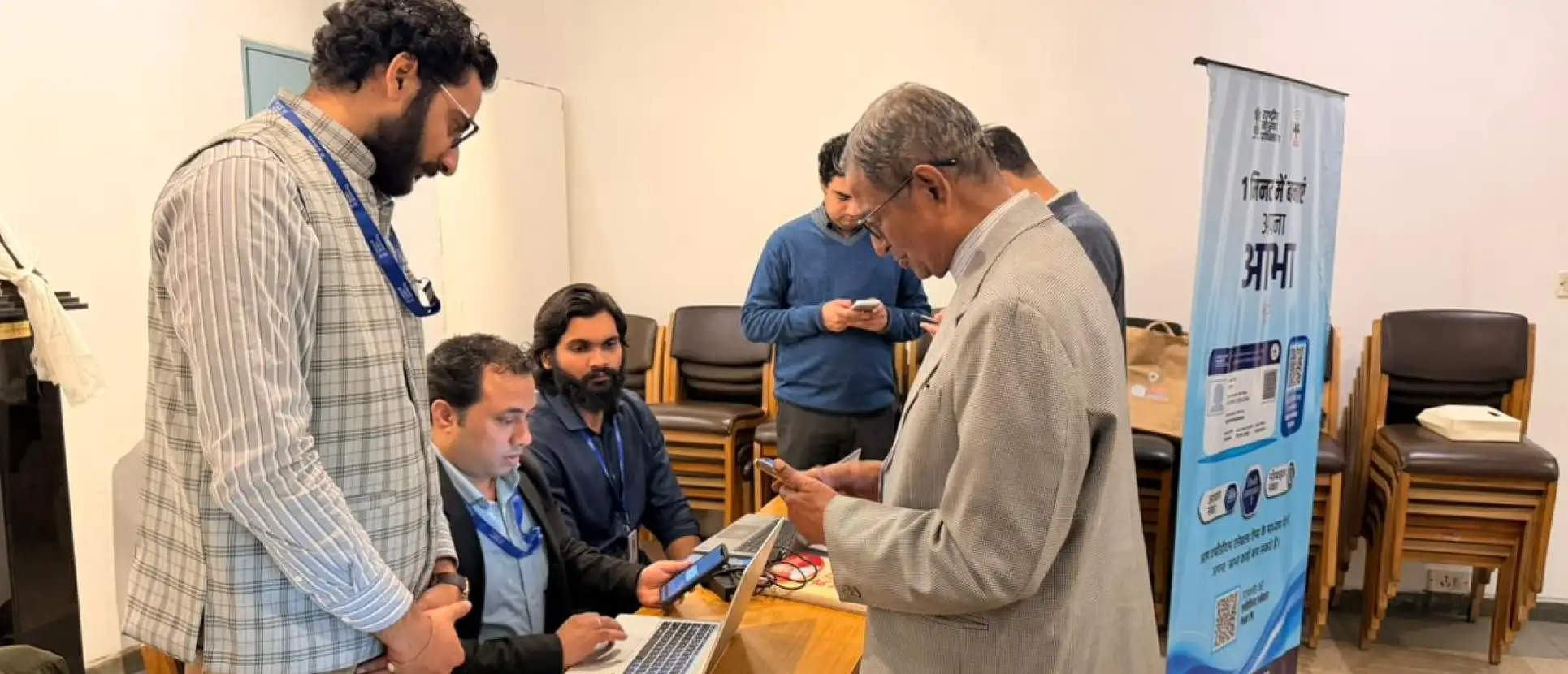
By reducing paperwork, manual filing, and time spent on non-clinical chores throughdigital registration, Scan-and-Share via ABHA QR codes, and electronic prescriptions, ABDM allows physicians to concentrate more on patient care, which streamlines administrative workflow.
3. Professional Visibility and System Integration
Registration under HPR and HFR formally integrates independent doctors and clinics into the national digital health ecosystem, improving trust, discoverability, and legitimacy in the eyes of digitally enabled patient
4. Enhanced Patient Experience & Trust
By giving people authority over their health information, ABDM's consent-based data-sharing paradigm promotes transparency, confidence, and improved doctor-patient interactions.
5. Telemedicine and Hybrid Care
Through the Unified Health Interface (UHI), independent doctors can extend care beyond physical clinics by offering teleconsultations, digital follow-ups, and e-prescriptions, improving access for patients in remote or underserved areas.
Conclusion
The Ayushman Digital Bharat Mission can be a game-changer for small clinics and independent doctors by integrating them into an interoperable healthcare network. By embracing ABDM, small clinics and independent practitioners can enhance patient trust and ensure continuity of care. But realizing the full potential requires active implementation and digital awareness through targeting incentives and government support.
Successful adoption of ABDM will not only elevate healthcare access but also fulfill the idea of Universal Health Coverage through digital technology. A nationwide digital health revolution can be achieved by targeted adoption, a favourable legislative environment, and efficient use of digital services.
Stay tuned for more such updates on Digital Health News
Follow us