AI That Justifies the Investment: From Vision to Value at DHN City Meet-Up Mumbai

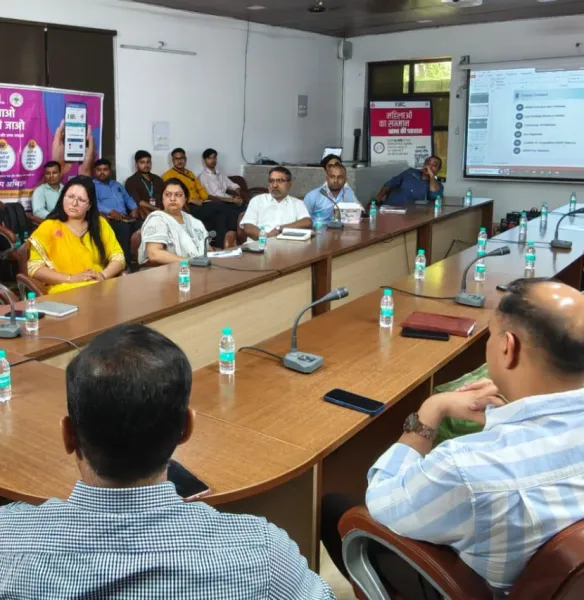
As artificial intelligence continues to move deeper into the fabric of healthcare delivery, the conversation is steadily shifting from possibility to performance. At DHN City Meet-Up Mumbai, this evolution came into sharp focus during a panel that explored a question increasingly shaping boardroom discussions and clinical decisions alike: what makes AI truly worth the investment.
Titled “AI That Justifies the Investment,” the session brought together hospital leaders, clinicians, and health technology experts to examine how AI is being evaluated not just as an innovation, but as a measurable driver of clinical and operational value.
The discussion opened on a clear note. AI adoption today is no longer about experimentation alone. It is about defining problems clearly, aligning stakeholders, and ensuring that outcomes justify the scale of investment being made.
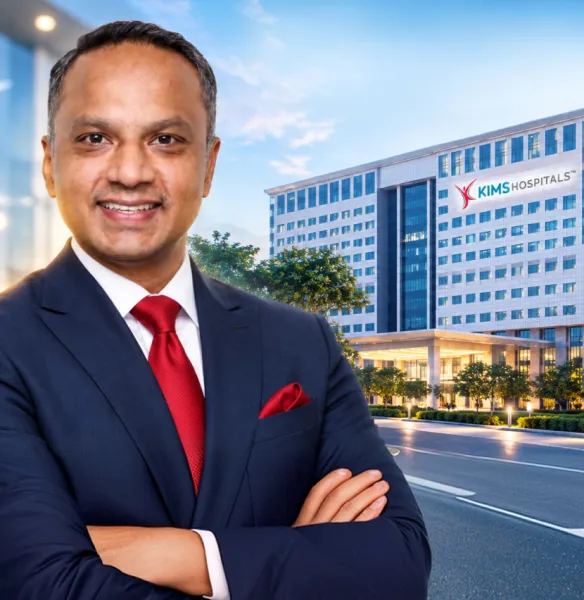
Saurabh Gupta, Regional Director at KIMS Hospitals, set the tone by emphasizing the importance of problem definition and frontline adoption.
"There should be a problem-solving proposal. Always defining what the problem is that we solve with AI. The most important stakeholder is the front-level operator because if they are not convinced, then the entire thing will fall."
His perspective highlighted a simple but critical reality. The success of any AI initiative ultimately depends on acceptance at the point of care, where systems meet real-world execution.
Building on this operational lens, Neeraj Lal, Regional Director of Maharashtra and Karnataka Region at Medicover Hospitals, focused on the ecosystem that supports AI deployment across healthcare institutions.
"Three people play a very, very important role in healthcare. One is the most important pillar for doctors, because we don't buy AI, we buy outcomes. Secondly, the vendor we are taking the AI solution from. Third, your own staff, who are working around this AI ecosystem. I think if we integrate these three things, AI will work very efficiently."
His remarks underlined that AI in healthcare functions effectively only when clinicians, vendors, and internal teams operate in alignment, with outcomes as the shared objective.
Bringing a strong clinical governance perspective, Dr Lt Col LC Verma (Retd), MD, Lilavati Hospital & Research Centre, Mumbai, emphasized the importance of defining problems through clinical ownership and measurable outcomes.
"The most important thing, you have to decode the problem statement. What mistake are we making? We should involve the doctors or the clinicians who are the end users in the end. We have to speak about the clinical outcomes, the patient-related outcome measures. So those are the core values. There is also a mismatch of demand and supply. The topic is the AI that justifies the investment; the justification should come from the clinicians. They really want it."
His perspective reinforced the need for early clinical involvement, ensuring that AI solutions are aligned with real patient care priorities and measurable health outcomes.
Adding a foundational technology lens, Anoop Arora, Founder and CEO of itDose Infosystems Pvt Ltd., simplified the structure of AI and what readiness truly means for healthcare systems.
"What is AI? I think AI is working on a concept of learning, then analyzing, and then predicting. So AI algorithms run on the data, they learn on the data, then they analyze, and then they predict. And when we talk about AI readiness, I would say AI readiness is just a combination of data readiness, plus the process readiness, and governance readiness."
His remarks highlighted that AI readiness is not defined by tools alone, but by the maturity of data systems, processes, and governance frameworks that support them.
Moderating the session, Dr Shashikant Pawar, COO, Kokilaben Dhirubhai Ambani Hospital, brought the discussion together with a clear framing of how AI is being viewed in healthcare today.
"AI is everywhere. When we talk about how we want to implement it. It is not what it does, but how AI is financially viable."
From Adoption to Justification
What emerged from the DHN City Meet-Up Mumbai panel was a clear shift in perspective. AI in healthcare is no longer being evaluated only on capability or innovation. It is being assessed on clarity of purpose, strength of execution, and measurable value creation across clinical and operational outcomes.
Across all viewpoints, one consistent understanding stood out. AI delivers meaningful impact when it is built on clearly defined problems, supported by aligned stakeholders, enabled by strong data and process foundations, and evaluated through outcomes that matter most in patient care.
As healthcare organizations continue integrating AI into their systems, the focus is steadily moving toward a more outcome-driven approach, where investment is justified not by potential alone, but by tangible results in real-world environments.
Stay tuned for more such updates on Digital Health News