Is Your Hospital Ready for AI? The Conversation Defining Healthcare’s Next Chapter at DHN City Meet-Up Mumbai
Is Your Hospital Ready for AI? The Conversation Defining Healthcare’s Next Chapter at DHN City Meet-Up Mumbai

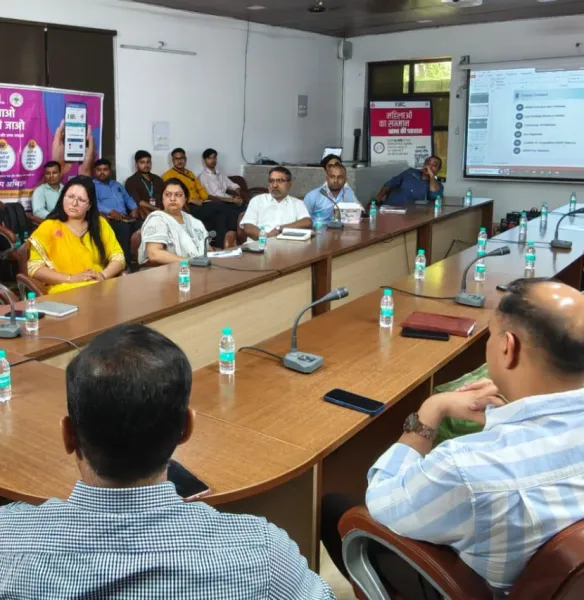
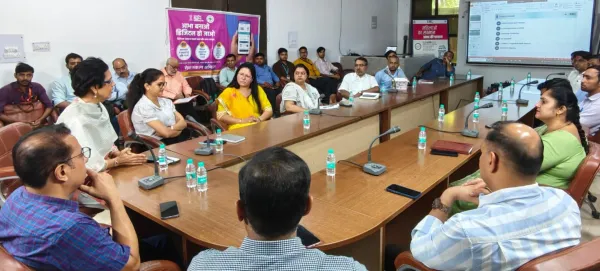
At a time when artificial intelligence is steadily reshaping the contours of global healthcare, DHN City Meet-Up Mumbai brought together some of the most influential voices in clinical leadership, hospital operations, and health technology for a conversation that felt both timely and necessary.

Set against the backdrop of a rapidly digitising healthcare ecosystem, the Mumbai edition of the DHN City Meet-Up became more than just a knowledge exchange. It evolved into a reflective space where one central question took center stage. Are hospitals truly ready for AI, not just in intent, but in infrastructure, data maturity, and governance strength.

The discussion unfolded at a moment when India’s AI healthcare market continues its sharp upward trajectory, yet the real-world readiness across institutions remains uneven. Between advanced pilot projects and legacy systems still catching up, the gap between ambition and execution has never been more visible.

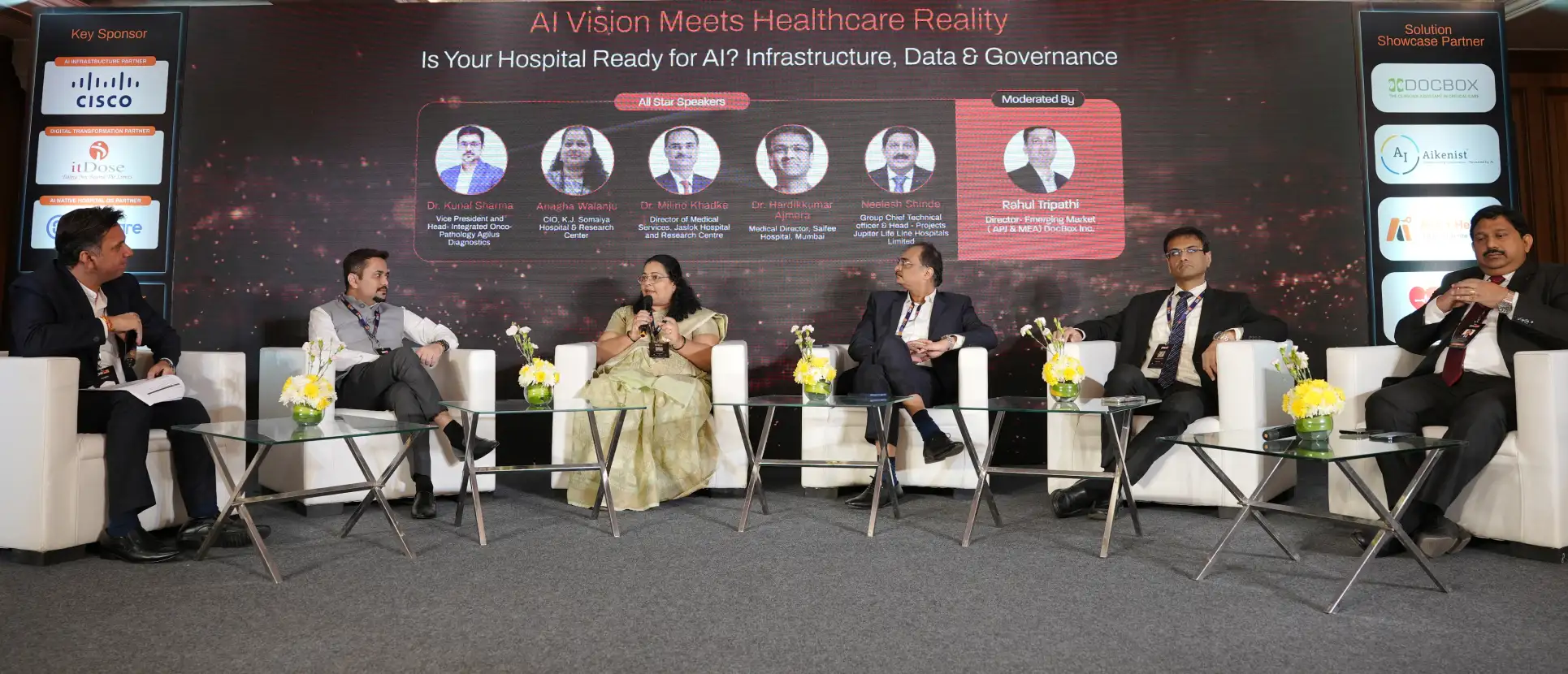
It was within this context that the panel titled Is Your Hospital Ready for AI? Infrastructure, Data, and Governance brought together experts to examine what readiness actually means in practice, beyond the buzzwords and beyond the promise.

From the very beginning, the conversation anchored itself in one clear idea. AI in healthcare is not just a technology shift. It is a systems shift.

Dr. Kunal Sharma, Vice President and Head Integrated Onco-Pathology at Agilus Diagnostics, opened the discussion by grounding AI readiness in its most fundamental layer.

"True AI readiness begins with data interoperability, how your pipeline works and how data is validated across heterogeneous systems. Data plumbing is foundational: your PACS must communicate with your LIS. If the data isn't flowing correctly at the infrastructure level, everything built on top of it is compromised."

His observation immediately reframed the conversation, placing emphasis on the invisible backbone that determines whether AI systems can function reliably in clinical environments.

Building on this foundation, Anagha Walanju, CHCIO CIO at K J Somaiya Hospital and Research Center, expanded the lens to include both systems and people.

"Integration is often misunderstood as mere connectivity between HIS, LIS, and EMR. It is far more than that; it is about how data flows from one system to another, ensuring correctness, consistency, and security at every step. Data must be standardised. And equally important is the human side: clinicians are apprehensive about job security, and we must invest in proper training. People embrace what they understand."

Her perspective highlighted that true integration is not only a technical challenge but also a cultural one, where adoption depends heavily on trust and clarity.

As the discussion progressed, Dr. Milind Khadke, Director of Medical Services at Jaslok Hospital and Research Centre, offered a grounded assessment of current realities.

"If anyone believes hospitals are ready for AI today, I would respectfully disagree. While pathology and laboratory functions have gone digital, the real challenge lies in patient records. We need 100% EMR adoption first, then comes the hard work of data screening and plumbing. We are running predictive ICU monitoring pilots, but we are still at the very beginning of this journey."

His remarks brought attention back to the uneven maturity across healthcare systems, where pockets of innovation coexist with foundational gaps.

From readiness to real-world application, the focus then shifted to how AI should be evaluated in clinical practice. Dr. Hardik Ajmera, Medical Director at Saifee Hospital, Mumbai, brought clarity to the evaluation lens.

"When I evaluate any AI tool for hospitals, I ask two questions: will it improve clinical outcomes, and will it improve the patient experience? In this era of AI, technology must behave as a clinical team member. It has to be user-friendly, and it must add a layer of patient safety. That is the only bar that matters."

His approach reframed AI not as an innovation metric, but as a clinical performance standard.

While much of the conversation centered around data and systems, Neelesh Shinde, Group Chief Technology Officer and Head Projects at Jupiter Life Line Hospitals Limited, drew attention to the physical backbone of digital healthcare.

"Before we talk about AI, we need to ask, are we ready for the basics? Do we have the right servers? Is our earthing in place? Everyone wants to discuss digitisation, but no one wants to look at the server room. The hardware foundation must be in place before software can succeed. AI is absolutely the future, and we should be hopeful, but until the infrastructure is ready, we cannot get there."

His perspective reinforced the importance of operational fundamentals that often sit outside the AI conversation but determine its success.

Moderating the session, Rahul Tripathi, Director Emerging Markets APJ and MEA at DocBox Inc, tied together the broader industry narrative.

"India's hospital sector is no longer asking whether to adopt AI. The real question is whether it is actually equipped to do so. The Indian AI healthcare market is growing at a CAGR of 40.6 percent, yet the foundational readiness required to deploy AI responsibly remains uneven across the sector."

A Conversation That Redefined Readiness

What emerged from the DHN City Meet-Up Mumbai was a clear and collective understanding that AI in healthcare is entering a more grounded phase. The conversation is no longer centered on possibility alone, but on preparedness at every layer of the system.

From infrastructure and interoperability to clinical adoption and governance, the path forward depends on how effectively healthcare institutions strengthen their foundations.

As the dialogue closed, one insight remained central. The future of AI in healthcare will be shaped not only by innovation, but by readiness built with discipline, clarity, and alignment across systems and people.

Stay tuned for more such updates on Digital Health News

Follow us

More Articles By This Author


Show All

Sign In / Sign up