Verily, NVIDIA Partner to Advance AI Infrastructure for Precision Health Research
The partnership aims to help Verily’s health system, life science, payer, and government partners develop and deploy AI more efficiently across healthcare applications.
Verily, a precision health AI company, has announced a strategic collaboration with NVIDIA to integrate NVIDIA’s complete AI technology stack into its Pre platform.
The partnership aims to help Verily’s health system, life science, payer, and government partners develop and deploy AI more efficiently across healthcare applications.
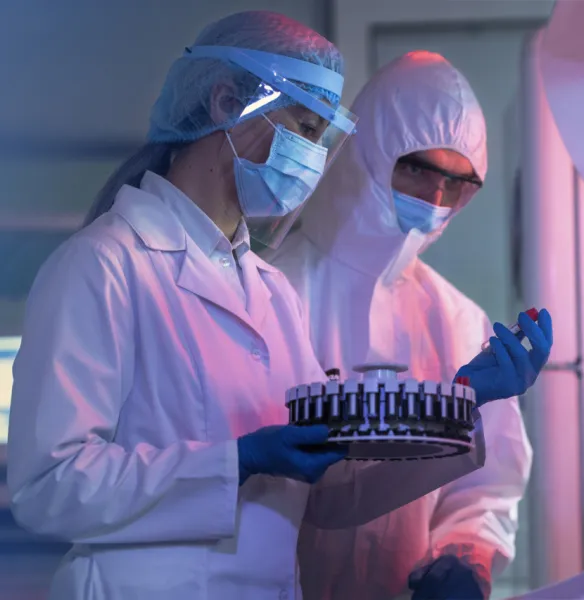
The collaboration provides researchers with direct access to advanced AI tools and hardware within Verily’s trusted research environment (TRE), Workbench. As part of the integration, Verily has incorporated NVIDIA’s GPU-accelerated libraries and frameworks, including NVIDIA NeMo, NVIDIA Parabricks, and NVIDIA CUDA-X Data Science, along with access to GPUs such as NVIDIA Blackwell and NVIDIA Hopper.
The integration has shown significant performance improvements, reducing genomic data processing times from hours to minutes using Parabricks and B200 GPUs compared to traditional CPU-only methods.
“With NVIDIA’s cutting-edge AI capabilities now available in our Pre platform, we are providing researchers with unparalleled tools to enhance the speed and efficiency of AI model development and omics analysis,” said Stephen Gillett, Verily CEO.
A key component of the collaboration includes accelerating analyses within the National Institutes of Health’s (NIH) All of Us Researcher Workbench. The Workbench, which supports nearly 20,000 researchers worldwide and hosts one of the largest genomics datasets, will now operate through Verily’s Pre platform as part of its extended partnership with Vanderbilt University Medical Center.
As part of this initiative, Verily researchers developed the first multimodal foundation model using the NIH All of Us Research Program dataset, integrating electronic health records (EHR) and genomics data through polygenic risk scores to support disease prediction and proactive health management. Researchers achieved a 10x faster model training speed using NVIDIA NeMo Automodel and H100 GPUs compared to previous methods.
Verily also plans to expand NVIDIA GPU-accelerated tools across its broader Pre solutions. The Refinery platform will continue to curate and structure multimodal data using a FHIR-native model, while Exchange will serve as a secure space for sharing AI-ready datasets, models, and agents to advance precision research and care.
Stay tuned for more such updates on Digital Health News
Follow us