The COO’s Playbook: 8 Pillars for Building a Future-Ready Hospital with AI

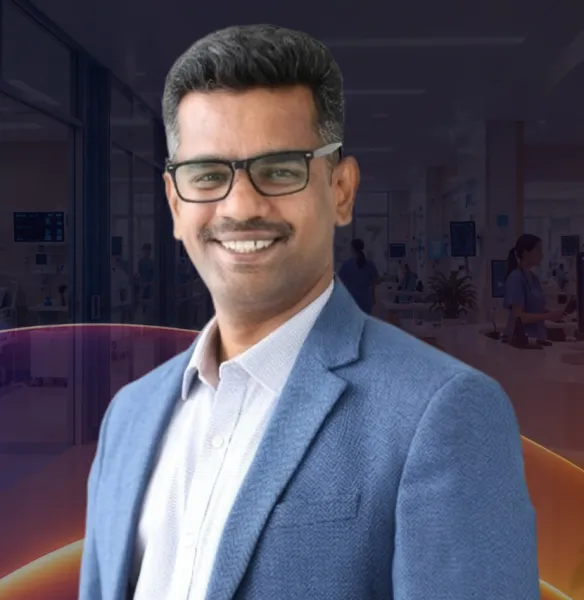
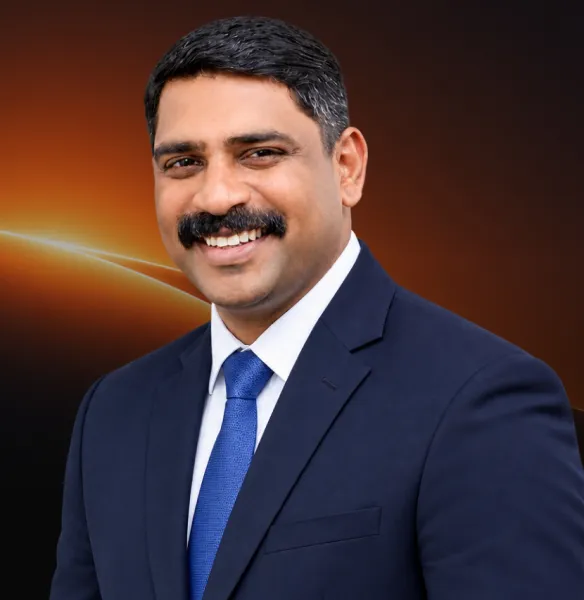
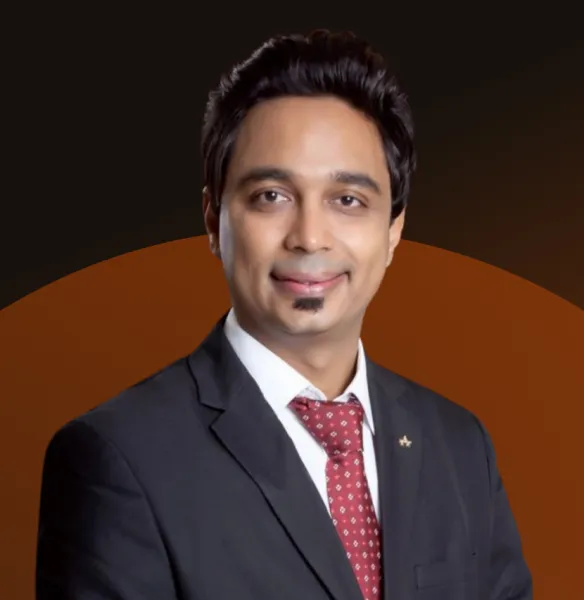
By - Kaarthik Ramamurthy, Chief Operating Officer, Apollo Hospitals, Vanagaram, Chennai
How AI can help healthcare leaders move from reactive management to intelligent, predictive, and safer hospital operations.
The future of healthcare will not be defined by AI replacing people. It will be defined by how effectively people use AI to make better decisions.
For a Chief Operating Officer, this distinction is critical.
Running a hospital is a continuous balancing act between clinical quality, patient experience, workforce, financial sustainability, infrastructure, safety, and regulatory compliance. In a multi-hospital environment, the complexity increases further. The challenge is not merely generating more data, but converting that data into meaningful intelligence and timely action.
AI has the potential to become a powerful operating layer for hospitals. But its success will depend on how thoughtfully it is integrated into workflows, how prepared the workforce is, and how effectively leaders manage the risks that accompany it.
I see eight pillars that can support a COO in building a future-ready hospital with AI.
Pillar 1: Intelligent Clinical Intelligence
A hospital generates enormous amounts of clinical data every day. The opportunity lies in understanding the patterns hidden within it.
AI can analyse outpatient and inpatient EMR data to identify trends in diagnoses, investigations, treatments, length of stay, readmissions, and clinical outcomes.
Medication utilisation is another important opportunity. AI can identify patterns of polypharmacy, potentially inappropriate medication combinations, duplication, and unusual prescribing behaviour, while supporting clinicians with alerts and decision support.
Similarly, laboratory reports should not remain isolated numbers in an EMR. AI can identify trends across sequential reports and highlight clinically relevant changes that may otherwise be missed.
The objective is not to replace clinical judgement. It is to augment it.
Pillar 2: Predictive Patient Flow
Hospitals traditionally respond to demand after it appears. AI allows us to anticipate demand.
By analysing historical admissions, emergency visits, seasonal patterns, appointment volumes, surgical schedules, and discharge behaviour, AI can help predict bed requirements, ICU demand, emergency department load, and operating theatre utilisation.
This enables the COO to move from reactive capacity management to predictive capacity planning.
The real value is not simply higher utilisation. It is the ability to improve patient flow without compromising safety or experience.
Pillar 3: Real-Time Operational Command
The traditional MIS tells us what happened yesterday.
The future hospital should tell us what is happening now and what is likely to happen next.
Real-time AI dashboards can bring together emergency waiting times, bed occupancy, OT status, ICU capacity, discharge delays, staffing levels, laboratory turnaround times, imaging utilisation, and other critical operational indicators.
A central command centre can enable the COO and leadership team to view the hospital as a single integrated ecosystem.
The next evolution is AI-assisted decision-making, where the system not only identifies an abnormality but also recommends where management attention is required.
Pillar 4: Continuous Monitoring of the Critically Ill
AI can significantly strengthen the monitoring of critically ill patients. Continuous streams of physiological data can be analysed to identify subtle changes and deterioration patterns earlier.
Central monitoring of critical-care patients can support clinicians by identifying trends across multiple parameters rather than relying only on individual readings. This can help create an additional layer of vigilance, particularly when clinical teams are managing multiple high-acuity patients.
The principle remains simple: AI should strengthen human vigilance, not replace it.
Pillar 5: Safety, Security and Hazard Intelligence
Hospital safety extends well beyond clinical care.
Hospitals contain multiple hazards like fire, electrical risks, hazardous materials, infection risks, equipment-related risks, and radiation exposure.
AI-enabled surveillance and predictive analytics can help identify unsafe patterns before they become incidents.
Radiation safety is a particularly important area in modern hospitals with extensive imaging and radiation oncology services. AI can support monitoring of radiation exposure, utilisation patterns, compliance, and unusual events, helping leadership teams identify risks and intervene proactively.
The same approach can extend to fire safety, environmental monitoring, biomedical equipment, access control, and other hospital security systems.
A future-ready hospital should move from incident reporting to incident prediction wherever technology permits.
Pillar 6: Workforce Intelligence
AI will change healthcare jobs, but the greater transformation will be in how people work.
The future workforce will need to understand how to interpret AI-generated insights, validate recommendations, recognise algorithmic limitations, and make decisions where human judgement remains essential. Doctors, nurses, technicians, and administrators will increasingly work alongside AI-enabled systems.
For the COO, workforce transformation therefore becomes a strategic priority. Training should move beyond teaching people how to use software. Employees need AI literacy, data literacy, critical thinking, and digital ethics. The workforce that succeeds will not compete with AI. It will learn to work effectively with it.
Pillar 7: AI Governance & Managing the Threat
Every technology creates new risks. AI can introduce concerns around data privacy, cybersecurity, algorithmic bias, incorrect recommendations, automation bias, and overdependence on technology. There is also a less visible threat: the possibility that employees accept an AI recommendation without sufficiently questioning it.
Healthcare cannot afford a “machine says so” culture. Strong governance must therefore accompany AI adoption. Hospitals need clear accountability for AI-supported decisions, data protection frameworks, validation processes, audit trails, and mechanisms to identify and correct errors.
The COO must ensure that innovation does not outrun governance.
Pillar 8: Building an AI-Ready Culture
Technology is only one part of transformation. The real competitive advantage will come from creating an organisation that continuously learns from its data.
AI adoption should therefore be linked to measurable outcomes: better patient safety, reduced waiting time, improved clinical outcomes, workforce productivity, lower wastage, stronger financial performance, and better patient experience.
The question for every AI initiative should be:
What problem are we solving, and how will we measure whether AI actually solved it?
This keeps AI anchored to organisational purpose rather than technology enthusiasm.
The Strength of the Future Hospital
The greatest strength of AI-enabled hospitals will not be automation alone. It will be visibility, predictability, and speed of decision-making. A future-ready hospital will be able to understand patterns across patients, medications, investigations, operations, workforce, and infrastructure. It will detect deviations earlier. It will predict demand. It will continuously monitor critical functions. And it will enable leaders to intervene before small problems become major operational or clinical events.
For a COO, this represents a fundamental shift from managing hundreds of individual processes to orchestrating an intelligent healthcare ecosystem. The hospital of the future will still need compassionate doctors, skilled nurses, experienced administrators, and empathetic leaders.
But they will be supported by a new layer of intelligence.
The winning healthcare organisations will not be those that simply adopt the most AI. They will be those who integrate AI most intelligently into the way people think, work, and make decisions.
AI is not the destination. A safer, smarter, more predictive, and more human hospital is.
Disclaimer: This is an authored article; DHN is not liable for the claims made in the same.
Stay tuned for more such updates on Digital Health News