Digital Health as the Gateway to Cross-Border Medical Tourism: Positioning Northeast India as a Healthcare Hub for South and Southeast Asia
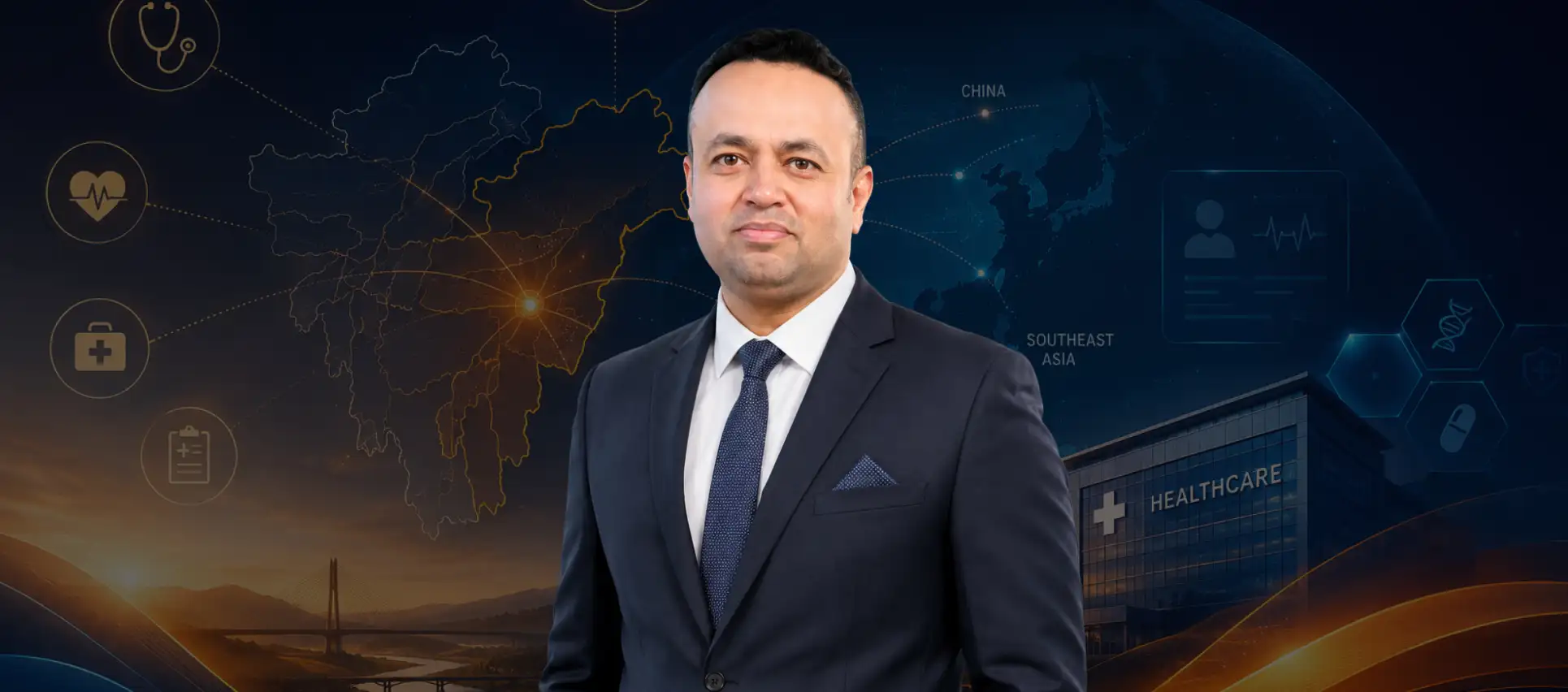
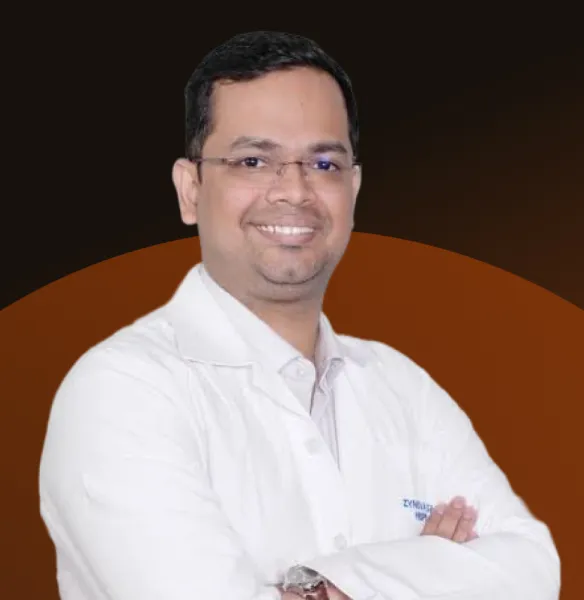
By- Dr. Gitartha Roymedhi, Medical Administrator, P A Sangma International Medical College and Hospital, University of Science and Technology, Ri Bhoi, Meghalaya; Executive Member, Association of Healthcare Providers of India, Northeast 1 Chapter (AHPI-NE1) and Indian Association of Palliative Care, Northeast Chapter (IAPC-NE).
Northeast India has traditionally been viewed primarily through the lens of its strategic geography, cultural diversity, and connectivity challenges. However, the region is increasingly emerging as a potential bridge between India, South Asia, and Southeast Asia.
One of the most promising opportunities lies at the intersection of healthcare, Digital Health, and cross-border medical tourism.
The question is no longer simply whether patients from neighbouring countries can travel to Northeast India for treatment. The more important question is whether Northeast India can build a digitally enabled healthcare ecosystem capable of reaching patients before they travel, treating them when they arrive, and continuing their care after they return home.
With its geographical proximity to Bangladesh, Bhutan and Myanmar, its connectivity with the wider ASEAN region, India's growing healthcare capabilities and the rapid expansion of Digital Health infrastructure, Northeast India has the potential to evolve into an important regional healthcare gateway.
Why Northeast India?
The strategic location of Northeast India is perhaps its greatest natural advantage.
The region shares international borders with Bangladesh, Bhutan, and Myanmar and lies in proximity to Nepal and the wider Southeast Asian region. Assam, with Guwahati as its principal urban and transportation hub, can potentially function as an entry point for patients from neighbouring countries.
The traditional Indian medical-tourism destinations—Delhi, Mumbai, Chennai, Hyderabad, Bengaluru and Kolkata—already possess strong international healthcare brands. Northeast India should therefore not attempt to replicate these established centres.
Instead, it should develop a differentiated proposition based on:
Proximity + Quality Indian Healthcare + Competitive Cost + Digital Connectivity + Medical Value Travel.
The objective should be to bring advanced healthcare closer to populations that may currently have to travel much farther to access it.
From Medical Tourism to Medical Value Travel
The concept of medical tourism itself is evolving.
Patients are increasingly looking beyond the procedure. They consider the entire healthcare journey: diagnosis, consultation, treatment, rehabilitation, accommodation, convenience, safety, and follow-up.
Northeast India has the opportunity to develop a broader Medical Value Travel ecosystem:
Diagnosis → Treatment → Rehabilitation → Wellness → Tourism → Digital Follow-up
This could create opportunities not only for hospitals but also for diagnostic centres, pharmacies, rehabilitation facilities, hotels, transportation providers, wellness centres and tourism businesses.
The region's natural environment and cultural diversity could further complement healthcare services, particularly in rehabilitation, wellness and preventive-health programmes.
Digital Health: The Game Changer
The most transformative component of this opportunity may be Digital Health.
Traditional medical tourism follows a relatively simple pathway:
Patient → Travel → Hospital → Treatment → Return Home
Digital Health can transform this into:
Digital Discovery → Teleconsultation → Digital Records → Specialist Opinion → Treatment Planning → Travel → Hospital Care → Digital Follow-up
A patient in Dhaka, Thimphu, Kathmandu, or Yangon could potentially consult a specialist in Guwahati before making any travel decision.
Previous laboratory reports, imaging, and clinical information could be shared digitally. A specialist could provide an initial assessment, recommend further investigations, discuss possible treatment options and provide an indicative treatment pathway.
If physical treatment is required, the patient can then travel with greater certainty.
After treatment, the relationship need not end when the patient crosses the international border on the way home. Teleconsultation and remote monitoring can allow the treating team to remain connected with the patient.
Thus, Digital Health can become the front door, clinical bridge, and follow-up mechanism of cross-border medical tourism.
The Digital Patient Journey
A future cross-border healthcare ecosystem could function as follows:
1. Digital Discovery
The patient identifies a hospital or specialist through a multilingual digital platform.
2. Teleconsultation
The patient interacts with a specialist without initially travelling.
3. Digital Medical Information
Previous medical records, laboratory reports, and imaging are securely shared.
4. Clinical Assessment
The treating team determines whether the patient requires further investigation, medical treatment, surgery, or another intervention.
5. Treatment Planning
The patient receives a preliminary treatment pathway and transparent information about expected costs and duration of stay.
6. Medical Travel Support
International patient services can assist with appointments, travel, accommodation, and other logistical requirements.
7. Hospital Treatment
The patient receives definitive clinical care.
8. Rehabilitation and Recovery
Appropriate rehabilitation, physiotherapy, wellness or recovery programmes can be incorporated.
9. Digital Follow-up
After returning home, the patient continues follow-up through telemedicine and appropriate digital-health tools.
This model can transform a hospital from a physical destination into a digitally connected regional healthcare provider.
Can Northeast India Compete?
Competition will undoubtedly exist.
Northeast Indian hospitals will compete with established Indian healthcare destinations as well as international medical-tourism centres such as Thailand, Singapore and Malaysia.
However, Northeast India does not need to win by competing on every parameter.
Singapore's strength is its advanced healthcare ecosystem and global reputation. Thailand has developed a powerful medical-tourism and hospitality model. India's metropolitan cities have enormous specialist depth and infrastructure.
Northeast India's competitive proposition can be different.
Its strength can lie in:
- Geographical proximity to neighbouring countries
- Indian Clinical Expertise
- Competitive Healthcare Costs
- Emerging Tertiary-care Infrastructure
- Digital Health
- Regional Connectivity
- Wellness and Tourism
The objective should therefore be to develop a regional catchment market, initially focusing on neighbouring South Asian and Southeast Asian populations rather than attempting to capture the entire Asian medical-tourism market.
Will Northeast India Take Patients Away From Other Indian States?
Some redistribution is inevitable.
A patient who previously travelled from Bangladesh to Kolkata may choose Guwahati in the future. Similarly, a patient who might otherwise have travelled to Delhi or Chennai for selected procedures could potentially choose a hospital in the Northeast.
However, this should not necessarily be viewed as a threat.
India's healthcare market should be considered as an interconnected ecosystem rather than a collection of competing state-level markets.
A patient entering India through the Northeast may require a highly specialised procedure that is not available locally. Digital connectivity can facilitate referral to a centre of excellence elsewhere in India.
The pathway could therefore become:
International Patient → Northeast Digital Gateway → Northeast Hospital → Super-specialty Centre Elsewhere in India → Digital Follow-up
In this model, Northeast India acts not only as a competitor but also as a gateway to the broader Indian healthcare system.
This could support the concept of a National Cross-Border Medical Tourism Network, in which different regions of India develop specialised international-patient markets while remaining digitally interconnected.
How Will the People of Northeast India Benefit?
The ultimate justification for developing cross-border medical tourism should not be the number of international patients alone.
The real measure of success should be its impact on the population of Northeast India.
Better Healthcare Infrastructure
International healthcare demand can encourage investment in advanced diagnostics, critical care, oncology, cardiac care, minimally invasive surgery, rehabilitation, and other specialties.
The same infrastructure can serve local populations.
Attraction and Retention of Specialists
A stronger healthcare market can attract specialists and create professional opportunities that may otherwise draw healthcare professionals towards metropolitan India.
Employment
The economic impact can extend well beyond doctors and nurses.
New opportunities can emerge in:
- Nursing and allied healthcare
- Medical laboratory services
- Radiology and diagnostics
- Hospital administration
- Digital Health
- Health information management
- International patient coordination
- Rehabilitation
- Hospitality
- Transportation
- Tourism
Improved Access Through Telemedicine
Digital Health can be particularly transformative for geographically remote communities.
A patient in a remote district may be able to connect with a specialist in Guwahati without undertaking an immediate long-distance journey.
This creates a hub-and-spoke healthcare model:
Community → District Hospital → Regional Centre → Tertiary Centre → Super-specialty Centre
Digital connectivity allows clinical expertise to travel even when patients cannot.
Development of a Healthcare Economy
Medical tourism can generate a wider economic multiplier effect involving:
Hospitals → Diagnostics → Pharmaceuticals → Medical Devices → Insurance → Digital Health → Hotels → Transport → Rehabilitation → Tourism
Consequently, healthcare can become an important component of regional economic development.
The Principle of Additionality
There is, however, an important policy consideration.
Cross-border medical tourism must not create a situation in which international patients receive preferential access while local patients face shortages.
The appropriate principle should be:
International healthcare demand should create additional capacity, investment, employment and technology rather than displace healthcare access for local residents.
Hospitals receiving public incentives or other support for international-patient development could be encouraged to maintain local-patient capacity, emergency-care obligations, transparent pricing, community-health programmes and telemedicine services for underserved populations.
This would ensure that medical tourism becomes a complement to public health rather than a competitor to it.
From Competition Between States to Collaboration Across India
A successful Northeast healthcare strategy should not be based on the idea of replacing other Indian medical destinations.
Instead, India can develop a collaborative regional model.
For example:
- Northeast India: Eastern gateway and regional cross-border healthcare
- Kolkata: Eastern India and Bangladesh-facing specialist services
- Delhi-NCR: Advanced tertiary and quaternary care
- Mumbai: Complex specialist and corporate healthcare
- Chennai and Hyderabad: Advanced surgery and super-specialty care
- Bengaluru: Technology, tertiary care and specialised medicine
- Kochi: Medical value travel and wellness
Digital Health can connect these ecosystems.
This approach would allow India to compete internationally while encouraging internal collaboration.
A Five-Pillar Strategy for Northeast India
A sustainable cross-border healthcare strategy could be built around five pillars:
1. Clinical Excellence
Hospitals must demonstrate measurable quality, patient safety, specialist expertise, and internationally credible clinical outcomes.
2. Digital Health
Telemedicine, interoperable health records, digital diagnostics, remote monitoring, AI-enabled clinical support and multilingual patient platforms should become integral components.
3. Connectivity
Air connectivity, border infrastructure, emergency transport and digital connectivity must improve simultaneously.
4. International Patient Services
Dedicated international-patient departments should provide transparent pricing, multilingual communication, travel coordination, accommodation support and continuity of care.
5. Regional Collaboration
Government, hospitals, medical colleges, health-tech companies, tourism agencies and neighbouring countries should work together to develop cross-border healthcare corridors.
The Guwahati Opportunity
Within this vision, Guwahati could potentially emerge as the Healthcare Gateway of Northeast India.
Its role could extend beyond serving Assam.
The city could become a regional hub connecting:
Bangladesh → Guwahati
Bhutan → Guwahati
Myanmar → Guwahati/Imphal
Northeast India → Guwahati
and, over time:
ASEAN → Northeast India
The objective would not simply be to build more hospitals. It would be to build a connected healthcare ecosystem.
Looking Towards 2030
By 2030, a successful Northeast healthcare ecosystem could potentially have:
- Digitally enabled international patient departments
- Multilingual teleconsultation platforms
- Stronger tertiary and super-specialty hospitals
- Integrated diagnostic networks
- Cross-border second-opinion services
- Digital pre-arrival treatment planning
- Medical travel facilitation
- Rehabilitation and wellness centres
- AI-supported diagnostics and decision support
- Remote patient monitoring
- Partnerships with healthcare providers in neighbouring countries
The region could progressively move from being primarily a consumer of healthcare from metropolitan India to becoming a provider of healthcare for neighbouring international markets.
Conclusion
Northeast India possesses a unique combination of geography, emerging healthcare capabilities, connectivity opportunities and proximity to large neighbouring populations.
But geography alone will not create a medical-tourism hub. Digital Health can provide the missing bridge. It can allow Northeast Indian hospitals to reach international patients before they travel, coordinate their treatment while they are in India, and continue their care after they return home.
The opportunity therefore goes beyond medical tourism. It is about creating a cross-border healthcare ecosystem in which healthcare, technology, connectivity, hospitality, rehabilitation and tourism work together.
The ultimate vision should not be:
“Bring foreign patients to Northeast India.”
It should be:
“Make Northeast India a trusted, digitally connected healthcare gateway between South Asia, India and Southeast Asia.”
And the ultimate measure of success should not be the number of international patients alone.
It should be whether this transformation produces better hospitals, better technology, more specialists, more employment, greater digital access and better healthcare for the people of Northeast India itself.
The vision can therefore be expressed simply:
From Geographic Frontier to Healthcare Gateway.
From Medical Tourism to Medical Value Travel.
From Physical Hospitals to Digital Healthcare Ecosystems.
From Competition Between States to Collaboration Across India.
Northeast India can become not merely a destination for healthcare—but a bridge connecting people, healthcare professionals, and healthcare systems across borders.
Stay tuned for more such updates on Digital Health News
Follow us