SGPGIMS to Venture into AI-driven Healthcare, Says Director Prof Radha Krishan Dhiman
The AI initiative forms part of a larger project to raise the status of the SGPGIMS from a tertiary to a quaternary healthcare centre, along with the expansion of the UP Medical College Network.
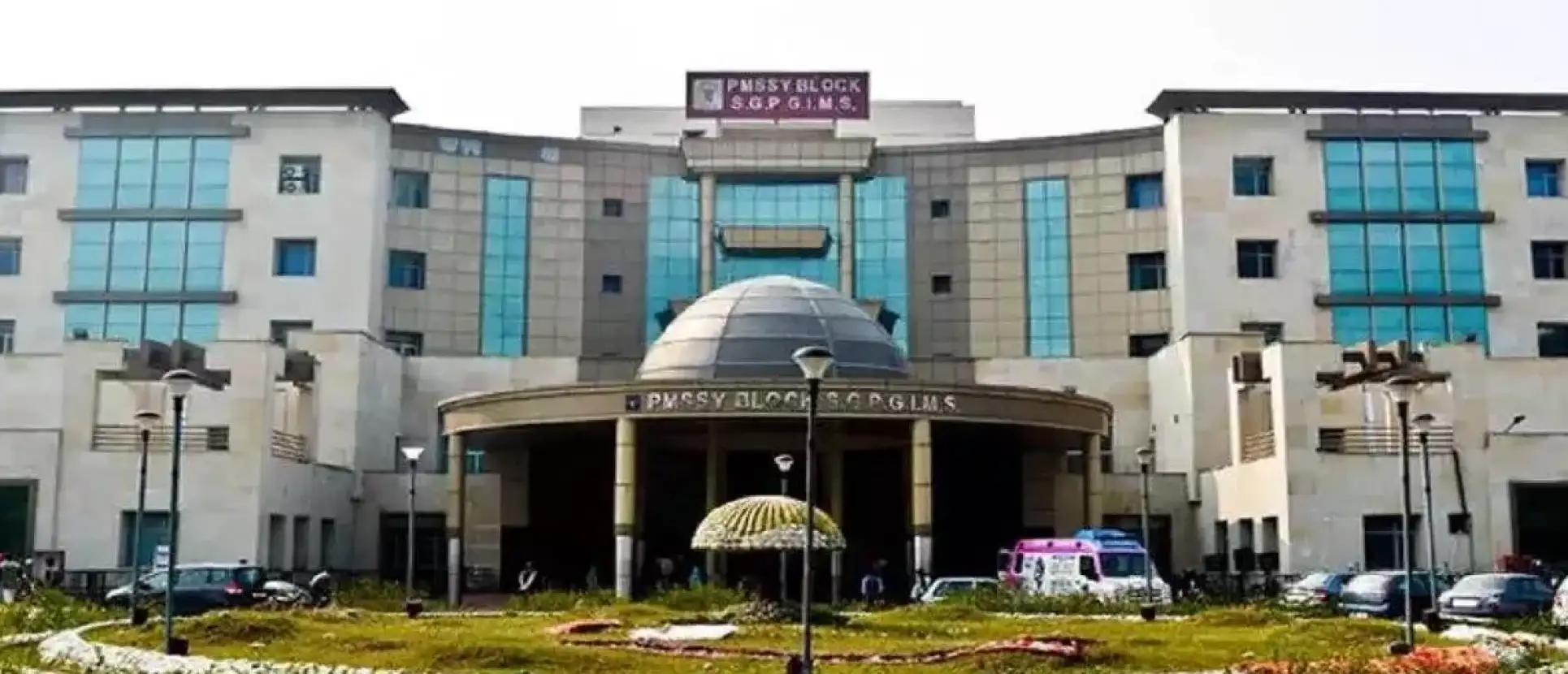
Sanjay Gandhi Post Graduate Institute of Medical Sciences (SGPGIMS) is all set to foray into AI-enabled healthcare, with its director Prof Radha Krishan Dhiman outlining plans to deploy AI to augment clinical care, efficiency and scalability at the institute.
In its journey through four decades, SGPGIMS has grown as a tertiary care and medical education leader. Further, its standing is consistently improving across national benchmarks like NIRF and NAAC; the institute now seeks to redefine its role in the healthcare system with advanced technologies and digital health initiatives.
In a recent event, director Prof Radha Krishan Dhiman gave emphasis on Artificial Intelligence being at the core of the institute's future vision. "The role of AI is increasing the pace of development in all fields at a speed much beyond our imagination," he said, noting that sustained investments by the Union and state governments were aimed at achieving the goals of 'Viksit Bharat' and 'Viksit Uttar Pradesh' by 2047.
"Healthcare cannot be left behind in this race. Hence, SGPGI aims to venture into AI in healthcare, to make existing healthcare safer, faster, more accurate, and scalable for the brighter future of India," he said.
The AI initiative forms part of a larger project to raise the status of the SGPGIMS from a tertiary to a quaternary healthcare centre.
"By definition, we are a tertiary care centre. But the time has come for the SGPGI to raise the bar and become a quaternary health-care centre," Prof Dhiman said, adding that quaternary care engages high-end medical equipment, skilled human resources, and mission-critical research infrastructure.
He added that SGPGIMS already has the capacity to function as a final referral destination for complex and critically ill patients.
"SGPGI has all the elements to function as the final referral destination for the sickest and most complex patients, offering technologies such as proton therapy, ECMO, advanced neuro-intervention, precision oncology, and cutting-edge cellular therapies," he added, saying this transition would align the institute with leading national and global centres.
The expansion of the Uttar Pradesh Medical College Network would be part of the futuristic roadmap, a digital endeavour aimed at providing specialized care beyond the boundaries of physical constraints.
Prof Dhiman further added that the network would be based on a hub-and-spoke model, which would allow the medical colleges to conduct tele-consultation, tele-education, tele-ICU services, and access to central data analysis.
Presently, six institutions are being connected, but the model can be scaled up to as many as 20 colleges. The state government has supported the proposed vision brought out by the institute.
Additional chief secretary of health and medical education Amit Kumar Ghosh said that SGPGIMS is pursuing excellence with clear objectives and assured that the department would extend the required budgetary support for the implementation of the proposed initiatives.
Stay tuned for more such updates on Digital Health News
Follow us