


Researchers Develops AI Tool to Sharpen X-Ray Diagnosis Accuracy
The AI system was trained on over 700,000 images from multiple global datasets. A key differentiator was the integration of detailed physician notes for each image, enabling Ark+ to learn not just from visual data but from expert clinical insights.
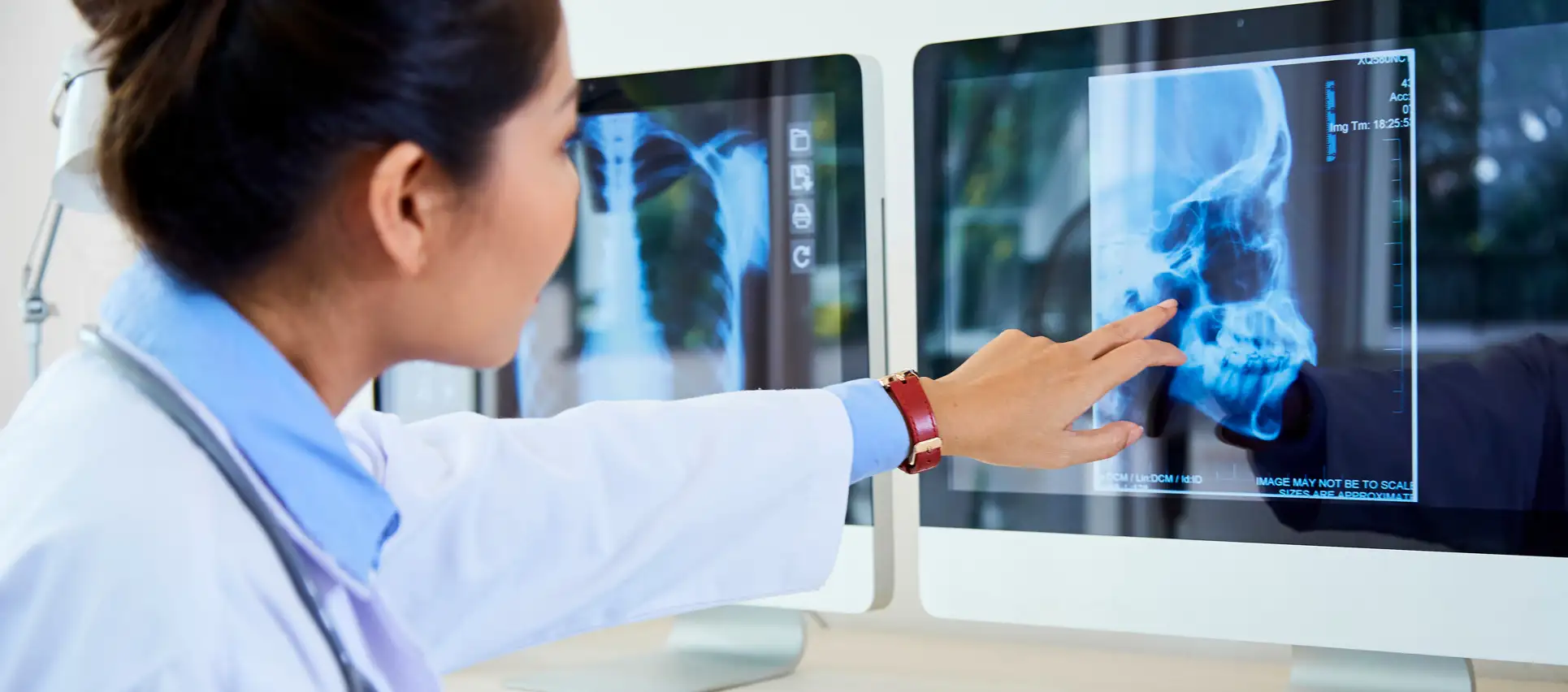
Arizona State University (ASU) researchers have developed a new artificial intelligence tool, Ark+, designed to assist doctors in interpreting chest X-rays with greater accuracy and speed.
The AI system, unveiled in a study published in Nature, aims to improve diagnosis of common, rare, and emerging lung diseases while preserving patient confidentiality.
“Ark+ is designed to be an open, reliable and ultimately useful tool in real-world healthcare systems,” said Jianming Liang, lead author of the study and professor at ASU’s College of Health Solutions.
In proof-of-concept tests, Ark+ demonstrated superior diagnostic performance, identifying conditions from pneumonia and tuberculosis to COVID-19 and avian flu, outperforming proprietary AI tools developed by major tech players like Google and Microsoft.
The AI system was trained on over 700,000 images from multiple global datasets. A key differentiator was the integration of detailed physician notes for each image, enabling Ark+ to learn not just from visual data but from expert clinical insights.
“You learn more knowledge from experts,” said Liang. “And pretty much, we were thinking of a new way to train AI models with numerous datasets via fully supervised learning.”
Unlike conventional AI models relying on self-supervised learning, Ark+ uses fully supervised learning, making it more accurate in identifying both common and rare diseases, even when limited data points are available. The AI can also adapt to detect new conditions without full retraining.
The system’s open-source nature allows other researchers and hospitals worldwide to access, customize, and deploy Ark+ for their local clinical needs.
“By making this model fully open, we’re inviting others to join us in making medical AI more fair, accurate and accessible,” Liang added. “We believe this will help save lives.”
The team plans to extend Ark+’s capabilities to other imaging diagnostics, including CT and MRI scans, with the goal of improving healthcare equity and diagnostic outcomes globally.
Stay tuned for more such updates on Digital Health News
Follow us