Philips Advances AI-led Healthcare Innovation, Unveils Latest Technologies in Bengaluru
Philips has also extended AI into ultrasound and enterprise informatics, using image augmentation and data integration to support earlier detection and more confident clinical decisions.
Philips has advanced the Bengaluru campus at the forefront of AI-driven healthcare innovation by offering state-of-the-art imaging and software solutions that shorten scan time, simplify clinical workflows, and widen access to quality diagnosis in the resource-constrained Indian health system.
Philips says these advances are raising patient comfort, helping clinicians manage growing workloads, and addressing some of the long-standing gaps in healthcare delivery in India.
Over nearly three decades, the Bengaluru innovation campus of Philips has grown into a core software and AI development hub, claiming a sizeable chunk of the company's global output in this segment.
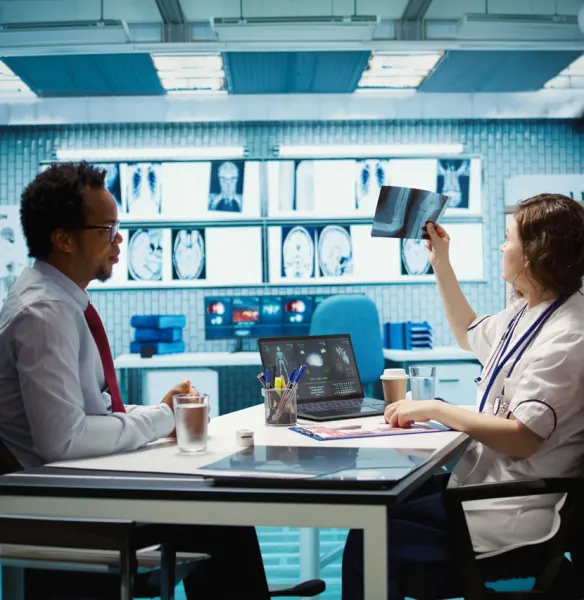
Recently, Philips introduced a new generation of AI-powered cardiac magnetic resonance solutions aimed at simplifying complex image capture workflows.
Standard cardiac views can be planned more automatically, acquisition is faster, imaging without breath-hold is possible, and single-beat data capture is enabled to reduce overall examination time and variability.
“In a cardiac scan, doctors require 12 to 13 views of the cardiac anatomy. Just for its planning, it takes 7 to 8 minutes. Using an AI algorithm, standard views required for quick diagnosis can be ascertained, and those 7-8 minutes reduced to 30 seconds. This is ‘SmartHeart’,” the company explains.
“In terms of our MRI product, almost 100% of the software-related work happens around Bengaluru. Similar is the case with enterprise informatics - bringing information and data exchange across hospitals and devices,” says Arvind Vaishnav, Head of Philips Innovation Campus, Bengaluru, noting that AI is increasingly embedded across the portfolio.
“Close to 30% of all data generated globally originates from healthcare. The challenge is to harness it productively. Hence, AI today also refers to the ‘Age of Intelligence, ” Vaishnav says, adding that automation can free clinicians’ time for direct patient care amid a projected global shortage of healthcare workers.
According to Philips’ Future Health Index 2025 – India report, the domestic healthcare AI market is expected to reach $1.6 billion by the end of the year, with Indian patients and clinicians expressing higher optimism about AI than many global counterparts. Yet access challenges persist, with appointment delays and staffing shortages affecting service delivery.
“Diagnosis is the starting point,” says Bharath Sesha, Managing Director, Philips Indian Subcontinent. “India will be at the forefront of providing AI-enabled access to care,” he concludes.
Philips has also extended AI into ultrasound and enterprise informatics, using image augmentation and data integration to support earlier detection and more confident clinical decisions.
Stay tuned for more such updates on Digital Health News
Follow us