



Meenakshi Super Speciality Hospital Introduces Toumai Robotic Surgical System
The new platform is intended to support surgeons in performing complex procedures with enhanced precision, control, and visualization.
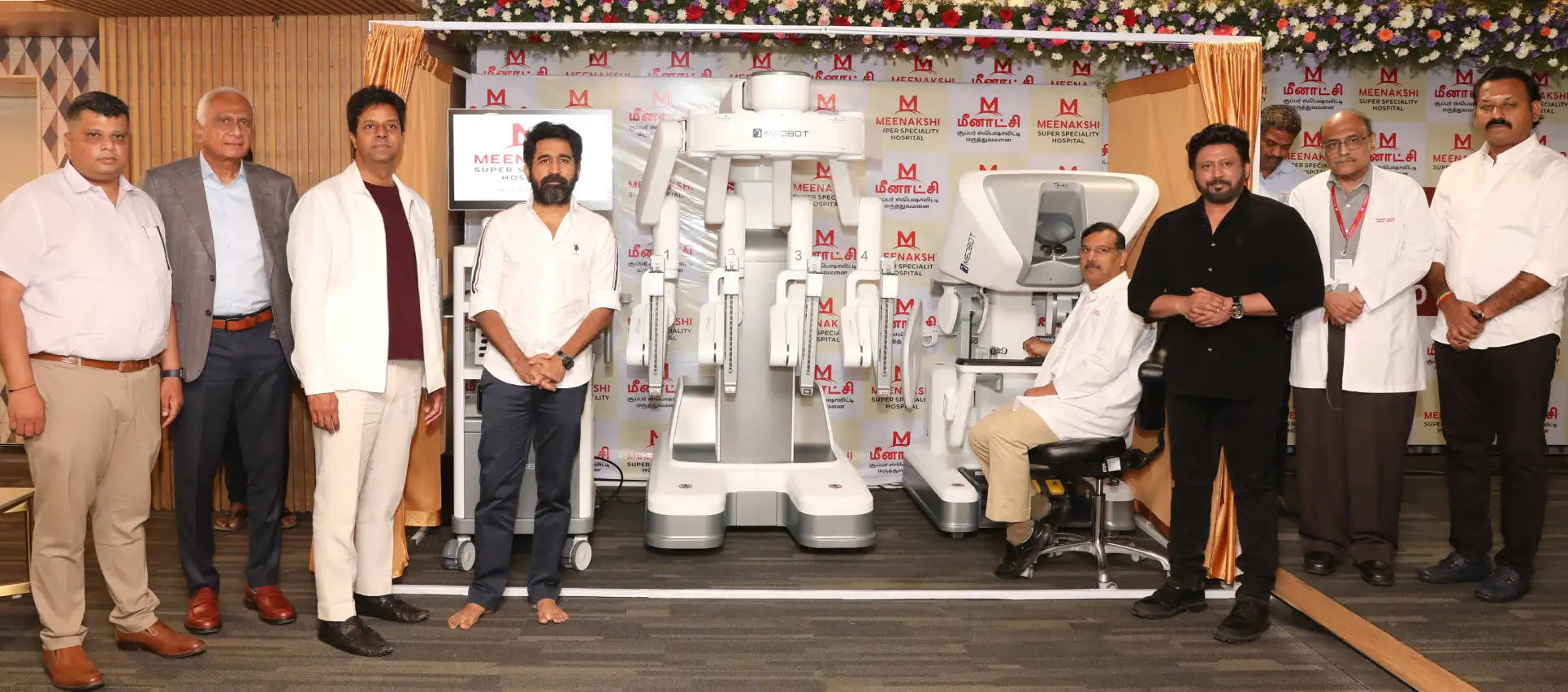
Meenakshi Super Speciality Hospital has introduced the next-generation Toumai MT-1000 Pro Robotic Surgical System in Madurai, expanding its capabilities in minimally invasive surgery across multiple clinical specialties.
The new platform is intended to support surgeons in performing complex procedures with enhanced precision, control, and visualization.
The platform is expected to support a wide range of complex procedures across gastrointestinal, hepatobiliary, urology, gynaecology, thoracic, breast, thyroid and paediatric surgery.
According to the hospital, the system combines immersive high-definition three-dimensional visualisation with highly dexterous robotic instruments and advanced imaging technologies to assist surgeons during intricate procedures.
Commenting on the latest development, Dr. S. Gurushankar, Chairman, Meenakshi Mission Hospital & Research Centre, said, “For the past 10 years, robotic surgery has been an integral part of our commitment to delivering advanced surgical care. The addition of the Toumai MT-1000 Pro Robotic Surgical System marks the next chapter in this journey, further strengthening our capabilities with next-generation robotic technology.”
“By combining advanced robotics with the expertise of our surgeons, we aim to deliver safer surgeries, faster recovery, and better clinical outcomes. With its future-ready capabilities, this platform also opens new possibilities for remote surgical collaboration and expands access to advanced care. This is another significant step towards making cutting-edge healthcare accessible to the people of South Tamil Nadu.”
According to the hospital, the enhanced three-dimensional visualization and wristed instruments are expected to help surgeons preserve vital nerves and delicate structures during complex procedures.
The robotic-assisted surgery enables procedures to be performed through small incisions, with the robotic system fully controlled by the operating surgeon from a dedicated console.
The technology translates the surgeon's hand movements into precise instrument actions while filtering hand tremors, supporting greater precision during complex procedures.
The hospital further stated that the system is expected to benefit patients in several ways, such as smaller incisions, reduced blood loss, lower risk of infection, shorter hospital stays, and faster recovery, depending on the patient's clinical condition and the procedure performed.
The platform combines ultra-low latency, master-slave control technology, and highly dexterous robotic instruments to faithfully translate the surgeon’s hand movements into precise instrument actions.
Additional features include an ergonomically designed surgeon console, laser-assisted smart docking, and an integrated full-HD imaging platform designed to further enhance surgical accuracy, efficiency, and surgeon comfort.
The system also incorporates advanced image processing with real-time ICG fluorescence imaging, vessel enhancement, and smoke removal to improve visualisation of critical anatomical structures during surgery.
It is equipped with force-sensing technology for delicate tissue handling and is designed to support a wide range of complex procedures.
The platform is also enabling future remote surgical collaboration through high-speed network connectivity.
Speaking on the latest technology, Dr. Ramesh Ardhanari said, “The robotic platform can be used across multiple specialties, including gastrointestinal surgery, hepato-biliary and pancreatic surgery, urology, gynaecology, thoracic surgery, bariatric surgery, hernia surgery and several complex cancer procedures. It is particularly valuable for operations requiring exceptional precision in confined anatomical spaces.”
Stay tuned for more such updates on Digital Health News
Follow us