

More Time for Clinical Interpretation: How NewMedd Diagnostics Uses Somatiq for PET-CT Reporting
NewMedd Diagnostics handles more than 2,000 scans a month across Bengaluru and Mysuru, according to Dr. Murali Nadig, spanning PET-CT, cardiac imaging, general nuclear medicine, CT, MRI and specialised radiology. Since July 2025, the practice has used Somatiq in its reporting workflow, where it organises patient histories, supports report preparation and flags inconsistencies before sign-off.
At NewMedd Diagnostics, the collaboration with Somatiq is shaped by the demands of a busy imaging practice: complex patient histories, different reporting styles and cases that need priority attention. The aim is to make specialist time count.
NewMedd Diagnostics | Bengaluru and Mysuru | Using Somatiq since July 2025
“I am spending more time seeing the images rather than the documents.”
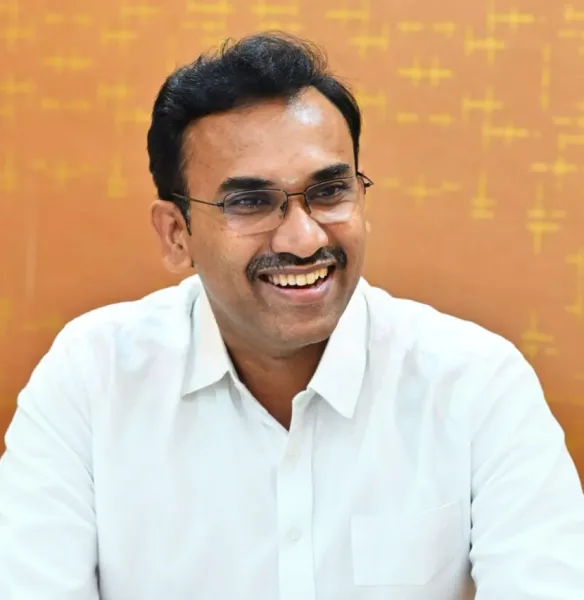
For Dr. Murali Nadig, Medical Director at NewMedd, that is one of the clearest benefits of using Somatiq at NewMedd Diagnostics. Keeping reports moving while giving complex studies the attention they need is a daily priority for the practice.
NewMedd handles more than 2,000 scans a month across its Bengaluru and Mysuru practice, according to Dr. Nadig. Its work spans oncological and non-oncological PET-CT, cardiac imaging, general nuclear medicine, CT, MRI and specialised radiology, alongside theranostics and specialist consultations. The workload varies, and so does the time each case needs.
Dr. Nadig has experience both in clinical practice and in building nuclear medicine services. He trained at Mysore Medical College and earned his MD in Nuclear Medicine at AIIMS, New Delhi, before establishing Scintilon SPECT Scans in Bengaluru in 2008. As NewMedd’s Medical Director and Chief Nuclear Medicine–PET-CT Consultant, he has helped build its practice across the two cities and has been part of its clinical leadership for more than a decade.
NewMedd has used Somatiq since July 2025. Its physicians have helped shape the platform around the way they work, from organising the patient’s history to preparing the report for review.
A Clearer History Before the Report
For patients returning for PET-CT or other specialised studies, the current examination may be one point in years of investigation and treatment. Earlier imaging, pathology reports, and records of surgery, chemotherapy or radiotherapy all help the physician understand the question the new scan needs to answer.
The information may be available, but assembling it into a useful sequence takes time. At NewMedd, uploaded records are organised by Somatiq’s AI into a chronological clinical summary. The physician can review what the available documents say happened, and when, alongside the current study.
This is particularly useful in complex oncology and theranostic care, where several earlier studies and multiple lines of treatment may inform the interpretation. An accessible history allows the physician to spend less time reconstructing that sequence and more time considering what it means for the images in front of them.
Reporting that Fits the Physician
NewMedd’s range of services brings different reporting requirements. An experienced physician also has an established sequence for reviewing a study, a structure for presenting findings and language they prefer. Making the software familiar to that reader has been an important part of the collaboration.
Dr. Nadig’s own reports helped shape Somatiq’s support for his structure and wording. He describes his PET-CT report as “almost standardised”, with consistency developing around a style he recognises. The platform also keeps pace with his dictation, reducing the work involved in turning his interpretation into a report.
His feedback includes a practical caution: clicking through each finding may help a doctor in training, but can slow an experienced reader. The software has to accommodate the reader’s experience as well as the study being reported.
Guideline references and browser-based image access sit within the reporting environment, bringing more of the supporting material into the same workspace and reducing the need to move between separate systems.
Making Room for Priority Cases
In a busy practice, reporting priorities can change through the day. Some cases need an urgent clinical decision. Patients travelling from outside Bengaluru or Mysuru may need their reports before they leave. These requirements have to be accommodated alongside the routine reporting list.
Dr. Nadig says Somatiq has helped NewMedd maintain turnaround times while accommodating these needs. By reducing the work of gathering and formatting information, the platform leaves physicians more room to respond to those priorities.
An Additional Check Before Sign-off
Before a report is finalised, Somatiq can check the draft against the available patient history and bring inconsistencies back to the physician for clarification. These may include a mismatch between the findings and impression, a laterality discrepancy or a statement that conflicts with the documented history.
The value of the check is in making an unresolved point visible while the physician can still address it. When information is unclear, the workflow is designed to ask for clarification.
“Healthcare software has to earn a doctor’s trust. It should be clear about the information it uses, where there is uncertainty and why it is asking a question. That transparency helps the doctor assess its suggestions and decide what belongs in the final report,” says Naveen Kumarsami, co-founder and Chief of AI at Somatiq.
The physician supplies the clarification, reviews the final text and signs the report. Dr. Nadig cautions against allowing software support to replace the physician’s own review of the images.
Dr. Nadig describes the effect on the working day in practical terms.
“It has also helped us maintain turnaround times and accommodate urgent requirements. Most importantly, the physician remains firmly in control, with more time available for careful image interpretation.”
Dr. Murali Nadig, Medical Director, NewMedd Diagnostics
About Somatiq
SOMATIQ is operating system for radiology. Every scan is stored, read, reported and billed on one AI-native platform, so radiologists spend their time on the one thing only they can do: Diagnose. More at somatiq.ai
Stay tuned for more such updates on Digital Health News
Follow us