Mahajan Imaging & Labs Introduces AI-Integrated Blood Test for Early Alzheimer’s Diagnosis
The offering is part of the company’s Dementia Diagnostic Series and is aimed at enabling earlier and more accurate detection of Alzheimer’s-related biological changes in Indian clinical practice.
Mahajan Imaging & Labs has expanded its dementia diagnostics portfolio with the introduction of an AI-integrated blood biomarker test for Alzheimer’s disease, supported by a structured PET and MRI imaging pathway.
The offering is part of the company’s Dementia Diagnostic Series and is aimed at enabling earlier and more accurate detection of Alzheimer’s-related biological changes in Indian clinical practice.
At the core of the new approach is the pTAU217/β-Amyloid1-42 blood biomarker test, which has received approvals from the US Food and Drug Administration and India’s Central Drugs Standard Control Organisation. The test allows clinicians to identify Alzheimer’s pathology before the onset of advanced cognitive symptoms, marking a shift away from symptom-led diagnosis toward biology-first assessment.
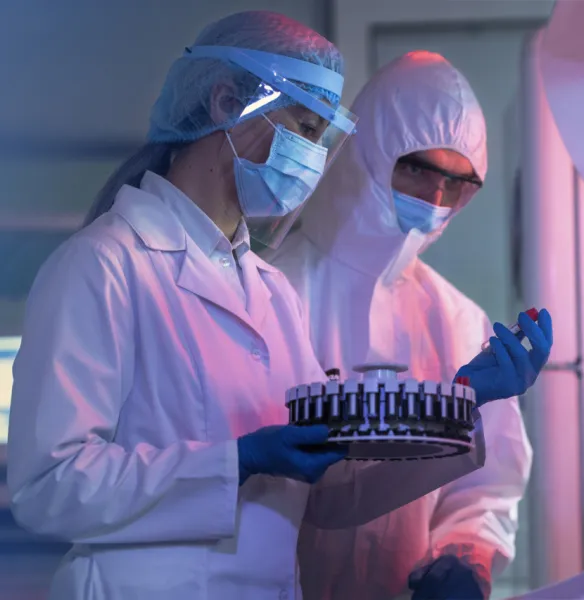
The diagnostic pathway combines blood-based biomarker testing with AI-enabled MRI brain imaging using a dementia-specific protocol, and FDG PET imaging where clinically indicated. According to Mahajan Imaging & Labs, patients begin with the blood biomarker test as the primary decision-making tool, followed by imaging studies in cases with positive or borderline results to improve diagnostic clarity and guide further care.
The expanded Alzheimer’s diagnostics framework was formally introduced at a scientific symposium hosted by Mahajan Imaging & Labs in Gurugram on January 18, 2025. The event brought together more than 40 neurologists and imaging specialists to discuss the role of combined laboratory and imaging diagnostics in reshaping Alzheimer’s care in India. The symposium focused on the clinical integration of next-generation blood biomarkers with PET and MRI imaging.
India currently has an estimated 8.8 million people aged 60 and above living with dementia, with Alzheimer’s disease accounting for the majority of cases. Projections suggest this number could nearly double over the next decade, increasing pressure on healthcare systems to adopt earlier and more precise diagnostic tools.
Until recently, Alzheimer’s biomarker testing relied largely on cerebrospinal fluid analysis, which requires invasive lumbar puncture procedures. Plasma-based testing now enables clinicians to obtain similar biological insights through a standard blood test, improving patient acceptability and access. Mahajan Imaging & Labs stated that it now performs the pTAU/Aβ1-42 test at its reference laboratory, allowing faster turnaround times and closer integration with imaging findings.
The company noted that MRI imaging continues to play a key role in evaluating structural brain changes and excluding alternative causes of cognitive symptoms, while PET imaging is reserved for cases where it adds clear clinical value. The integrated model is intended for individuals over 50 with memory concerns, patients with mild cognitive impairment, those with a family history of Alzheimer’s disease, and cases where access to advanced imaging may be limited.
Stay tuned for more such updates on Digital Health News
Follow us