Healthcare Leaders Flag Digital Security, GST Relief, AI Adoption Ahead of Union Budget 2026–27
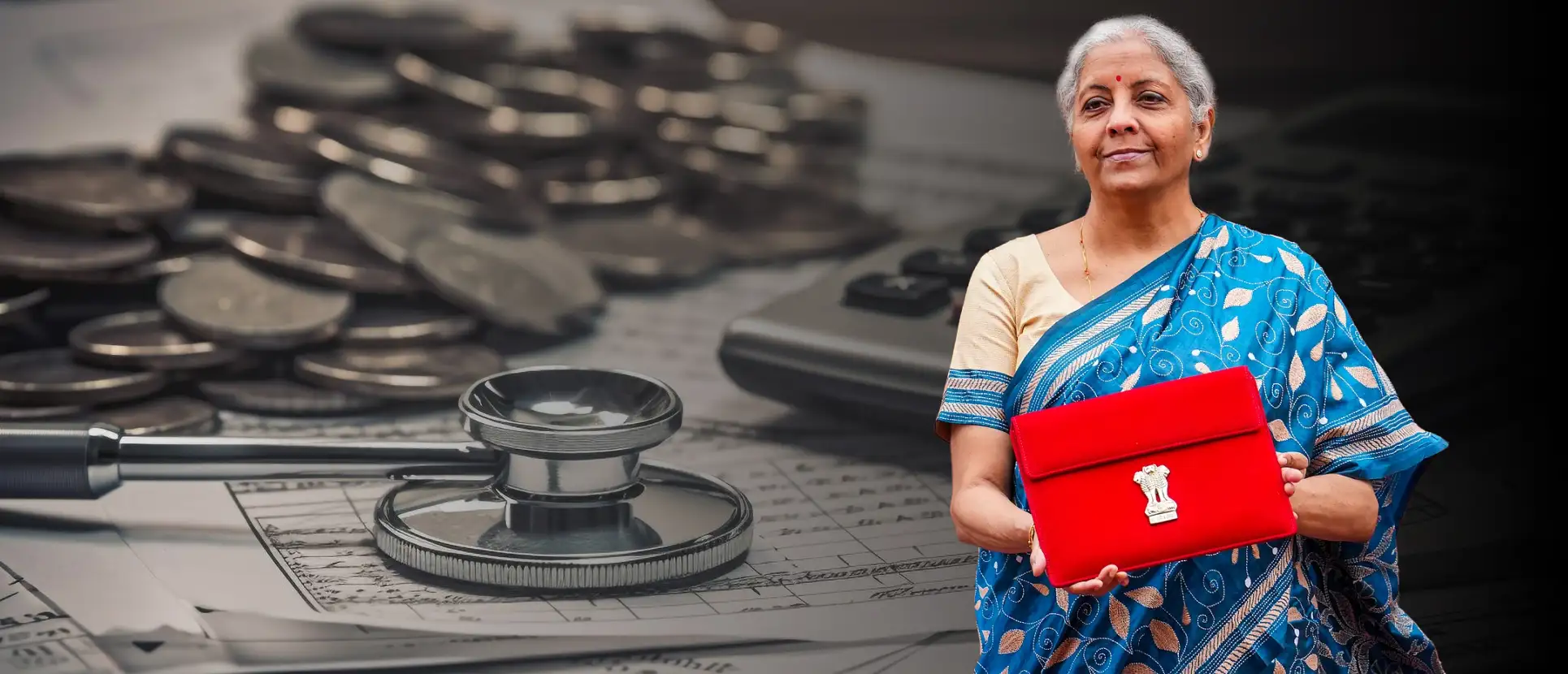
Finance Minister Nirmala Sitharaman is scheduled to table the Economic Survey on January 29 and present the Union Budget on February 1, setting the stage for policy direction across key sectors, including healthcare.
The Budget Session of Parliament has commenced today, with President Droupadi Murmu addressing the joint sitting of the Lok Sabha and Rajya Sabha.
Finance Minister Nirmala Sitharaman is scheduled to table the Economic Survey on January 29 and present the Union Budget on February 1, setting the stage for policy direction across key sectors, including healthcare.
As anticipation builds, healthcare leaders have highlighted priorities spanning digital infrastructure, cybersecurity, taxation reforms, and equitable access to advanced medical technologies. Emphasis is being placed on sustaining the momentum of healthcare digitisation while addressing structural and cost-related challenges across urban and non-urban regions.
Sharing expectations from the digital health ecosystem, Surjeet Thakur, Founder and CEO, TrioTree Technologies, said, "India’s healthcare ecosystem is rapidly transitioning toward a digital-first future, where technology is no longer a support function but the foundation of patient care, clinical accuracy, and operational efficiency. The government’s continued investment in healthcare infrastructure has laid a strong base, and the next phase must focus on accelerating secure digital adoption across the country."
He further underlined the importance of cybersecurity as digital adoption scales. "As hospitals increasingly deploy HIS-EHR platforms, AI-driven diagnostics, and connected care solutions, cybersecurity and data protection must become a core pillar of healthcare policy. We are already seeing hospitals raise cybersecurity spending from nearly 8–10% of IT budgets today to an estimated 12–15% by 2027, reflecting the growing threat landscape and regulatory expectations," he said.
Highlighting expectations from Union Budget 2026–27, Thakur added, "We look forward to dedicated funding for healthcare IT cybersecurity, targeted subsidies to enable digital transformation in Tier-2 and Tier-3 regions, and rationalised tax frameworks that make advanced healthcare technologies affordable for smaller facilities."
From the perspective of specialty care, Dr. Arun Singhvi, MD and Group CEO, ASG Eye Hospital, noted the impact of recent tax reforms. "The landmark GST 2.0 reforms implemented in September 2025 have provided a significant fillip to the healthcare industry. The reduction in GST rates from 12% to 5% on ophthalmic equipment is a visionary step that directly supports ASG Eye Hospital's ‘Vision 2030’ to democratize affordable and accessible eye care pan-India," he said.
Dr. Singhvi pointed to persistent cost pressures due to embedded taxes, stating, "Since clinical services currently remain in the ‘exempt’ category, hospitals are unable to avail Input Tax Credit (ITC). Granting ‘zero-rated’ status to healthcare or introducing a minimal GST slab with full ITC eligibility would unlock an estimated 5–6% of costs currently trapped within the supply chain."
He also called for customs duty relief on high-precision equipment and policy support for AI adoption, noting the high costs associated with advanced diagnostic technologies, AI software, and computing infrastructure. He further stressed the need for interest subsidies, expanded PLI coverage for ophthalmic equipment, and incentives for local manufacturing to reduce dependence on imports.
On cancer care, Prof Dr Raj Nagarkar, Chief of Surgical Oncology & Robotic Services and Managing Director - KIMS Manavata Hospitals, HCG Manavata Cancer Centre and Six Sigma, Nashik, said, ''As we approach the Union Budget 2026–27, healthcare, especially cancer care, must be viewed as a long-term national investment rather than a cost. India is witnessing a steady rise in cancer incidence and addressing this requires a strong focus on early detection, affordability and decentralised access to quality care. Also, the Government’s recent steps to rationalise GST on life saving drugs, medical equipment and devices have been encouraging, and we hope this momentum continues. Further reduction in duties on advanced technologies such as robotic surgery systems, AI-driven diagnostics and precision oncology tools will help bring world-class treatment within reach of patients beyond metro cities. However, equally important is strengthening the ecosystem with timely reimbursements under Government health schemes, investment in trained manpower and support for hub-and-spoke cancer care models that link district centres with specialised institutions. Cancer care is multidisciplinary by nature and cannot be scaled through infrastructure alone. A forward-looking Budget that supports innovation; be it robotic-assisted surgery, AI-enabled imaging, cell and gene therapies or indigenous diagnostics, while ensuring affordability for patients, will go a long way in transforming India’s cancer care landscape and improving outcomes for millions.'
On broader healthcare and skill development priorities, Dr. Syed Samar Abbas, Director, IGMPI, said, "As the Union Budget 2026–27 comes closer, there’s a real chance to make India's healthcare, life sciences, and skill development sectors even stronger." Referring to the previous allocation, he added, "In the last Budget, the healthcare sector was allocated nearly ₹98,300 crore, showing a clear focus on expanding infrastructure and services."
He emphasised sustained investment in research, quality systems, and skill development, stating that targeted allocations toward preventive screening and disease resilience would strengthen workforce readiness while reducing import dependence.
Focusing on preventive and personalised healthcare, Dr. Debojyoti Dhar, Cofounder and Director, Leucine Rich Bio (BugSpeaks), said, "As we approach the Union Budget 2026–27, the healthcare sector is at a crucial moment. India currently spends around 2.2% of GDP on public health, still below the National Health Policy target of 2.5%." He called for incentives for preventive and personalised healthcare, particularly microbiome-based diagnostics, along with lower GST on clinical diagnostic services and dedicated funding for national nutrition programmes.
Highlighting the HealthTech ecosystem, Satish Kumar Singh, Founder, MY LYF CARE, said, "Building on the momentum of last year’s enhanced healthcare allocation, which emphasized the digital health infrastructure, telemedicine, and technology-driven service delivery, we see the Budget 2026 as a major accelerator for India's HealthTech ecosystem."
He further noted the importance of AI-based diagnostics, integrated digital health platforms, increased R&D funding, and clearer GST and technology adoption incentives to bridge the urban-rural healthcare divide and strengthen domestic manufacturing.
Stay tuned for more such updates on Digital Health News
Follow us