CoWIN: Building a Population-Scale Digital Platform for India’s COVID-19 Vaccination
CoWIN, or the COVID-19 Vaccine Intelligence Network, is a state-of-the-art digital vaccination platform developed by the Government of India as a Digital Public Good (DPG). A system that touched over a billion lives to help combat the pandemic, CoWIN and its story is one that is close to my heart and one that has made this country proud the world over.
Therefore, here is the story of CoWIN, from my vantage point.
How it started
In March 2020, I was working as Chairman of Telecom. Regulatory Authority of India (TRAI). COVID had struck the entire world. We were all working from home under the lockdown. I was also preparing for retirement after serving in the Government for 42 years.
In April 2020, the Govt constituted a seven-member committee for developing and implementing a citizen App technology platform for combating COVID-19. I was one of the members of that Committee.
During the deliberations of that Committee, I realised that while we will have vaccines in near future, administration of the same will become fairly challenging, given the diversity of our country, unless we prepare a robust and scalable digital platform for the same. This was essential for an optimized utilization of resources and maximized efficiency to ensure each resident in India had access to the COVID-19 vaccines.
I presented the idea to the Hon’ble PM in June 2020. He appreciated and directed the Health Ministry to create a task force to get the work of digital platform implemented.
I retired from TRAI in September 2020 and was in my village when, in the beginning of January 2021, I received a call from Delhi – asking me to come back and head the development and launch of CoWIN.
My review of the existing software revealed that it will not meet our requirements and will have to be completely re-written and re-designed. Obviously, this will take some time and the PM was. going to launch the vaccination drive, in a couple of days, on 16th of January 2021.
I wanted to set the expectations right and hence I met the PM on 14th January. I explained to him that the existing software will be used on 16th January and while it may work initially, it was not going to scale up. I also told him that it will take some time before we come up with new software. I was afraid that the PM would be disappointed about the readiness of the software. However, to my pleasant surprise, he was very supportive and told me that we can take another month to deploy the software as the second dose will happen after twenty-eight days.
In that meeting PM also asked me to make the software of international standard and gave his ideas as to how this backbone could later be used for Universal Immunization Program (UIP), blood donation system and even organ donation purposes. I gave him all the assurances, though I was not sure whether I would be able to come to his expectations!
With the help of a small team of five members, mostly the people who had worked with me in Aadhaar, we developed CoWIN in a record time, with ample consideration given to its scalability, modularity, and interoperability.
It was on January 16, 2021, that our Hon’ble Prime Minister unveiled CoWIN along with the launch of national COVID-19 vaccination campaign, the largest in the World.
However, the development of CoWIN did not end with this launch. This was merely the end of the beginning of a story that touched over a billion lives in less than 12 months.
Roll out & Scale up
Bearing the load of vaccinating one-sixth of humanity is not a trivial task for any digital system. Scale was of utmost importance in achieving this feat. To begin with, CoWIN was doing about 200,000 doses per day. However, it was known to us that we would soon have to scale this up 100 times. The strength of a technical system to sustain heavy traffic is often overlooked due to the lack of features and glamour of the user interface. This is an area where CoWIN has not received its due share of credit. For a system that cannot afford to fail, CoWIN’s ability to sustain a traffic of millions of users daily is commendable.
As the scale of the platform in terms of registered users increased multifold, the platform’s sustainability is what set it apart as a digital vaccination platform. The country set a global feat of vaccinating 2.5 crore individuals in a day, and CoWIN backed this feat from strength to strength, clocking in over 4 billion hits on its servers that day. Additionally, CoWIN has been the fastest digital platform to reach every 100 million milestone, followed by the coveted one billion mark, which only a handful of platforms have been able to achieve globally, and none has been able to do so in such a short time.
Challenges & Evolution
However, achieving this scale came with its fair share of challenges and obstacles. Countering these challenges and obstacles added to the robustness of the platform, making it more accessible to the people of this country.
To begin with, in phase one of vaccination, the government prioritized the most vulnerable and focused on vaccinating the healthcare workers (HCWs) and Front-line workers (FLWs). Lists with names and phone numbers were shared for bulk upload. At this point in time, there was no online appointment system. HCWs and FLWs were sent text messages with defined slots at specific facilities for vaccination through CoWIN.
However, the first challenge was unclean data and incorrect phone numbers. As a result, individuals were not receiving text messages. Furthermore, due to unfavourable scheduling, the turn-out was low and this supply-driven approach resulted in lower efficiency of vaccination centres and at times wastage of vaccine vials.
CoWIN data helped us see that this approach would not work, especially when it would be applied to the public at large. This resulted in the first fundamental change in the vaccination policy – demand-driven vaccination. The government can make vaccines available, but individuals must choose to take them, inputting their own data for veracity.
Through the initial phases of the vaccination program, the booking system was criticized heavily, with a lot of noise coming in from different places. However, the platform enabling the administration of 1 billion doses in a record time of nine months put all nay-sayers and doubters to rest. While dealing with these external pressures, we only focused on letting the prowess of our technology do the talking.
Further, it was initially decided that the second dose of the vaccine would be administered at the same centre to ensure that the individual gets the same vaccine. On deliberation, we realized restricting citizens based on location for second dose would reduce compliance and increase complications in administration. Hence, the second fundamental change brought to the vaccination policy was flexibility in booking second appointment at any centre, with continued for the precautionary doses.
In the beginning, most of the media had written off the application. The news of CoWIN glitches became commonplace. Any minor disruption would result in headlines like “Glitches in CoWIN results in disruption in the vaccination process”. However, we knew that what we were following was the right architecture. Minor glitches are part of any software deployment, and they could be set right without any major disruption.
The vaccination coverage kept on increasing. From health workers and frontline workers in the beginning, it went on to cover senior citizens aged 45-60 with comorbidities. Then the scope was increased to everybody from 45 onwards and further to 18+. When the vaccination was opened for the age group 18 to 45, all sorts of tricks were tried to destroy the credibility of the platform. Some tried bots to book the seats while some others tried to accentuate the minor problems to major flaws. Obviously, the team continued to respond to all the emerging challenges.
Once some news was flashed that the personal data of 150 million people was available on the dark-web for sale. It turned out to be a hoax.
Our Certification process was also allegedly questioned by some countries. While they had no problems with India’s vaccination program, they had issues with CoWIN certification process. We claimed that the CoWIN certification process was the most robust one using the latest tools available in technology. Finally, the debate got settled when it turned out that it was not the country but our own media which had invented the story when there were issues of recognition of vaccines being used in India.
Technological Innovation in Healthcare
The architecture of the platform ensured data security, privacy through design and principles such as minimal data collection, privacy-by-design, interoperability, and consented sharing of information.
The guiding principle of ensuring that the system can adapt quickly based on the rapidly changing socio-economic and policy environment was always kept in mind. An open architecture with interoperability was the result of this driving principle. It was anticipated that large hospital networks may choose to use their IT systems for vaccination, and we then saw some States produce their own separate systems. The open APIs helped us to ensure that all systems are talking to each other and there remains a single source of truth.
CoWIN is likely the first government application in the country that allows private actors to connect and deliver the vaccination based on open and standardized APIs. Coupled with the Ayushman Bharat Digital Mission, the API structure of CoWIN has allowed for its repurposing for other healthcare utilities. As we look at a post-pandemic world, CoWIN has already enabled the Universal Immunization Program (UIP) and will also be used for blood donation and organ donation system.
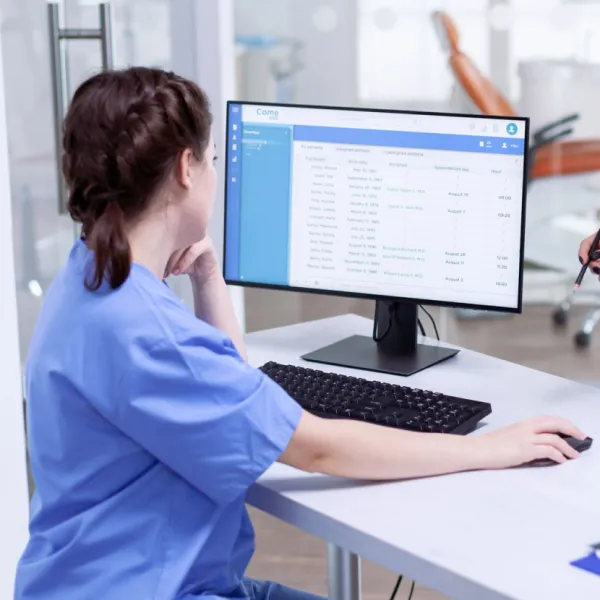
Using the vaccination module of CoWIN as the foundation, CoWIN has been repurposed as a lite-HMIS (DocMitra). It is a Health Management Information system for small clinics where the doctors can publish their available slots for consultation, write prescriptions and digitally sign them. Citizens can make either physical or tele-consultation appointments and digitally pay consultation fees. I believe this will accelerate digitization in the healthcare sector. DocMitra is also part of the Universal Health Interface (UHI), which offers multiple capabilities, including interoperable teleconsultation.
Global Applaud
The prowess of CoWIN didn’t go unnoticed by other nations, as we started receiving requests to implement the platform in other countries for vaccination. The result of this was the hosting of the CoWIN Global Conclave, inaugurated by the Prime Minister on 5th July 2021, which witnessed participation from over 141 countries. The Cooperative Republic of Guyana also signed an MoU for the adoption of CoWIN and was implemented there.
From a global standpoint, one of the modules of CoWIN that has played an instrumental role in allowing all Indians to resume their socio-economic affairs was the certification module. Based on the indigenous DIVOC technology, the module issued vaccination certificates which were digitally verifiable and were tamper-proof. As international travel resumed, our Missions abroad were able to confidently liaise with other nations to allow for the safe passage of our vaccinated citizens without any hesitation. This resulted in acceptance of our vaccination certificates by over 120 nations globally. It was truly something to be proud of that India was one of the first nations issuing a digitally signed and verifiable certificate, as opposed to the hand-written certificate issued by many western counterparts.
India’s efforts also contributed to the adoption of this technology by other Asian neighbors such as Indonesia, Sri Lanka and Philippines. During the G20 Health Assembly, India stood tall due to CoWIN as it played a key role in the development of an international verifier of health credentials hosted by the WHO itself.
Conclusion
Digital Leapfrog of our country is a very inspiring story. Our unique Digital Public Goods (DPGs) and Digital Public Infrastructure (DPI) are truly transformational. Our PM’s Digital India vision to make India a digitally empowered nation and a knowledge economy are giving us huge dividends. Our DPIs like Aadhaar, UPI and JAM trinity are delivering full throttle. Products built on top of these like eKYC, Authentication, Digi Locker, e-Sign, Consent Artefact and eRUPI, collectively described as India Stack are central to our service delivery systems. DBT, PDS, Jan Dhan Accounts, IT Return filing and Digi Yatra are only a small subset of applications driven by India Stack. Other countries are learning from us. Our systems are population scale, inter-operable, frugal, robust, privacy and security preserving, inclusive, open API and open standards and even open source based. They are replicable and unique. Those groups, institutions and countries who were very critical and dismissive about our efforts are now full of admiration for our approach, scalability, and robustness. CoWIN is just one example. ONDC, ABDM Account Aggregator and Digital Credit system are some of those which are going to become commonplace very soon.
Finally, I would conclude by reiterating that CoWIN was the joint effort - of software designers, architects, developers, and data scientists. It was the team's commitment complimented by great political will that aided in forging the success story of vaccinating 1.3 billion Indians against COVID 19.
Stay tuned for more such updates on Digital Health News