Center to Boost Genomics & Metagenomics Surveillance for Emerging Health Threats under One Health Mission
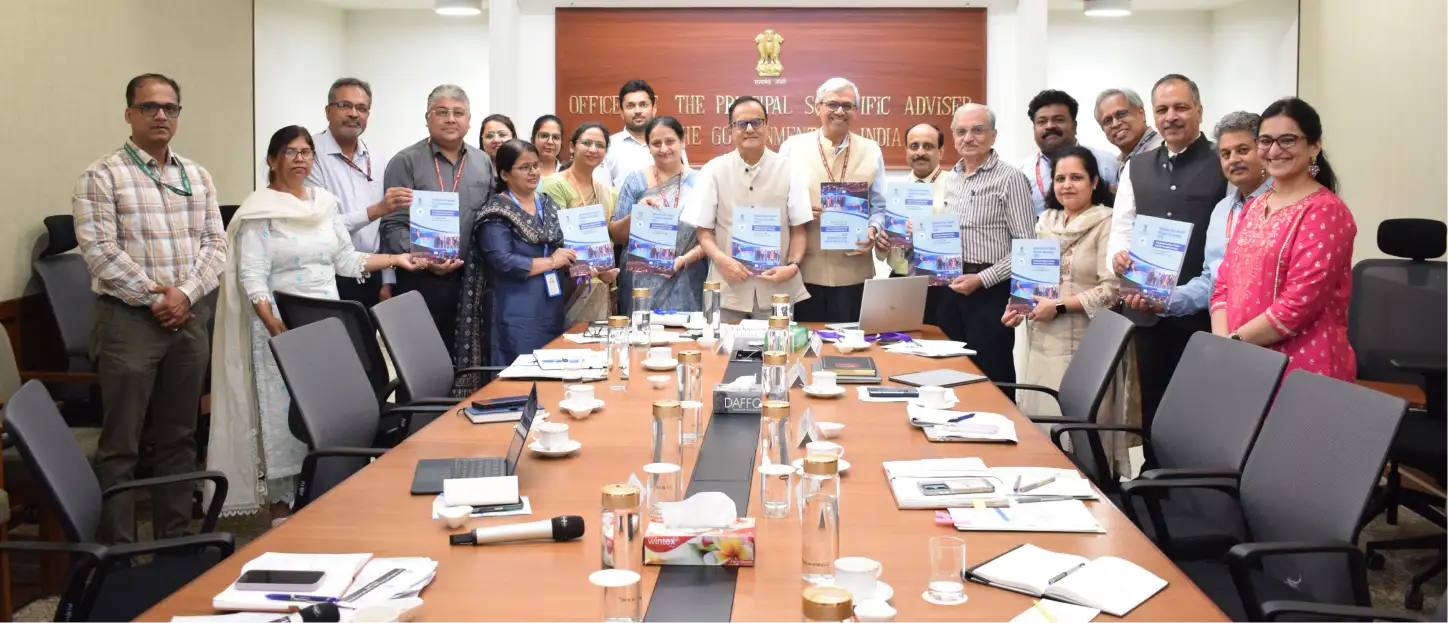
Key focus areas included improving surveillance networks, enhancing laboratory capacity, strengthening data-sharing mechanisms, and ensuring timely detection and response to public health threats.
India is strengthening its public health preparedness through the initiation of genomics and metagenomics-based surveillance networks under the National One Health Mission.
This approach aims to enable early detection of emerging pathogens by integrating advanced genomic tools with cross-sectoral surveillance systems, covering human and environmental health.
The Indian government has recently reviewed its preparedness to address emerging public health challenges during the fifth meeting of the Scientific Steering Committee of the National One Health Mission, chaired by Prof. Ajay K. Sood, Principal Scientific Adviser to the Government of India.
Key focus areas included improving surveillance networks, enhancing laboratory capacity, strengthening data-sharing mechanisms, and ensuring timely detection and response to public health threats.
The committee reviewed progress made under the National One Health Mission and assessed ongoing efforts to strengthen preparedness systems across the country.
The meeting brought together senior officials and experts from key ministries, scientific departments, and research institutions. Among those present were Dr. Rajiv Bahl, Secretary, Department of Health Research and Director General, Indian Council of Medical Research (ICMR); Dr. Parvinder Maini, Scientific Secretary at the Office of the PSA; Dr. M. Ravichandran, Secretary, Ministry of Earth Sciences; and Dr. Ranjan Das, Director, National Centre for Disease Control (NCDC). Representatives from departments including Biotechnology, Science and Technology, Pharmaceuticals, and organisations such as CSIR, DRDO, and the National Security Council Secretariat also participated.
In his remarks, Prof. Ajay K. Sood underlined the importance of coordinated efforts and emphasized the need to strengthen institutional mechanisms to address evolving health challenges. He stated that there is a need for stronger collaboration among stakeholders to improve preparedness and response capabilities. In the concluding session, he stressed that future efforts must focus on “measurable and sustained action on the ground.”
The meeting also highlighted major developments under the mission, including the creation of a Model Governance Framework for States and Union Territories and the expansion of genomics-based surveillance systems. Participants were informed about recent initiatives aimed at improving awareness, capacity building, and stakeholder engagement.
Updates were presented from various technical workstreams. Lt. Gen. (Retd.) Dr. Madhuri Kanitkar shared progress on high-containment laboratory networks, while Dr. N.K. Arora discussed advancements in surveillance systems. Efforts related to data integration were presented by Dr. Vijay Chandru, and developments in medical countermeasures were led by Dr. Renu Swarup and presented by Dr. Nivedita Gupta.
The meeting concluded with a consensus on the need to further strengthen coordination, scale up existing initiatives, and ensure effective implementation of strategies to enhance India’s overall preparedness for future public health challenges.
Stay tuned for more such updates on Digital Health News
Follow us