Apple Expands Hypertension Notifications on Apple Watch in India Amid Rising Heart Health Concerns
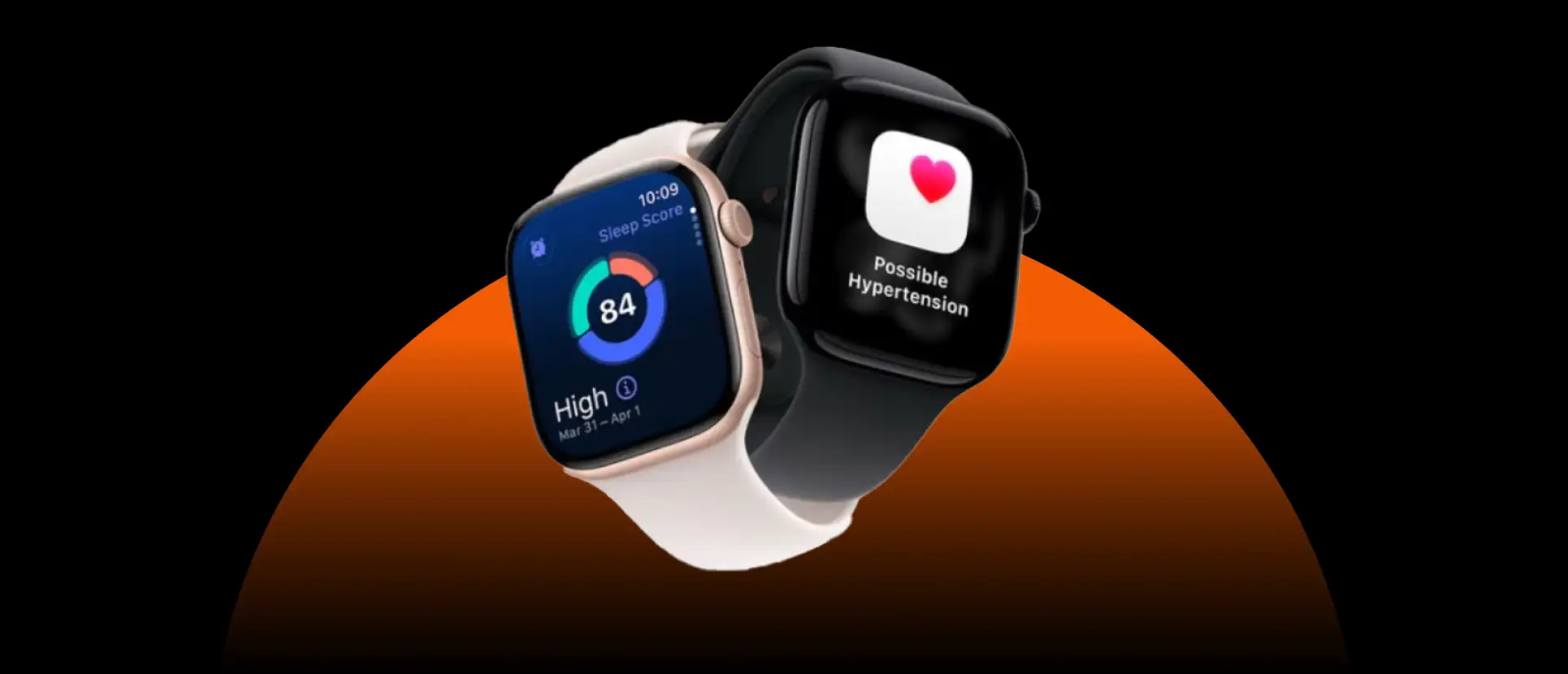
The feature serves as a screening tool rather than a diagnostic device and does not provide real-time blood pressure values or medication monitoring.
Apple has introduced Hypertension Notifications on the Apple Watch in India, a feature aimed at identifying signs of chronic high blood pressure by tracking blood vessel behaviour over time.
The rollout comes at a time when heart attacks are occurring earlier among Indians, with reports indicating a rise in younger individuals experiencing severe cardiac events.
Hypertension affects an estimated 1.3 billion people worldwide, and nearly 40% are unaware they have the condition. The Apple Watch feature does not measure blood pressure directly. Instead, it observes long-term patterns based on cardiovascular signals to detect signs consistent with chronic hypertension.
The notifications are supported on Apple Watch Series 9 or later and Apple Watch Ultra 2 or later.
The technology uses photoplethysmography, or PPG, where the watch collects 60-second samples approximately every two hours when the user is sitting still. These samples pass through a three-stage machine learning system.
A deep learning model trained on data from more than 100,000 participants identifies features in PPG signals. The next stage assesses hypertension risk using linear machine learning models trained on blood pressure data.
A 30-day average is then evaluated against a threshold to determine whether a notification should be sent.
"Each of the individual PPG segments that we look at might not be meaningful in and of themselves, but once we average them all together and look over this 30-day window, that's where we're able to provide notifications that will be meaningful and actionable," said Dr. Adam Phillips, a cardiologist at Apple.
The 30-day observation period accounts for natural fluctuations in blood pressure caused by daily activities, diet and stress. The feature focuses on detecting sustained elevation, which poses long-term cardiovascular risk.
Validation results show an overall sensitivity of 41% and specificity of 92%, with specificity rising to 95% in users with normal blood pressure. For Stage 2 hypertension, sensitivity increases to 54%.
According to Apple, the feature is intended for passive monitoring across a wide population, prioritising accuracy of alerts over broader detection.
"We want to make sure that we have a really low rate of alerts that might not be right," Dr. Phillips said. "When we send an alert to someone, we want to be sure that that alert is right most of the time."
Apple estimates the feature will notify more than one million people globally in its first year who may have previously undiagnosed hypertension. Studies conducted during validation included broad representation across skin tones, including Fitzpatrick Type V and VI.
After adjustments for age and BMI, Apple found no meaningful accuracy differences based on race, ethnicity or skin tone.
The feature is designed for adults aged 22 and older who have not been diagnosed with hypertension and is not intended for pregnancy, reflecting the cohorts used in model training.
"We made sure to have a really broad representation of participants across all demographics, and then we compared performance during development and during validation," Dr. Phillips said. Accuracy variations linked to age and BMI aligned with known hypertension trends.
When a notification is triggered, users are advised to verify their blood pressure using standard cuff-based measurements, following protocols consistent with American Heart Association recommendations of twice-daily readings for seven days before consulting a physician.
The feature serves as a screening tool rather than a diagnostic device and does not provide real-time blood pressure values or medication monitoring. It offers passive detection that may prompt earlier investigation, particularly valuable in a population where sudden cardiac events are increasingly reported at younger ages.
Stay tuned for more such updates on Digital Health News
Follow us