



Al Diagnostics, Al Scribes & Smart Kiosks: Healthtech's Big Moment at India Al Impact Summit 2026
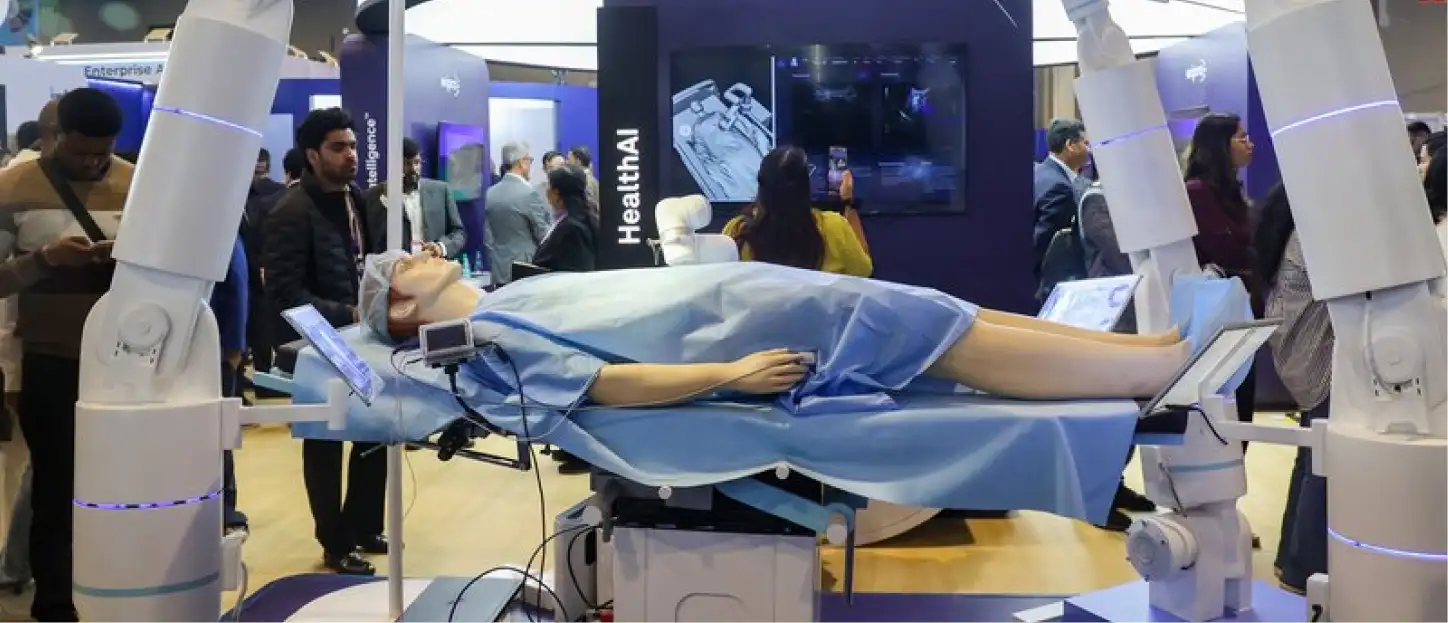
At the India AI Impact Summit 2026, healthcare innovation took centre stage as AI-powered diagnostics, offline medical scribes, smart kiosks, and clinical intelligence platforms showcased real-world deployment readiness.
The India AI Impact Summit 2026 is making waves globally, emerging as a pivotal force in the artificial intelligence discourse. Hosted at the Bharat Mandapam in New Delhi, this multi-day event has welcomed representatives from over 100 nations, uniting heads of government, visionary policymakers, groundbreaking researchers, dynamic startups, and leading technology giants.
Prime Minister Narendra Modi highlighted AI’s accelerating role across governance, agriculture, and public systems, with healthcare emerging as the most immediate and transformative frontier. Building on earlier global AI convenings in Paris, Seoul, and Bletchley Park, this edition marked a clear pivot toward deployable, scalable, real-world solutions.
In the healthtech sphere, AI in healthcare is entering mainstream implementation, and it is now being harnessed for real-world solutions. Let’s delve into the groundbreaking innovations that are reshaping the landscape of healthcare and beyond.
AI Health ATMs: Decentralising Diagnostics
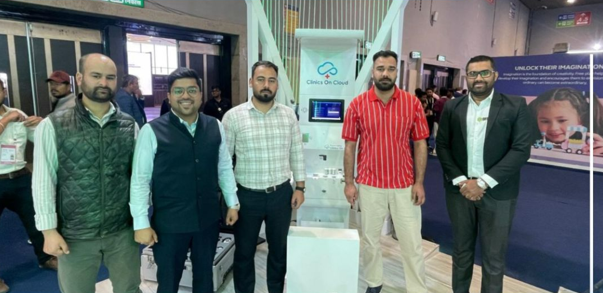
One of the most talked-about exhibits was the AI-enabled Health ATM by Clinics on Cloud, a kiosk model designed to deliver preventive screening without requiring a hospital visit.
The system can screen for over 40 health parameters in about 10 minutes. It includes tests spanning general health panels, infectious disease rapid tests, urine analysis, cardiac assessments, ECG, spirometry, anaemia checks, diabetes screening and more. According to the startup, most tests require only five blood samples, while several others are non-invasive. Results are delivered instantly via printouts or messaging platforms, and teleconsultation with doctors is integrated into the system.
Source: LinkedIn
AI File Management for Cancer Care
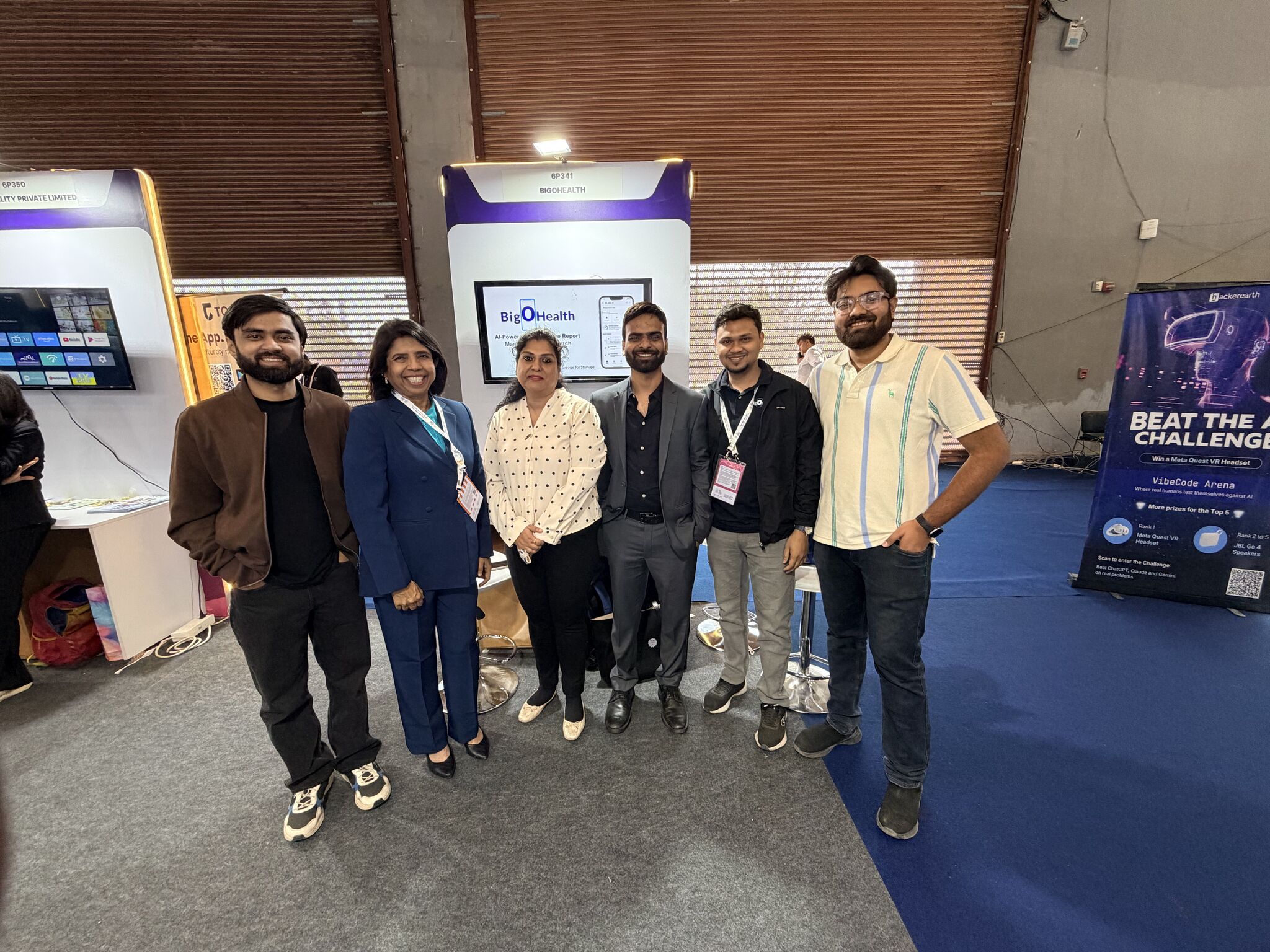
Cancer treatment often means years of scattered reports across labs and hospitals. OncoVault, developed by BigOHealth, aims to organise this clinical complexity.
Patients can upload scans or photographs of reports without manually entering data. The AI identifies report types, extracts key details such as dates and diagnostic findings, and arranges them chronologically. A standout feature is a one-page summary that condenses long treatment histories into a structured overview, particularly useful when patients seek second opinions. The platform also allows voice inputs for symptom logging.
Source: LinkedIn
Motion Analytics Beyond the Lab
Bhargati, conceptualised at IIT Delhi, showcased how simple smartphone videos can be converted into detailed biomechanical assessments.
Using recorded footage and ground markers, the AI platform generates kinograms, skeletal overlays that analyse joint angles, stride length, ground contact time and movement efficiency. Originally designed for athletes in remote regions without access to advanced sports labs, the system also has applications in gait analysis, elderly mobility monitoring and rehabilitation tracking.
Source: LinkedIn
Offline AI Medical Scribing
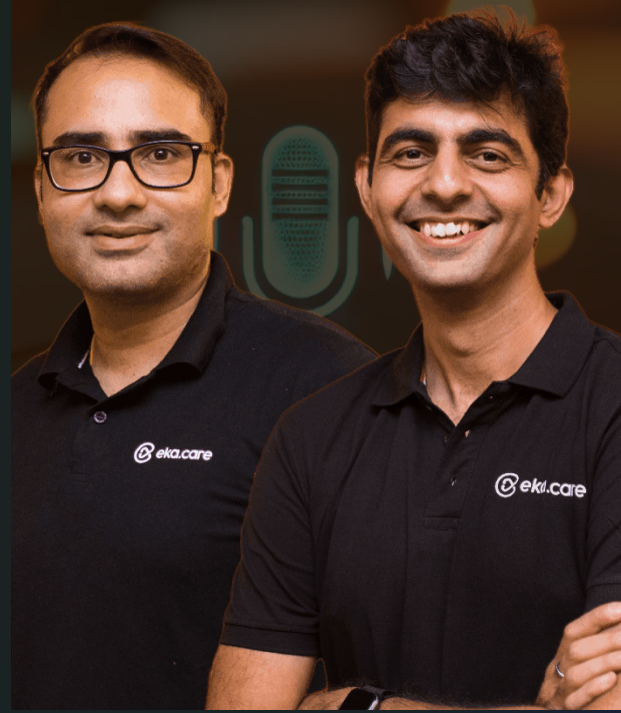
Eka Care, in partnership with NVIDIA, introduced an offline multilingual AI medical scribe tailored for Indian clinical settings. Designed especially for high-volume and rural clinics, the tool captures patient history, generates prescriptions and structures documentation without requiring doctors to type during consultations.
Crucially, it works without continuous internet connectivity and supports multiple Indian languages, addressing real-world infrastructure limitations. Reducing time spent on documentation could allow doctors to focus more directly on patient care while improving record standardisation.
Autonomous Robots Inside Hospitals
Ottobots demonstrated autonomous robots capable of delivering medicines and supplies within hospital premises. These robots can navigate corridors and elevators independently, potentially reducing dependency on attendants or family members for internal logistics. In high-footfall hospitals, such automation could help streamline internal supply chains and optimise staff workload.
Edge AI & Assistive Wearables
Sarvam showcased two notable innovations - First, Sarvam Kaze, smart glasses developed in India that enable real-time data capture and assistive overlays. Potential healthcare use cases include remote field support, assistive navigation for differently-abled users and point-of-care data capture.
Second is Sarvam Edge, an AI engine that runs directly on mobile devices without internet connectivity, translating 22 languages in real time. In multilingual clinical environments, such an offline capability could significantly improve doctor-patient communication.

Source: Twitter
Advanced Clinical Intelligence
Fractal Analytics unveiled Vaidya 2.0, its next-generation healthcare AI model designed to strengthen clinical decision-making and diagnostics. The upgraded system combines predictive analytics with contextual patient data, enabling clinicians to generate faster, data-driven insights across complex cases.
Vaidya 2.0 aims to streamline treatment pathways, reduce variability in care decisions, and enhance precision in high-burden environments. Its emphasis on integrating real-world patient data signals a broader shift toward AI systems that augment physician judgment with structured, explainable intelligence.
AI as a Mental Health Companion
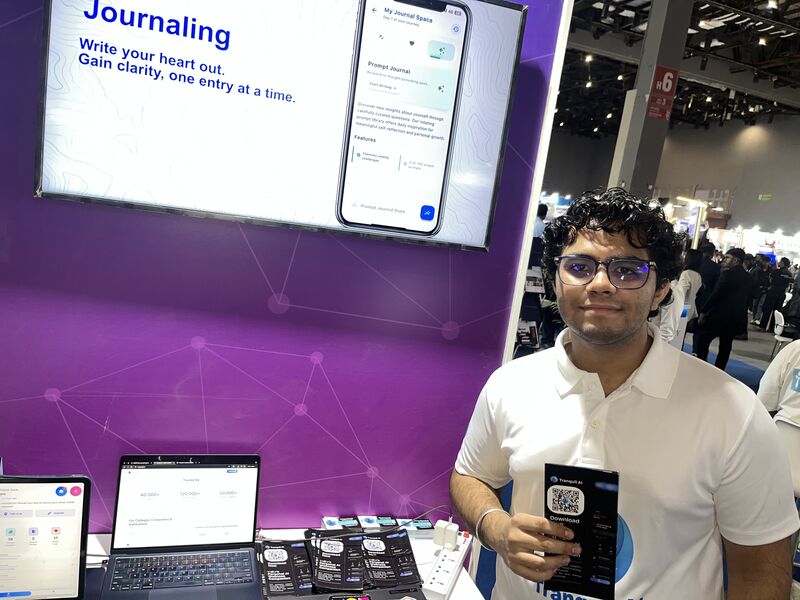
Tranquil AI, founded by a team from VIT Vellore, is built to support students navigating academic stress, anxiety and burnout. The platform combines mood tracking, journaling, meditation tools, sleep support and an adaptive conversational AI.
Unlike generic chatbots, it evolves over time based on user-consented data inputs such as journal entries and mood logs. The goal is not to replace therapists but to offer structured, early-stage emotional support, particularly in environments where access to mental health professionals remains limited.
From Showcase to Scalability
What stood out at the AI Impact Summit 2026 was the emphasis on infrastructure-aware innovation. Many solutions were designed specifically for India’s constraints, limited connectivity, workforce shortages, data fragmentation and geographic disparities. Rather than futuristic concepts, the focus was on deployable AI, systems that can operate offline, integrate with existing workflows and address real operational bottlenecks, and solve the real problems.
If the summit signalled anything for healthtech, it is that AI in Indian healthcare is increasingly about execution, scale and measurable impact.
Disclaimer: This article is intended for editorial coverage of innovations showcased at the AI Impact Summit 2026 and does not constitute endorsement of any specific product or company.
Stay tuned for more such updates on Digital Health News
Follow us