The Hospital Without Walls: How Virtual Care is Redefining Healthcare in India
"Technology should empower the poor, improve ease of living, and make healthcare accessible to every citizen." - Prime Minister Narendra Modi
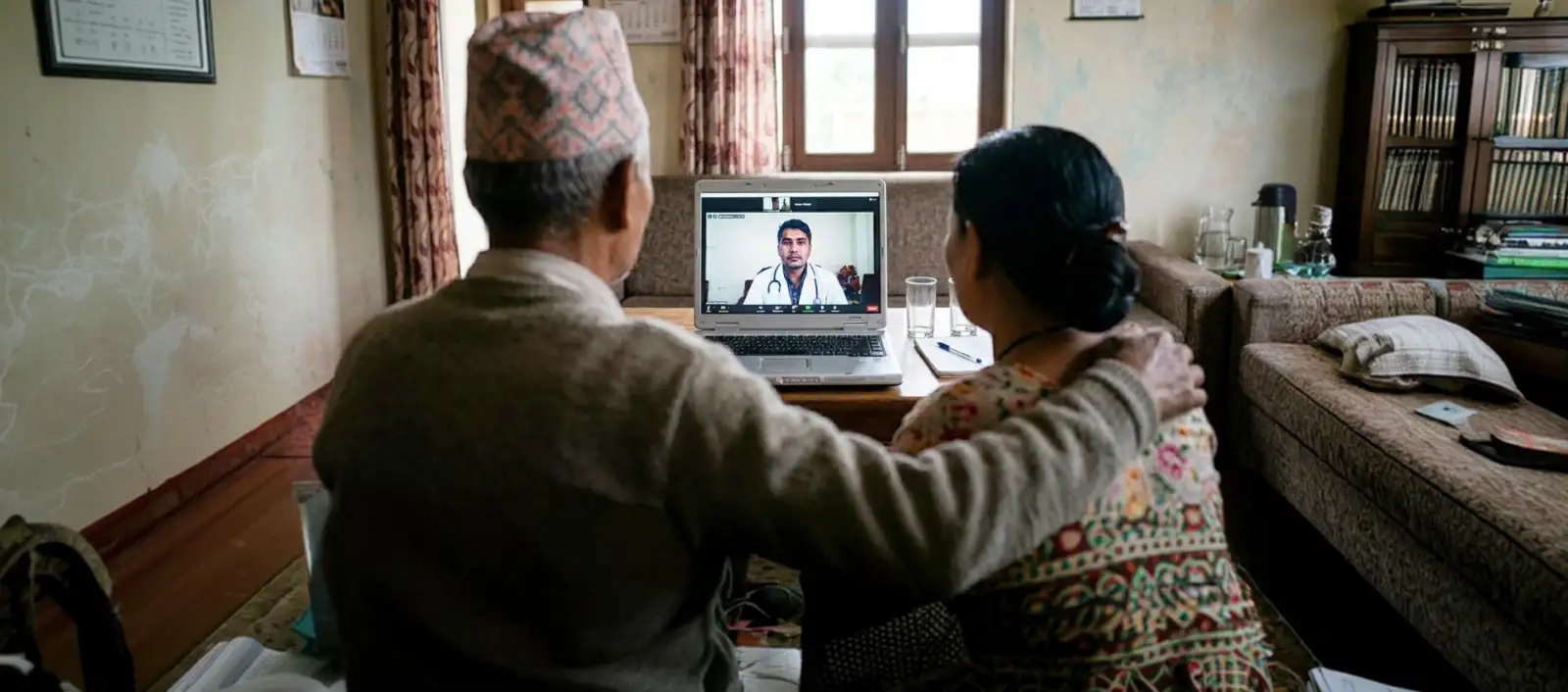
Healthcare is no longer confined to the walls of hospitals. A specialist consultation, follow-up appointment, or continuous monitoring of chronic conditions can now happen from the comfort of a patient's home. This transformation has given rise to the virtual hospital, a digitally connected model of care that extends medical services beyond physical infrastructure.
Driven by artificial intelligence (AI), interoperable digital health platforms, wearable devices, and remote patient monitoring, telemedicine in India is redefining how healthcare is delivered. More than a technological upgrade, it represents a shift towards healthcare that is accessible, continuous, and centred around the patient's needs. As India's digital health ecosystem continues to expand, virtual care is bringing quality healthcare closer to millions who were once separated from it by distance and limited infrastructure.
The Rise of the Virtual Hospital
A virtual hospital is much more than an online consultation platform. It is a seamless healthcare system where consultations, diagnosis, prescription, follow-up and ongoing monitoring are part of a seamless process that enables healthcare outside the hospital environment.
Although the COVID-19 pandemic has accelerated the use of telemedicine in India, the telemedicine approach has become a viable way to enhance healthcare access. Healthcare providers are now offering online services to their patients, which allows them to access timely care without having to make multiple in-person visits. Virtual hospitals are not meant to replace traditional hospitals, but rather complement them, enhancing the continuity of care and access to healthcare for underserved communities.
What's Powering the Shift?
A virtual hospital is much more than an online consultation platform. It is a seamless healthcare system where consultations, diagnosis, prescription, follow-up and ongoing monitoring are part of a seamless process that enables healthcare outside the hospital environment.
Although the COVID-19 pandemic has accelerated the use of telemedicine in India, the telemedicine approach has become a viable way to enhance healthcare access. Healthcare providers are now offering online services to their patients, which allows them to access timely care without having to make multiple in-person visits. Virtual hospitals are not meant to replace traditional hospitals, but rather complement them, enhancing the continuity of care and access to healthcare for underserved communities.
How Technology is Bringing Care Home
The success of virtual healthcare goes well beyond video consultations. Artificial intelligence is assisting clinicians with patient triage, clinical documentation, and decision support, while wearable devices continuously monitor heart rate, blood pressure, blood glucose, oxygen saturation, and other vital parameters.
Remote Patient Monitoring (RPM), Internet of Things (IoT)-enabled medical devices, cloud-based Electronic Health Records (EHRs), and mobile health applications are creating a connected ecosystem where patients remain under medical supervision even outside hospital settings.
These technologies are gradually shifting healthcare from episodic treatment to continuous, proactive care, allowing healthcare providers to intervene earlier and improve patient outcomes.
Why It Matters
The most significant contribution of telemedicine in India is the equating of healthcare. Patients in rural and underserved areas can now get access to specialists without having to travel far distances, which helps in saving them money and time.
Additionally, virtual care is revolutionizing how chronic diseases are managed with regular digital check-ins, making better care for pregnant women by introducing them to specialists, facilitating monitoring for the elderly at home and increasing access to mental health services.
It not only enables people to save time but also helps to alleviate pressure on the healthcare system, by bringing efficiency, quality, and health care to people where they are.
What's Holding It Back?
Despite remarkable progress, several challenges remain. Uneven internet connectivity, limited digital literacy, and unequal access to smartphones continue to restrict the reach of virtual healthcare in many parts of the country.
As healthcare becomes increasingly data-driven, protecting sensitive patient information through robust cybersecurity and privacy frameworks has become equally important. Building trust in virtual consultations, ensuring interoperability between digital platforms, and strengthening regulatory standards will be essential to achieving sustainable growth.
What's Next?
Teleconsultation is not the only possibility for the virtual hospital. There are already some examples of how AI will drive the next evolution of digital care: AI-powered care assistants, predictive healthcare, hospital-at-home models, ambient intelligence, and advanced remote patient monitoring.
Healthcare systems are shifting away from treating diseases and focusing on preventive measures by keeping a constant check on them, providing personalised interventions, and deriving insights from data. Innovation is continuing to drive forward and the hospital will become a connected healthcare network that provides quality healthcare services anytime, anywhere.
Conclusion
No longer a distant dream, the virtual hospital is now a reality in India's healthcare landscape. With robust digital public infrastructure and the increasing use of telemedicine in India, healthcare is increasingly connected, inclusive, and patient-centred.
While challenges related to accessibility, digital literacy, and data security remain, the momentum towards technology-enabled healthcare is undeniable. The future of healthcare will not be defined by the size of hospitals but by their ability to deliver timely, high-quality care wherever patients are, making healthcare truly borderless.
Stay tuned for more such updates on Digital Health News
Follow us