Mira Integrates with Oura Ring to Combine Hormone Data with Sleep and Temperature Trends
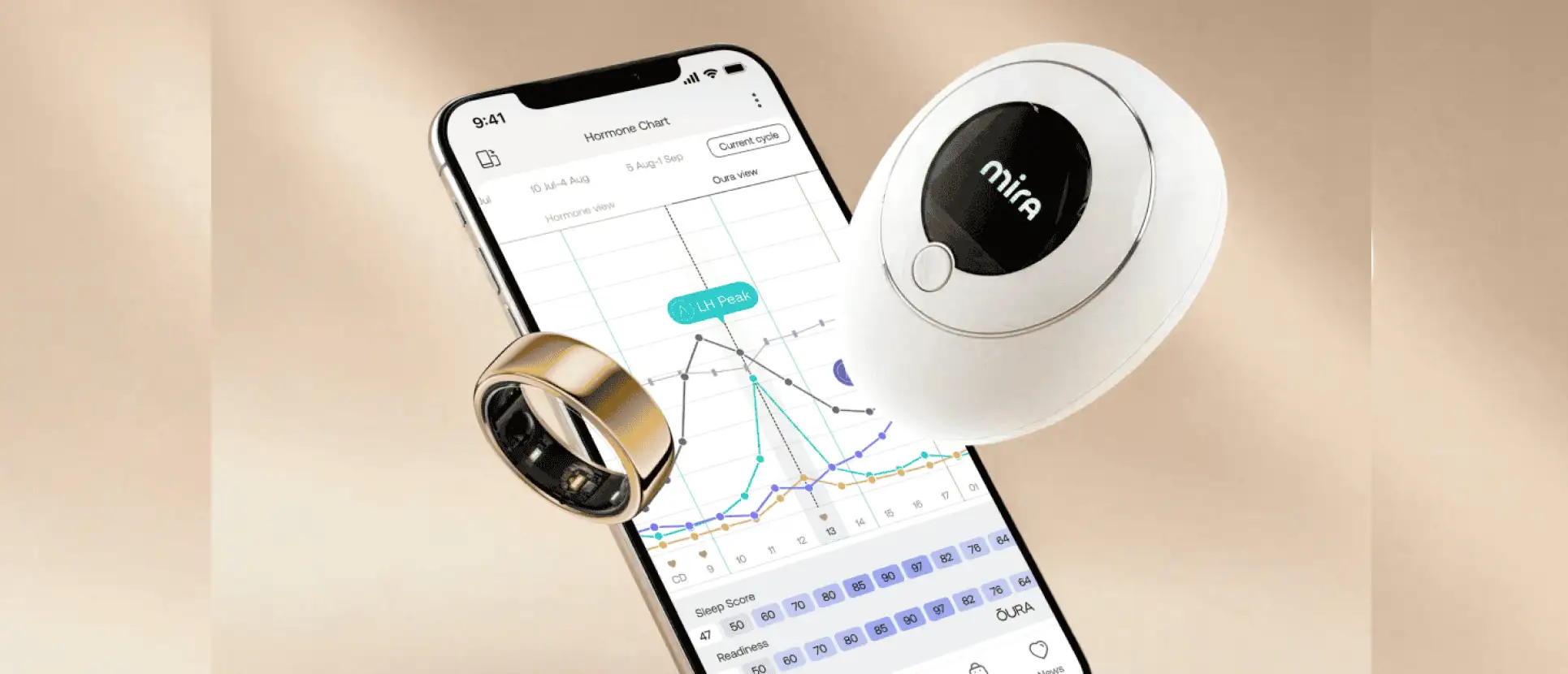
The integration combines Mira’s at-home, lab-grade hormone testing data with continuous biometric tracking from the Oura Ring.
Mira has announced a direct integration with Oura Ring, enabling users to access Oura’s biometric data, including sleep, readiness, and temperature trends, within the Mira app alongside hormone concentration results.
The integration combines Mira’s at-home, lab-grade hormone testing data with continuous biometric tracking from the Oura Ring. Users can now view hormonal fluctuations in parallel with daily physiological indicators, offering a consolidated view of reproductive and metabolic health patterns.
The collaboration is designed to provide contextual interpretation of health data. Instead of analyzing metrics in isolation, users can assess how changes in sleep quality or body temperature align with hormonal shifts such as ovulation, luteinizing hormone (LH) surges, estrogen fluctuations, or perimenopausal transitions.
Dr. Chris Curry, Clinical Director of Women’s Health at Oura, said the integration supports improved “body literacy.” “Hormonal changes play a critical role in how women feel each day,” Curry stated. “By combining Mira’s lab-grade hormone data with Oura’s continuous biometrics, we’re helping women see how hormonal shifts show up in their everyday lives.”
The companies outlined three primary use cases for the integration. In fertility tracking, hormone measurements can be paired with Oura’s temperature trends to help identify ovulation patterns. For perimenopause, users may correlate irregular hormone changes with sleep disruption and recovery trends. In cases of hormonal imbalance, the integration allows users to link symptoms such as fatigue or low energy with measurable hormonal variations.
Sylvia Kang, CEO and founder of Mira, said the integration addresses a gap between symptom tracking and underlying causes. “More women than ever track health metrics like sleep, stress, activity, strain, but rarely have the tools to see the real reasons behind their symptoms,” Kang said. “With this integration, we’re connecting hormone data with daily health signals, giving women insights they can act on.”
The Mira–Oura integration is currently available to Mira users.
Stay tuned for more such updates on Digital Health News
Follow us