From Vision to Impact at DHN Delhi City Meetup: How Leadership is Shaping Digital Health
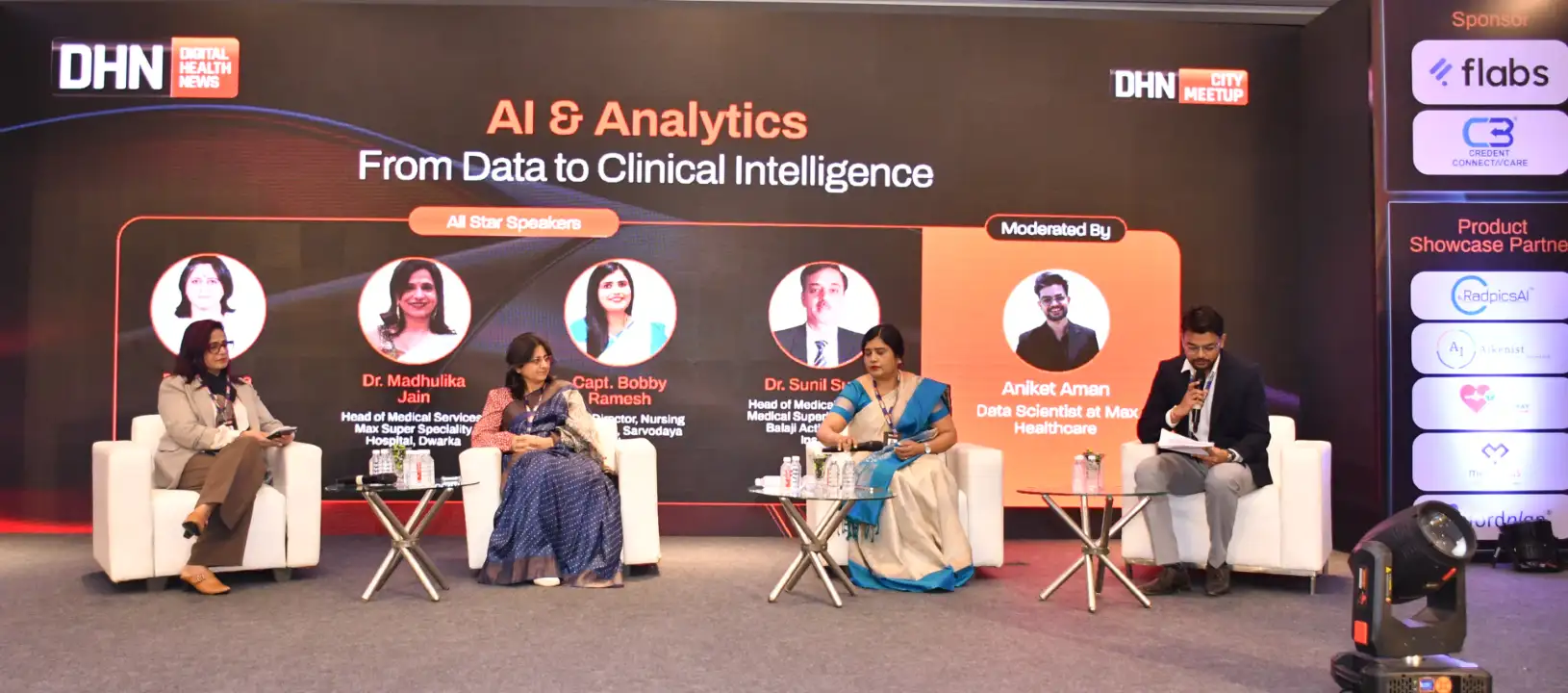
In Delhi’s bustling healthcare landscape, the promise of digital transformation is everywhere, in boardrooms, hospital corridors, and tech-enabled labs. Yet, the DHN City Meetup revealed that technology alone is insufficient to drive meaningful change. The conversations made it clear: transformation requires not just tools, but vision, leadership, and systemic integration, all anchored in real-world clinical priorities.
Leadership as the Catalyst for Digital Adoption
The first discussions set the tone by underscoring the human dimension of digital transformation. Technology, however sophisticated, is only as impactful as the leadership guiding it. Cdr. Navneet Bali, Executive Director and Group CEO of ClearMedi Healthcare, framed AI as both a tremendous opportunity and a profound responsibility.
According to him, “Healthcare’s future is inseparable from AI, from improving operational efficiencies to strengthening clinical decision-making.” His insight reminded the audience that AI is not merely a tool to automate tasks but a lever to enhance decision-making across hospital operations.
Early engagement of clinicians emerged as a recurring theme. Dr. Shankar Narang, CEO of Centre for Sight, noted that “clarity in tech adoption, involving doctors from the beginning, and building ownership is essential.”
Without clinician buy-in, even the most sophisticated systems risk underutilization, turning investment into wasted potential. Leadership, therefore, must not just implement technology; it must cultivate trust and ownership among those who use it every day.
Operational relevance was another crucial insight. Dr. Saurabh Lall, Vice President and Hospital Director at Marengo Asia Hospitals, highlighted a critical pitfall: “Technology must solve real problems, not become a solution searching for one.”
This observation reminded participants that digital tools must address tangible clinical and operational challenges, reinforcing the principle that strategy must precede adoption.
Culture, too, plays a decisive role in shaping digital outcomes. Viji Varghese, Hospital Director at Manipal Hospital, Dwarka, explained, “A digital-ready culture is essential; when the mindset is ready, adoption naturally follows.”
Here, the conversation moved beyond workflows and platforms, touching on the deeper organizational readiness required to embrace transformation.
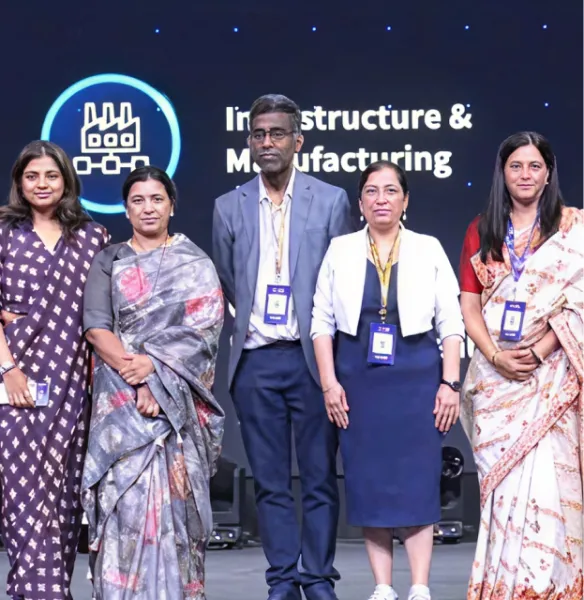
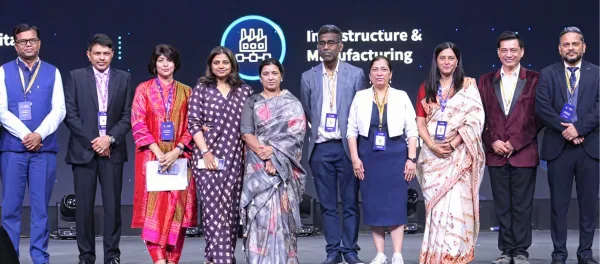
Moderated by Dr. Sunil Khetarpal, Deputy Director General at the Association of Healthcare Providers India, the discussion converged on a simple truth: AI is a tool, but leadership and culture are the forces that turn potential into impact.
Diagnostics in Transition: Moving from Digitization to Integration
The dialogue then shifted to diagnostics, an area that has seen rapid digital adoption but continues to struggle with fragmentation.
Dr. Sunita Kapoor reminded the audience that transformation begins with clarity: “You have to define the problem statement first.” Advanced imaging and lab systems, she argued, are ineffective without a clear understanding of the clinical challenges they are meant to address.
The issue of siloed digitization was starkly highlighted by Pooja Chatrath, who noted that while 70–75% of mid and small labs are digitally equipped, most operate in isolation. She stressed that standards such as HL7, FHIR, and ABDM alignment are not optional but necessary for true interoperability. Otherwise, digitization risks remaining cosmetic, a paper report on a screen rather than actionable insight.
Expanding on this, Dr. Suraj Shrivastav observed that printing a digital report does not equate to transformation: “Automation must be embedded into workflows and backed by governance and regulation.”
The conversation revealed that technology must seamlessly integrate into daily operations, not exist in parallel to them.
Dr. Alok Sharma explained that modern diagnostics involve multiple workflows, not just a single pipeline: “It’s not a single workflow, it’s multiple workflows that need integration.”
Digital pathology, imaging informatics, and lab systems can provide objectivity, quantification, and longitudinal patient insights only when these complex workflows are harmonized.
Dr. Ravi Gaur added a forward-looking perspective, noting that India’s digital pathology market is poised for exponential growth. Yet, he cautioned, integration remains the true challenge: fragmented data cannot generate intelligence. The opportunity is vast, but so is the risk of inertia if systems remain isolated.

Transformation Beyond Technology: Insights and Imperatives
The overarching insight from both discussions was clear: healthcare transformation is not a story of tools; it is a story of leadership, culture, and integration. AI amplifies capability, diagnostics enable insight, and data unlocks intelligence, but only when combined with intentional design, clinician engagement, and disciplined execution.
What set the DHN City Meetup apart was the way these conversations connected strategy to practice. Leaders highlighted that success is measured not by how many systems a hospital deploys, but by how well those systems enhance patient care, empower clinicians, and improve operational outcomes. The discussions offered a blueprint for India’s hospitals: co-create with clinicians, embed technology in workflows, and foster a digital-ready culture to turn aspiration into measurable impact.
As the event concluded, the message was unambiguous: digital health in India is no longer aspirational. It is a responsibility, and leadership is the compass guiding hospitals from fragmented adoption to patient-centered, integrated care. Those who trail behind do so not because technology is insufficient, but because vision, strategy, and integration are absent. Transformation favors the intentional, and in this journey, leadership, not tools, is the ultimate differentiator.
Stay tuned for more such updates on Digital Health News