Digital Pathology: How AI is Transforming Disease Diagnosis in India
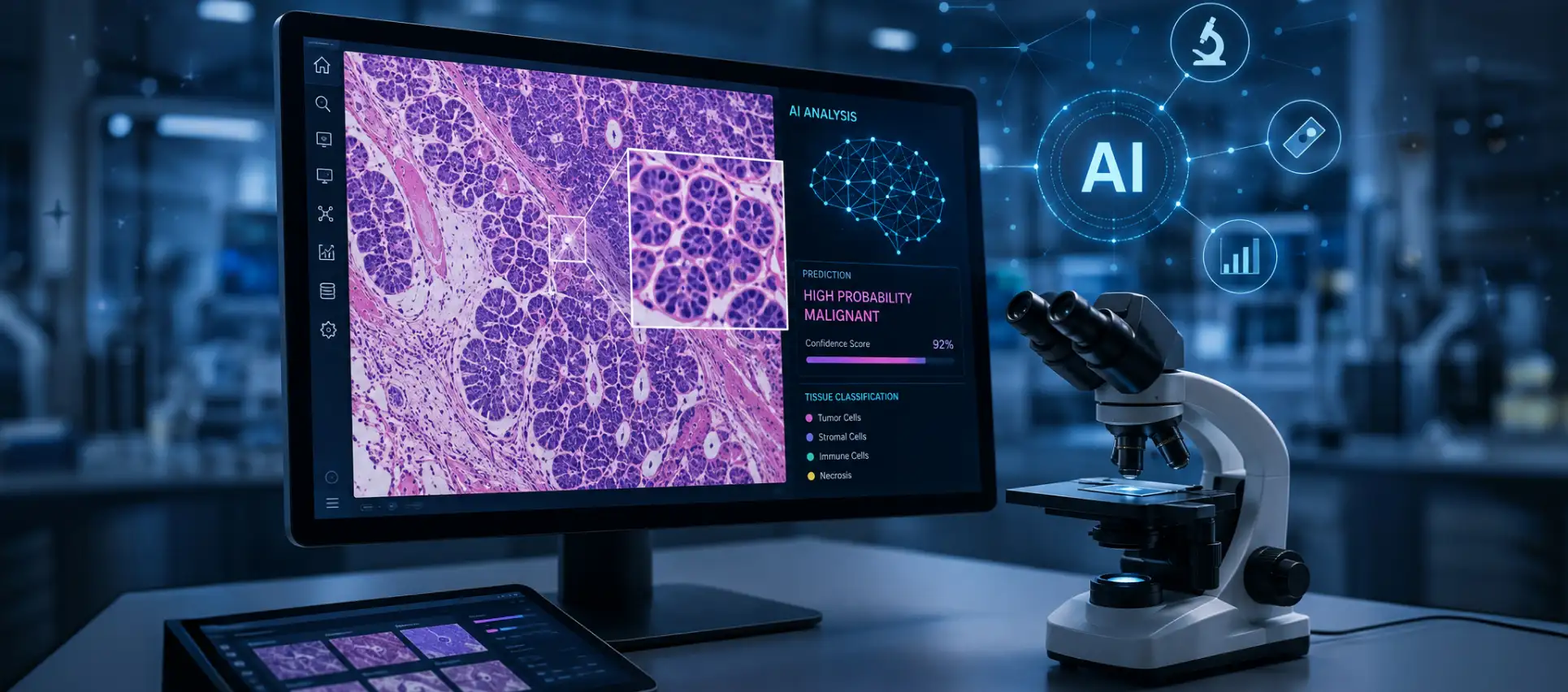
Think about a biopsy sample from a rural clinic being forwarded to the nearest specialist laboratory, where the sample would have to wait its turn behind many other samples before finally getting analysed under the microscope by one of the few specialists working there, which could take up to a few days despite shrinking treatment opportunities. The idea of digital pathology is to completely revolutionise such an image by digitising the glass slides into high-resolution pictures, which could be analysed and shared anywhere without the need for both the patient and the specialist to be present at one place. This paper aims to describe the concept of digital pathology, its significance in the Indian scenario and the use of AI-assisted diagnosis in this regard.
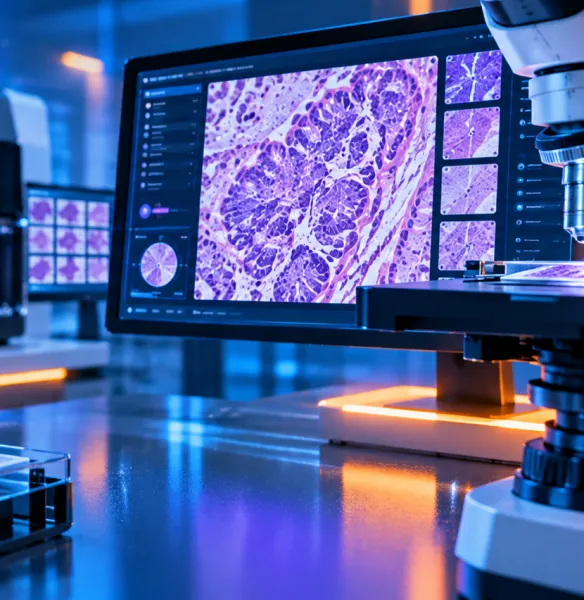
What Digital Pathology Actually Involves
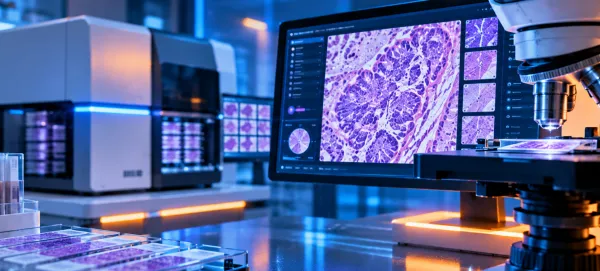
"Digital pathology is the field of pathology in which traditionally made glass microscope slides are scanned to produce whole-slide images that can be viewed, analysed, shared and stored in electronic form instead of needing an actual slide to be physically transported and looked at."
The result of this change is the emergence of telepathology, whereby a specialist in one city can assess the results of a digital scan of a slide conducted in a hospital far away in another location, in effect decoupling where samples are taken from where expertise exists to interpret those samples. Additionally, this technological step allows the involvement of AI altogether because, in order to analyse a slide, the machine learning model requires an actual digital image, not a glass slide viewed under the microscope.
An AI-assisted diagnostic system that makes use of the digitised slides can help to accomplish several goals, including automatically highlighting suspicious regions of a slide to pay attention to by a pathologist, helping to grade the degree of malignancy, and quantifying some biomarkers, usually viewed as a means to help a pathologist go through their cases more efficiently.
A Workforce Gap Driving Urgency in India
The shortage of trained professionals in diagnostics in India makes digital pathology especially urgent, going above mere convenience. It is expected that in 2025, there will be 1.7 million cases of cancer in India, rising to 2.5 million cases in 2030, whereas only around 5,500 trained pathologists are available to serve some 300,000 laboratories throughout the country.
The shortage of specialists leads directly to the problem of delays in diagnosis, especially for patients from non-urban areas. As in the former era of Indian pathology, the time needed for results to come out was between 4 and 5 days, and during these days, the disease could develop and become more difficult to treat. Moreover, patients in the countryside traditionally suffered from the inequity of opportunities compared with people who lived close to big diagnostic centres in cities.
The diagnostics market of India, assessed to be around USD 9 billion in the mid-2020s and developing at the annual rate of about 10%, forms the background against which digital pathology becomes adopted in the country, although the reviews of the digital pathology situation in India suggest that actual adoption of this technology remains relatively low in comparison with the size of this market.
Where the Technology is Already at Work
One of the oldest forms of digital pathology in India involves telepathology and remote second opinions. This form of digital pathology goes back to when a telepathology connection was set up between a rural hospital at Barshi, Maharashtra and a specialised hospital at Mumbai in 2000, many years before the advent of AI tools.
The use of AI for the purpose of screening cancer in an automated way is another emerging form of digital pathology in India. Indian technology companies have been building tools for screening cancers like prostate cancer by employing AI algorithms that can highlight suspicious regions on the digitised slide for further evaluation by the pathologist. The purpose here would be to improve both consistency and timing in making a diagnosis of prostate cancer, which requires serious clinical follow-up.
Thirdly, the frozen section analysis, education and quality assurance can also be included under the applications of digital pathology in India. Digital slides can be used during time-critical frozen sections, for creating searchable libraries for educational purposes for new pathologists, and also in QA programs.
The Case for Making the Switch
One clear advantage that comes from the implementation of digital pathology is in the extension of specialist expertise even if no specialist exists in that location. The rural clinic that lacks its own pathologist will be able to consult specialists through telepathology, thereby bringing down the difference in diagnostic availability between the large cities and the small ones.
Another advantage of this technology is increased speed and efficiency, especially in cases where tools aided by AI have been superimposed upon the digitised slide. By making it possible to identify abnormalities or even assisting in grading, these technologies can help increase the volume of cases dealt with by a few pathologists without requiring a corresponding increase in staff, thus solving the problem of the extreme paucity of pathologists relative to the population in India.
A final advantage lies in the ability to better cope with the demands of contemporary diagnostics. In cases where the diagnosis of cancer requires not only the visual examination but also analysis of various biomarkers, immunohistochemistry, and molecular profiling, a digital platform makes it much easier.
What's Holding Broader Adoption Back
Infrastructure and cost present the two biggest barriers, especially outside metropolitan areas. Slide scanning at high resolution and the information technology infrastructure necessary to store and transfer the large digital pathology files constitute a sizeable investment that is not something most small laboratories can afford.
Data standardisation presents a second problem. In a narrative review of the barriers to the use of digital pathology in India, for example, a lack of knowledge about how to adopt and implement digital pathology affordably and efficiently within the Indian healthcare environment was highlighted. This suggests a general lack of data standardisation in the field.
Data security and privacy issues present a third obstacle. Digitised slides, like any digital health data associated with a medical record of a particular individual, pose similar challenges from the point of view of sensitive information protection, and potential users should be assured of adequate protection of patients' personal data during the whole process of scanning, storage, and remote review of slides.
Turning Early Promise into Everyday Practice
Considering the growing cancer-to-pathologist ratio imbalance in India, it is unlikely that the fundamental case for the adoption of digital pathology is going to change any time soon, irrespective of technological advancements in the technology due to the fact that the shortage of pathologists fueling the demand cannot be resolved in the near future.
The expansion of the diagnostics market in India means that there is indeed an economic environment for the development of digital pathology despite the fact that its realisation is going to take targeted investment in infrastructure for small and rural labs instead of focusing solely on the large urban labs.
Ultimately, whether digital pathology and the application of artificial intelligence in medical diagnostics would narrow the pathologist shortage gap in India or further increase the discrepancy between the urban and rural laboratories will depend on the deliberate development of necessary infrastructure and standards.
Stay tuned for more such updates on Digital Health News
Follow us