




BHASHINI’s Voice Prescription Tool Expands Beyond Pilot at AIIMS Delhi

Beyond AIIMS, BHASHINI’s voice tool has been integrated into hospital information systems at JIPMER and the Indian Army’s healthcare services.
Government-backed language AI platform BHASHINI has expanded the deployment of its voice prescription tool at the All India Institute of Medical Sciences (AIIMS), New Delhi, following positive feedback during its pilot in the Neurology and Neurosurgery departments.
The technology enables doctors to dictate prescriptions directly into the hospital’s electronic system, reducing the need for manual data entry.
BHASHINI supports speech recognition, translation, speech synthesis and other language technologies across Indian and international languages. Its healthcare applications aim to improve communication between patients and clinicians while supporting digital documentation.
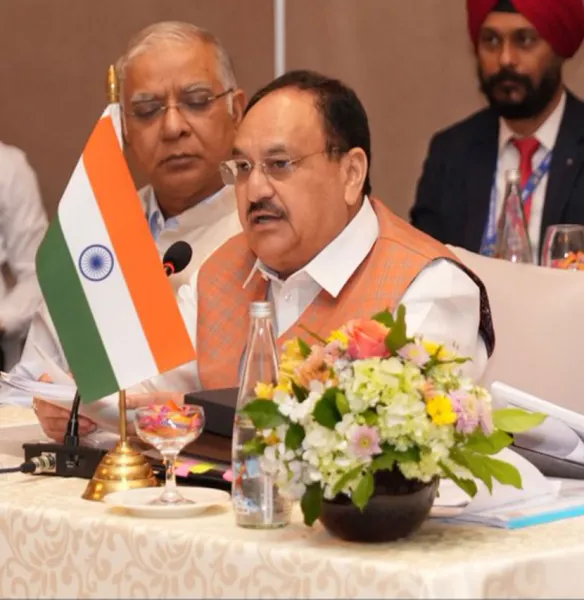
The Digital India BHASHINI Division, under the Ministry of Electronics and Information Technology (MeitY), showcased these applications at a recent summit held in New Delhi.
AIIMS has integrated BHASHINI’s speech-to-text technology with the National Informatics Centre’s eHospital prescription module, allowing clinicians to record prescriptions through voice input during outpatient consultations.
"The platform has proved useful in supporting clinical workflows, with positive feedback from doctors during the pilot in Neurology and Neurosurgery. Building on this experience, the application is now being rolled out across the institute," said Prof Vivek Tandon, professor in charge of the computer facility at AIIMS New Delhi.
Beyond AIIMS, BHASHINI’s voice-based documentation capabilities have been integrated into hospital information systems at Jawaharlal Institute of Postgraduate Medical Education and Research (JIPMER) and the Indian Army.
JIPMER has integrated BHASHINI into its e-Sushrut hospital management information system.
Doctors can dictate case histories, inpatient notes and discharge instructions in English or supported Indian languages.
Dr Anand A of JIPMER said the institute aims to "make clinical workflows more efficient and reduce documentation burdens on healthcare professionals."
The Directorate General of Medical Services of the Indian Army has also demonstrated BHASHINI’s integration with its Dhanwantri system, which converts spoken clinical notes into typed text.
Maj Gen Sandeep Bhalla said multilingual support was important because the Army’s healthcare services cater to serving personnel, veterans and their families who speak different languages.
BHASHINI also highlighted initiatives to strengthen multilingual AI for healthcare, including Data Daan for Health. The initiative focuses on collecting everyday expressions used to describe symptoms and mapping them to standard medical terminology, helping AI systems better interpret how people communicate health concerns.
As BHASHINI’s voice prescription tool expands across public healthcare institutions, its implementation will offer further insight into how speech-based AI can support clinical workflows, documentation and multilingual communication at scale.
Stay tuned for more such updates on Digital Health News
Follow us