




Karnataka’s Namma Clinics: Can Digital Workflows Strengthen Urban Primary Healthcare?
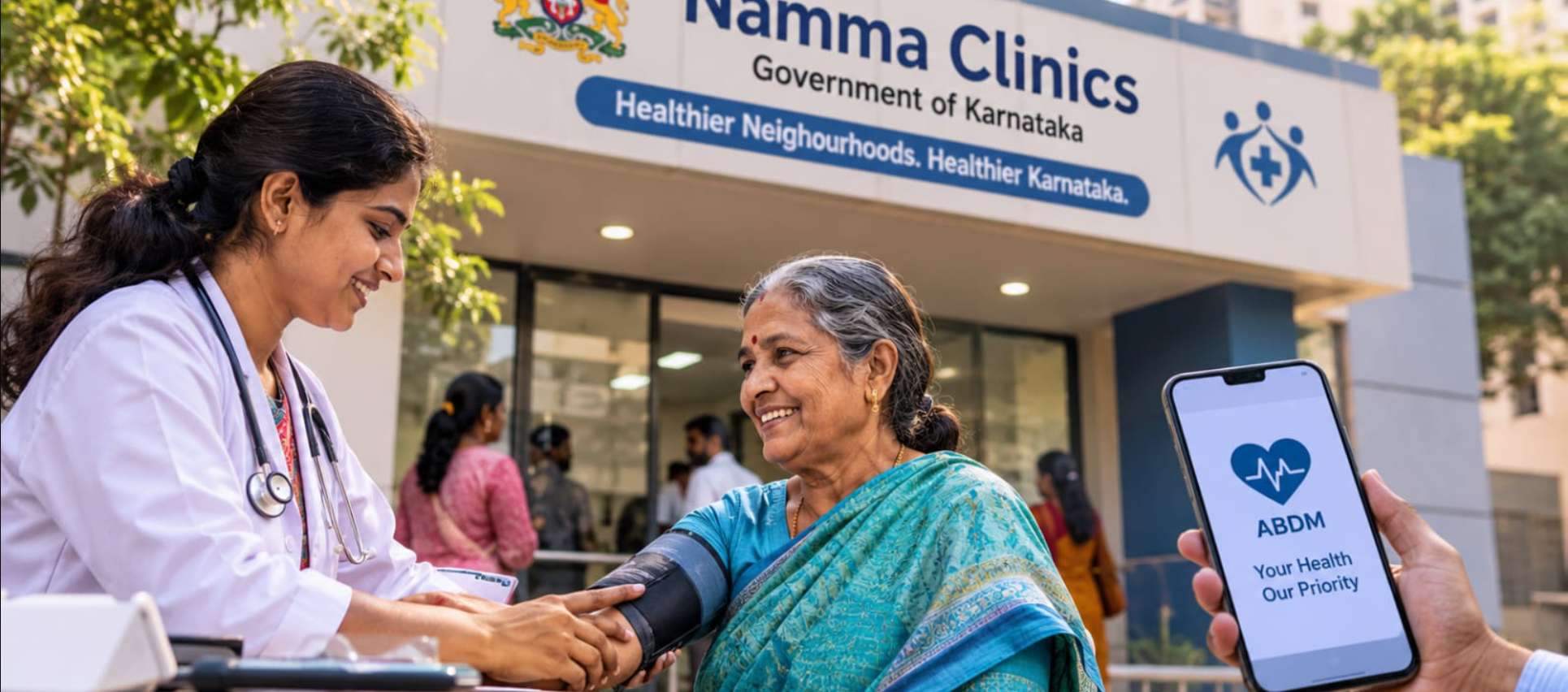
Urban healthcare is often associated with multi-speciality hospitals, advanced diagnostic facilities and an expanding network of private providers. Yet, beneath this visible growth lies a persistent contradiction: access to basic healthcare remains uneven across the very cities that house some of the country’s most advanced medical institutions. For residents of low-income settlements, migrant communities and densely populated urban neighbourhoods, even routine healthcare can involve long waiting periods, lost wages, travel costs and delayed diagnosis. The challenge is not simply the absence of hospitals, but the limited availability of accessible, affordable and continuous primary care close to where people live.
This gap is becoming increasingly significant as India's urban population expands and cities face a growing burden of non-communicable diseases, infectious illnesses and an ageing population. Primary healthcare, therefore, must move beyond treating immediate symptoms to building systems capable of early screening, preventive intervention, regular monitoring and timely referral. It is at this intersection of accessibility and continuity that Karnataka's Namma Clinics assume importance.
Unlock the Future of Digital Health — Free for 14 Days!
Join DHN Plus and access exclusive news, intelligence reports, and deep-dive research trusted by healthtech leaders.
Already a subscriber? Log in
Start with 14-Days Free TrialStay tuned for more such updates on Digital Health News
Follow us