



AI Tool Detects 39% More Intracranial Aneurysms Than Radiologists, Study Finds
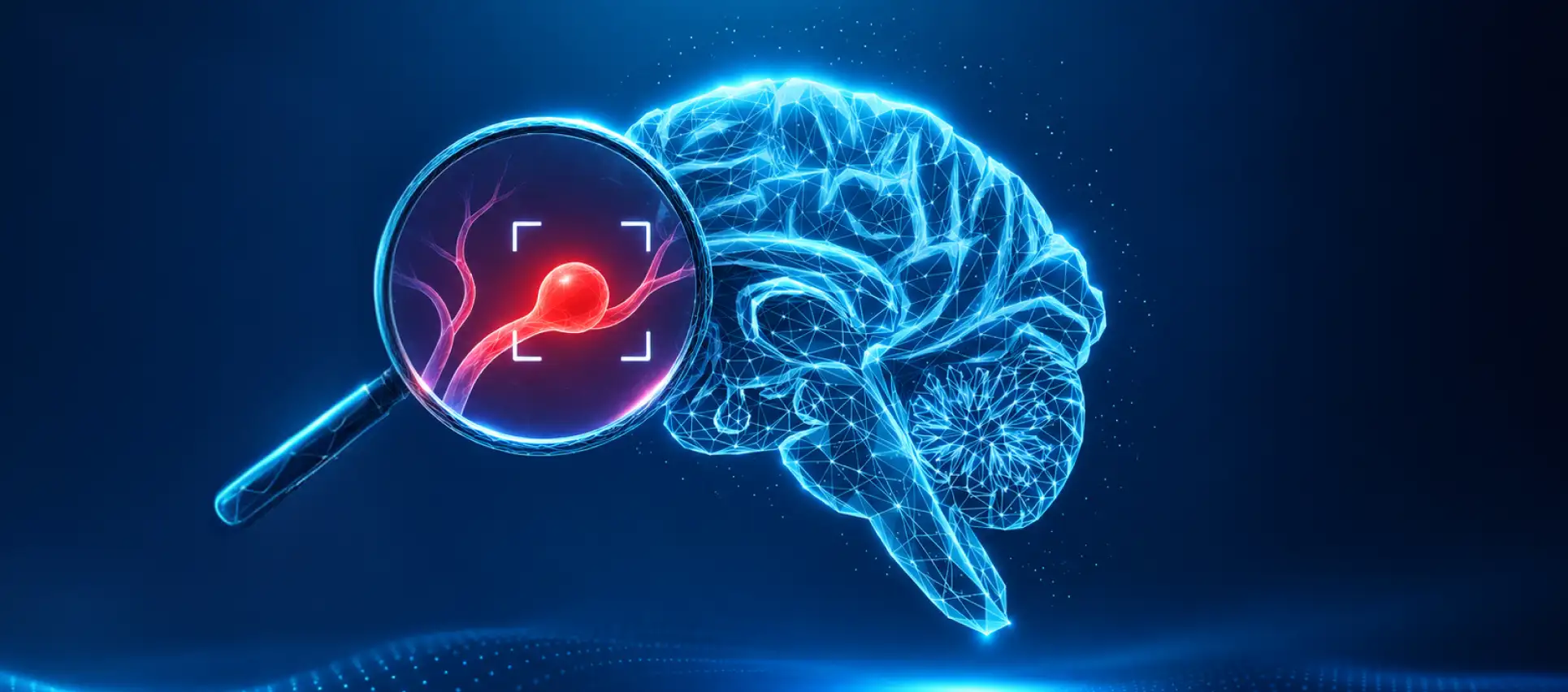
The algorithm identified 55 additional aneurysms that radiologists had initially missed, producing a relative enhanced detection rate of 39%.
Artificial intelligence (AI) has improved intracranial aneurysm detection in a real-world evaluation at Northwell Health in the US, where a commercially available AI tool identified 39% more aneurysms than radiologists alone.
The prospective study found that the algorithm detected additional lesions while maintaining specificity comparable to radiologists, highlighting its potential as a diagnostic aid in brain imaging.
Intracranial aneurysms occur when a blood vessel in the brain develops a weakened area that bulges outward. If an aneurysm ruptures, it can cause a potentially life-threatening subarachnoid haemorrhage. Computed tomography angiography (CTA) is used to examine blood vessels and identify these abnormalities, although very small aneurysms can be difficult to detect.
Published in the Journal of the American College of Radiology, the study was led by Shlomit Goldberg-Stein, MD, Director of Artificial Intelligence in the Department of Radiology at Northwell Health, New Hyde Park, New York, and colleagues.
Researchers assessed an algorithm developed by Aidoc, an FDA-cleared AI platform designed to identify intracranial aneurysms on brain CTA scans.
The prospective evaluation covered 3,856 consecutive brain CTA examinations conducted between Nov and Dec, 2023, across inpatient, emergency, and outpatient settings.
The results showed that the AI tool achieved a sensitivity of 84.6%, compared with 71.8% for radiologists alone. Specificity remained similar at 98.7% for AI and 98.5% for radiologists. The two approaches agreed in 3,714 examinations, representing 96.3% of the total.
The algorithm identified 55 additional aneurysms that radiologists had initially missed, producing a relative enhanced detection rate of 39%. Researchers reported that approximately 70 examinations were required to identify one additional aneurysm.
The benefit varied by clinical setting. Inpatients recorded the highest relative enhanced detection rate at 78.3%, with 28.9 examinations needed to identify one additional aneurysm.
Emergency cases showed a 37.1% enhanced detection rate, while outpatient examinations recorded 14.1%, with false-positive findings outweighing additional true detections in that setting.
More than half of the aneurysms identified exclusively by AI were smaller than 3 mm, accounting for 31 of the 55 additional detections.
The findings suggest that AI and radiologists may identify different groups of lesions, supporting a complementary approach rather than replacing specialist interpretation.
The researchers concluded that AI could support intracranial aneurysm detection in routine clinical workflows, although its practical value depends on the care setting.
Further evaluation of diagnostic performance, alert burden, and clinical outcomes will be important when determining where such tools can be most effectively integrated into radiology services.
Stay tuned for more such updates on Digital Health News
Follow us