AI Impact Summit 2026: Day 1 Sets the Tone for Responsible AI in Health
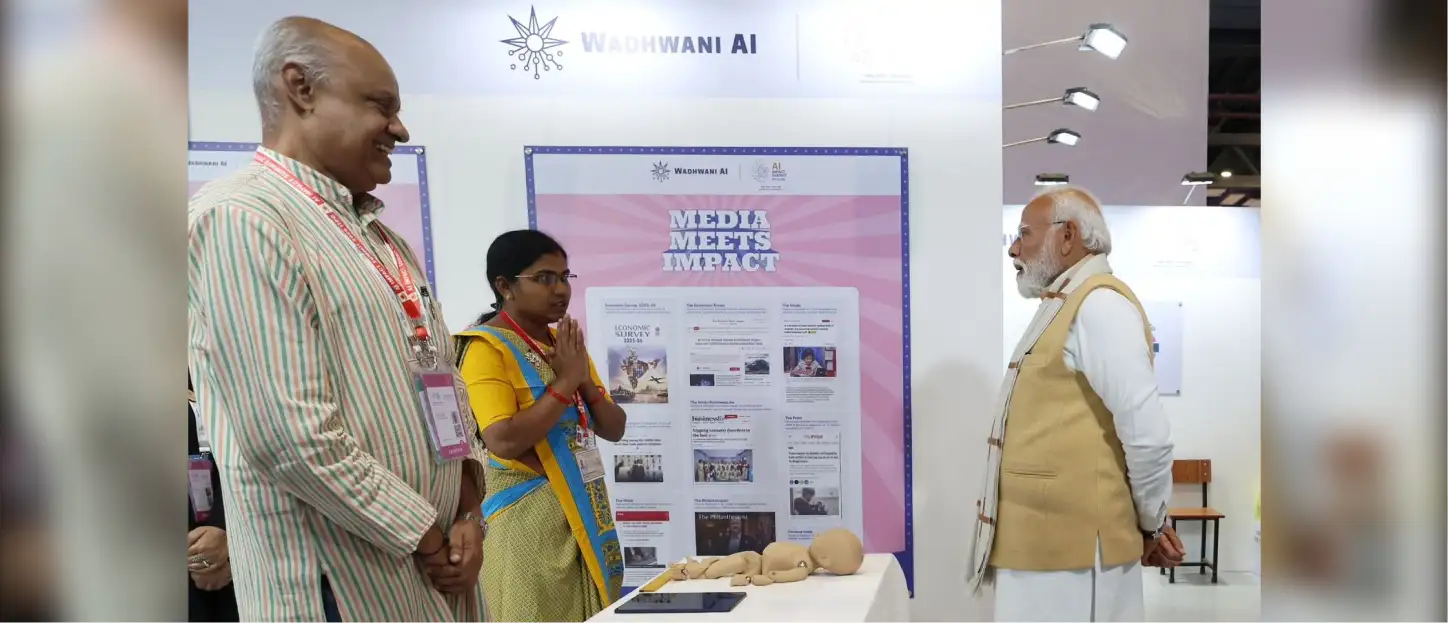
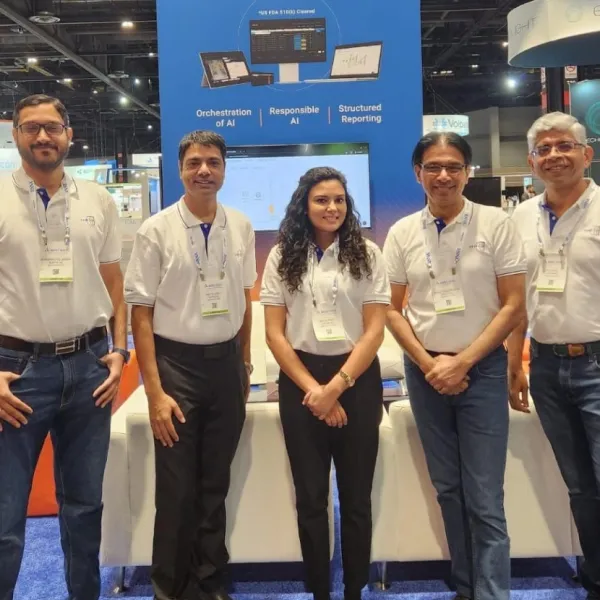
The summit featured broader AI showcases from companies such as Wipro, Qualcomm, and emerging Indian startups, highlighting robotics, industrial AI, and language models.
The AI Impact Summit 2026 has set the tone for responsible AI in healthcare, bringing global technology leaders and policymakers together to advance trusted AI tools and their integration across India’s health system.
The first day of the AI Impact Summit 2026 has brought Health and artificial intelligence to the forefront of national and global conversations, drawing over 600 startups and 13 country pavilions, reflecting expanding international collaboration in AI.
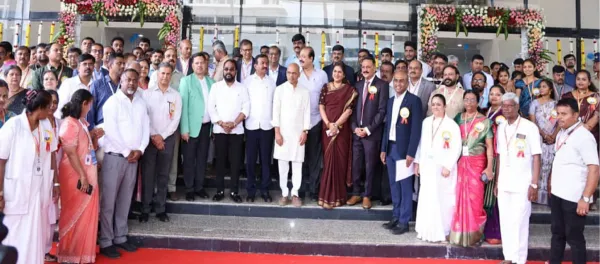
Prime Minister Narendra Modi inaugurated the event and visited multiple exhibition stalls, interacting with innovators and entrepreneurs, and will deliver the inaugural address for the India AI Impact Summit 2026 on February 19.
Modi tweeted, “India AI Impact Expo 2026 was a powerful convergence of ideas, innovation, and intent. It showcased the extraordinary potential of Indian talent in shaping the future of Artificial Intelligence for global good. Above all, it reaffirmed our commitment to harnessing AI responsibly, inclusively and at scale for human progress”.
Health has emerged as one of the central themes of the summit, with the National Health Authority (NHA) hosting key policy discussions on ‘Scaling AI for Public Health Impact’.
In a session on public-private partnerships, Union Health Secretary Punya Salila Srivastava highlighted India’s decade-long digital transformation anchored in the Ayushman Bharat Digital Mission (ABDM). With over 859 million citizens linked to more than 878 million digital health records, she described ABDM as a foundational layer enabling AI integration across the system.
Quoting her remarks, she stated, "One of the key expectations from AI, especially in public health, is that it should reduce the burden on our health care workforce," adding that digital public infrastructure is central to inclusion and equity.
She referenced AI-enabled platforms such as eSanjeevani, which has delivered 449 million teleconsultations, alongside tools for diabetic retinopathy, tuberculosis screening, and epidemic surveillance.
Dr Sunil Kumar Barnwal, CEO of NHA, reinforced the need for ecosystem-level integration. “In finance, you may lose money. In health, you risk trust & lives,” he said, underlining the higher responsibility associated with AI in healthcare.
He emphasized that AI must move beyond pilots and be embedded into routine clinical and administrative workflows to reduce non-clinical burdens on doctors. Built on interoperable and open standards under ABDM, AI systems are being positioned for seamless integration without dependence on centralized data silos.
Dr Geetha Manjunath, Founder, CEO and CTO of NIRAMAI Health Analytix, highlighted challenges in scaling innovations, including unclear pathways for integrating solutions into government health infrastructure, securing pilot funding, and transitioning from pilot projects to large-scale adoption.
She also emphasized that preventive care, particularly through early detection, should be prioritized alongside treatment-focused programs like Ayushman Bharat, potentially requiring dedicated budgets for preventive health initiatives.
State-level experiences added practical context. Mr Sampath Kumar, Principal Secretary & Development Commissioner, Government of Meghalaya, reported over a 50% reduction in maternal mortality over five years using predictive analytics to identify high-risk pregnancies.
AI-enabled handheld TB screening tools have screened 90,000 individuals offline, detecting 110 positive cases and reducing transport costs significantly.
Dr Piyush Singla, Secretary IT, Govt of J&K, announced plans for a computational health unit in collaboration with IIT Jammu and ICMR to align AI use cases with regional disease burdens.
The session concluded with recommendations to strengthen regulatory capacity, introduce health technology assessments for AI tools, create a national registry of validated AI solutions, and expand knowledge-sharing across states.
The summit also featured broader AI showcases from companies such as Wipro, Qualcomm, and emerging Indian startups, highlighting robotics, industrial AI, and language models.
Union Health Minister J P Nadda is expected to launch two key initiatives (SAHI & BODH) at the India AI Summit today.
Stay tuned for more such updates on Digital Health News
Follow us