


The Rise of the 'Digital Medical Travel Companion': Is Technology Helping to Manage a Patient's Journey Across Borders?

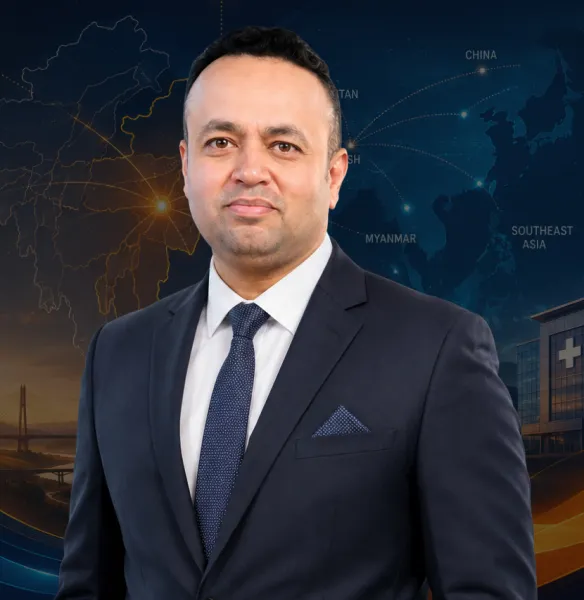
By Pankaj Chandna, Co-Founder, Vaidam Health
Technology is changing how patients access healthcare across borders. From finding specialists and sharing medical records to arranging consultations and coordinating travel, digital tools are connecting different stages of the medical journey. This shift towards tech-enabled medical tourism is making cross-border healthcare more structured and increasingly end-to-end.
A digital medical travel companion brings these functions together, helping patients access information, consult specialists remotely and coordinate their journey before, during and after treatment. Technology supports this process, while human guidance remains central to healthcare decisions.
From Digital Discovery to a Connected Patient Journey:
Patients increasingly adopted digital healthcare during the pandemic, and many have continued using these services even after in-person healthcare resumed. The global online doctor consultation market is estimated to reach USD 15.01 billion in 2026, with a projected CAGR of 25.74% between 2026 and 2031. Mobile apps accounted for 69.40% of the market in 2025.
Technology allows international patients to understand their treatment options and hospital suitability before they travel. Through telemedicine and online consultations, patients can share medical records digitally and seek a preliminary medical opinion before making travel arrangements. Patients can now research doctors, hospitals, treatment options and associated costs remotely before making decisions about their medical care. Technology stops being an information source and becomes part of the patient's decision-making process.
Discovery is the easy half. Once a patient decides to travel, the work includes medical documentation, consultation scheduling around a surgeon's operating days, visa assistance, flights, accommodation close to the hospital, airport transfers, interpreters, and coordination with the hospital itself. The journey then continues through treatment, follow-up consultations, investigations and ongoing communication with the treating doctor, extending beyond the patient’s return home.
Connecting the Journey Through Technology:
This is where a data-backed approach to medical travel makes a practical difference. When patient information, communication and workflows are connected, the stages get coordinated instead of being handled as isolated tasks. A patient arriving in another country usually needs a person: someone who understands that healthcare system, speaks their language, and can explain why the admission process looks nothing like it does at home.
A technology-led medical tourism platform can do both. Digital hospital and doctor discovery on one side. Personalised support, multilingual communication and local on-ground assistance on the other. Dedicated case managers connect the different parts of the journey, while technology provides the operational intelligence needed to manage information and coordination at scale. The outcome is not just a digital healthcare experience. It is a connected, end-to-end patient experience where technology supports every stage of the journey, alongside human guidance.
Can Technology Make Cross-Border Healthcare More Human?
There is a contradiction running through digital medical travel. Healthcare keeps getting more technology-driven, and the patient's need for human reassurance has not gone away.
Crossing a border increase that need. For international patients, the healthcare journey may involve navigating different languages, cultural contexts and administrative requirements. Technology makes sure that the patient gets assistance at each step. It organises medical information, sends reminders, facilitates online consultations, and makes communication possible across a six-hour time difference. AI-assisted systems can also support patient onboarding, information management and workflow coordination, which is the repetitive administrative work that fills a coordinator's day.
Medical decisions still require qualified healthcare professionals. Patients still want a human point of contact to understand their options and handle the things nobody planned for. That matters more when multiple hospitals, specialists and support services are involved at once.
The future, then, probably belongs less to fully automated medical travel and more to human-led, technology-enabled patient journeys.
That combination addresses one of the fundamental challenges in medical tourism: a fragmented experience. Instead of managing hospitals, doctors, travel arrangements and follow-up care as separate pieces, the patient gets a single structured journey with real people attached to it. The role of a medical travel platform extends beyond hospital and doctor discovery to helping patients make informed decisions based on their medical needs, available treatment options and individual circumstances.
For a global medical tourism platform, that means combining technology, data and human expertise to provide access to quality healthcare while maintaining the personal support patients need throughout the process. Personalisation will go further from here. Artificial intelligence and data-driven systems can help organise medical information, identify relevant treatment pathways, improve communication and reduce administrative delays.
Balancing Technology with Human Oversight:
Greater automation also brings greater responsibility. Health information is among the most sensitive forms of personal data, and cross-border care can involve multiple healthcare providers and jurisdictions. Digital systems have to be designed around privacy, accountability and continuity of care first. Automation is a feature, not a foundation.
For an international patient, that connection makes a real difference. A digital platform may help them find the right information. A well-designed medical travel ecosystem goes further, bringing together data-backed guidance, hospital discovery, multilingual support, operational coordination and human assistance.
So, the digital medical travel companion is not a replacement for the traditional patient facilitator. It is an evolution of the role. Technology manages the information and the coordination. People provide the context, reassurance and support.
As healthcare becomes more global, the practical promise of technology is a modest one: make distance less disruptive, so a patient can travel thousands of kilometres without feeling they are navigating the journey alone.
Disclaimer: This is an authored article; DHN is not liable for the claims made in the same.
Stay tuned for more such updates on Digital Health News
Follow us