



Electronic Health Records for Children: Why Paediatric Data Needs Its Own Standards and Safeguards

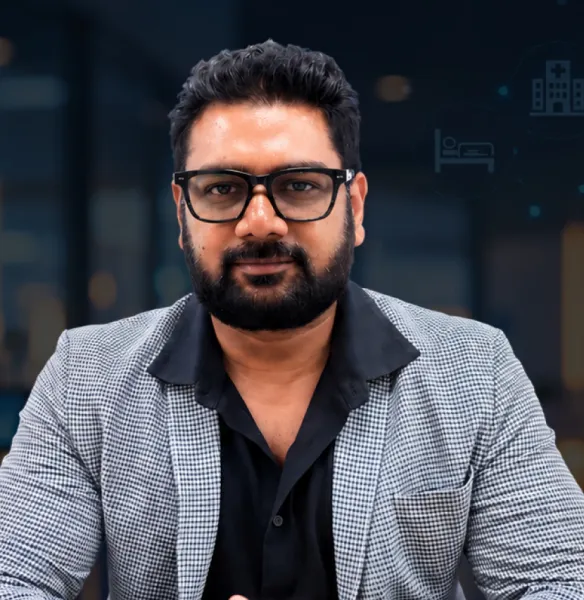
By Dr. Silky Jain, Chief Paediatric Haemato-Oncologist and Founder & CEO, Lavender Lane Children’s Superspeciality Centre
Twenty years ago, a child's medical history lived in a cloth bag: a stack of prescriptions, a vaccination card gone soft at the folds, a discharge summary someone's mother had carefully preserved. Today, that same history is supposed to live in the cloud, attached to a fourteen-digit health ID, accessible at the tap of a screen. In principle, that is progress. But the truth looks different. Parents sitting across the consultation table increasingly hold up a phone instead of a file, only to discover that their child's digital record is incomplete, fragmented, mismatched, or doesn't exist at all.
Big numbers, but children are left behind
India has done remarkable work on digital health. According to the Ayushman Bharat Digital Mission (ABDM), more than 104 crore health records have now been linked to over 93 crore ABHA accounts. Very few countries have achieved this scale.
But children are not equally part of this story. A 2024 assessment of ABDM, published in the journal Health Systems & Reform, found that children and adolescents under 18 make up about 35 per cent of India’s population but held only about 13 per cent of ABHA accounts at the time. They were the least represented age group in the system. The records were built for adults and then simply stretched to fit children.
Why a child’s record must be different
A child is not a static patient. Their weight, height, vaccination status, development, and organ function change every few months, not every few years. A dosing error that an adult's body might absorb without consequence can be dangerous in a toddler. A growth chart, a vaccination schedule, a developmental milestone, these are not footnotes in a child's record; they are the record. Yet most electronic health systems in use across both government and private institutions still treat paediatric data as a smaller version of adult data, when it requires an entirely different structure.
The consent question nobody is asking
India’s Digital Personal Data Protection Act, 2023 treats anyone under 18 as a child. It generally requires a parent’s or guardian’s verifiable consent to use a child’s data, and bans tracking, profiling and targeted advertising aimed at children.
These are good protections. But the law does not answer a simple question: what happens when the child turns 18? Their record — often years of sensitive test results, diagnoses and even genetic information — should move from the parent’s control to the young adult’s own. Very few hospital systems in India handle this handover well. Many do not plan for it at all.
What goes wrong in real life
The real-world consequences of getting this wrong are not abstract. A fragmented paediatric record means a child's leukaemia diagnosis, treated at one hospital, may not follow them to the next specialist they see for a transplant. It means a vaccination history recorded at a government facility may be invisible to the private paediatrician treating a fever six months later. Families end up repeating tests, repeating histories, and in the worst cases, repeating mistakes, simply because the system meant to prevent exactly this kind of loss was never built with a child's shifting, decades-long journey in mind.
What needs to change
India does not need another patch on the old system. It needs a dedicated standard for children’s health data. In simple terms, every paediatric record system should:
• Store weight and height at every visit and check medicine doses against the child’s current weight.
• Show growth charts and the vaccination schedule as a core part of the record, not an add-on.
• Use normal ranges and severity scores meant for children, which are different from adult values.
• Plan the handover of consent at 18, so the young adult takes charge of their own record smoothly.
• Connect government and private systems, so a child’s history follows them wherever they are treated.
At Lavender Lane, we have built our systems around these principles from day one, because a child’s data deserves the same care as their diagnosis. But no single hospital can fix this alone. It needs common rules for the whole sector.
The next test
India has shown it can digitise health records at a scale few countries can match. The next test is whether it can do this just as carefully for the citizens who will carry their records the longest: its children. Children cannot ask for better data systems themselves. That job falls to those of us who treat them, and to those who build the systems around them.
Stay tuned for more such updates on Digital Health News
Follow us