The AI Talent Gap in Indian Healthcare: Bridging Potential and Reality
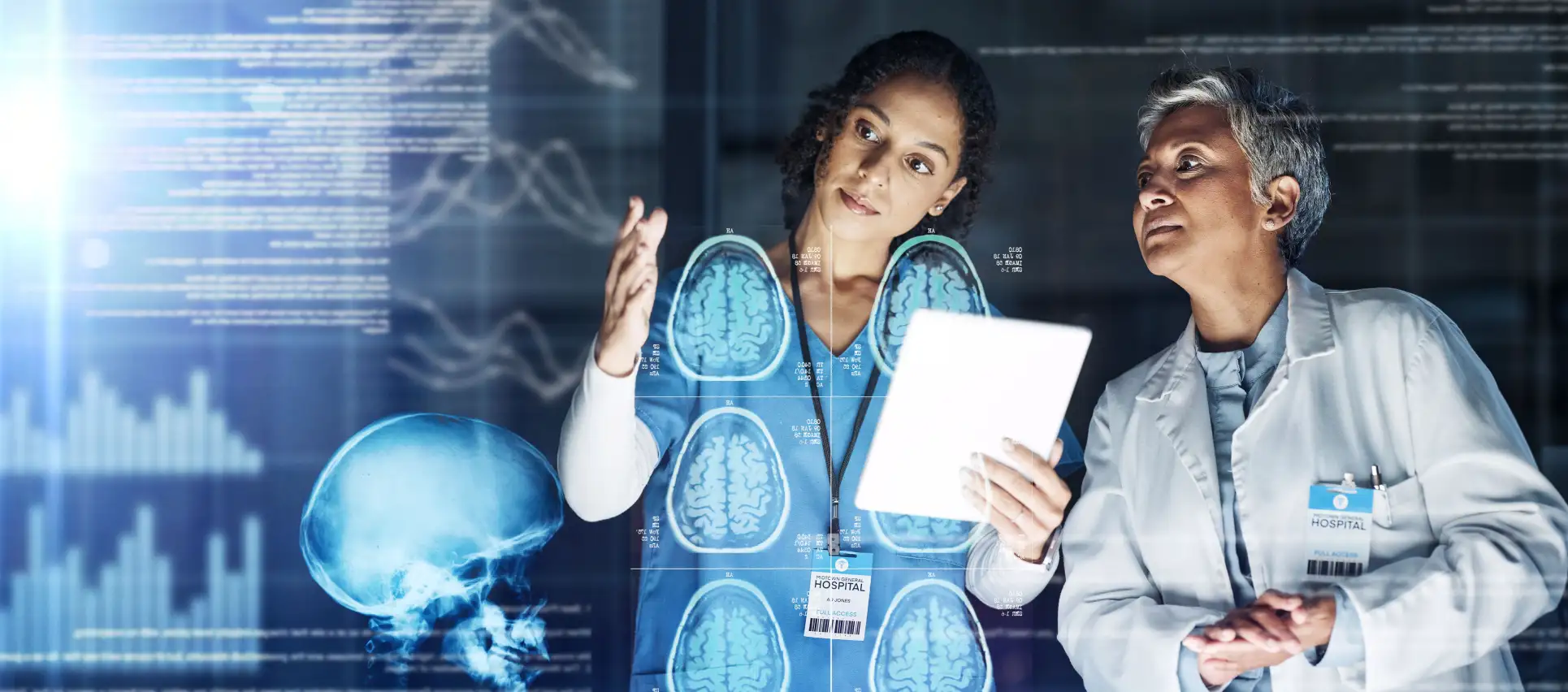
Artificial intelligence (AI) is rapidly reshaping healthcare worldwide. From improving diagnostics and personalizing treatments to optimizing hospital operations and patient monitoring, AI offers the potential to transform the quality, affordability, and accessibility of healthcare services.
In India, the National Strategy for Artificial Intelligence (2018), developed by NITI Aayog, envisioned AI as a crucial tool to address gaps in the healthcare system. Nearly eight years later, the promise remains, but the reality reveals a critical bottleneck: India faces a significant shortage of skilled AI talent, limiting the adoption and impact of AI in healthcare.
The Economic Survey 2024–25 highlighted the vast opportunities AI presents for the Indian healthcare sector, while simultaneously emphasizing the constraints that hinder its widespread use. According to the survey, AI, when combined with technologies such as robotics and the Internet of Medical Things (IoMT), can act as the “new nervous system” of healthcare—enhancing medical diagnostics, treatment, and patient care. It can help reduce drug discovery costs, improve the quality of medical devices, and enable real-time monitoring for patients in remote areas. However, the survey also notes that these benefits can only be realized if the country successfully addresses challenges related to talent, infrastructure, trust, and regulatory compliance.
Early AI Success Stories in India
Despite the broader challenges, India has already witnessed some promising AI applications in healthcare, demonstrating what is possible when technology is effectively implemented. In Rajasthan, for instance, the state government has integrated AI into its public health system to tackle silicosis, a debilitating lung disease caused by prolonged exposure to silica dust in mining communities. By training AI models on vast datasets of labeled chest X-rays, Rajasthan has significantly improved both the speed and accuracy of diagnosis. These AI-driven diagnostics, combined with digital X-rays and teleradiology, have enabled timely intervention for affected patients. Beyond diagnostics, the state implemented a Direct Benefit Transfer (DBT) portal to provide financial support to patients without bureaucratic delays, showcasing a holistic approach where technology complements social welfare.
Similarly, Uttarakhand’s eSwasthya Dham portal exemplifies AI in preventive and emergency healthcare. Designed to monitor the health of Char Dham Yatra pilgrims, the platform enables the creation of Ayushman Bharat Health Accounts (ABHA) in minutes, allowing visitors to store and manage their health records digitally. AI helps monitor real-time health parameters and ensures emergency medical support, reflecting how technology can enhance healthcare delivery even in challenging, high-traffic environments.
While these initiatives demonstrate AI’s potential, the adoption remains limited. In 2023, only 34% of healthcare organizations were piloting AI projects, and a mere 16% had operational generative AI initiatives. The gap between experimentation and full-scale deployment points to systemic challenges, particularly the lack of specialized talent capable of integrating AI solutions into clinical workflows.
The Core Challenge: AI Talent Shortage
India’s AI talent shortage is a central constraint in the healthcare sector. The demand for professionals skilled in AI is rising rapidly, but the supply remains limited. According to industry reports, only 15–20% of the current workforce has the technical expertise to work effectively with AI. Companies like HCLTech and Publicis Sapient face significant challenges in hiring engineers capable of designing, training, and deploying AI models, as well as professionals who can bridge the gap between technology and healthcare practice.
Startups, such as StaqU, illustrate a shift in hiring approaches. Rather than focusing solely on formal degrees or years of experience, these firms prioritize hands-on expertise, community contributions on platforms like GitHub, and demonstrable problem-solving abilities. Atul Rai, CEO of StaqU, notes, “Someone with two years of hands-on GitHub work in AI is more valuable to us than someone with two decades in Java.” This highlights a critical trend: adaptability, practical skills, and domain-specific knowledge are increasingly valued over traditional credentials.
Moreover, India’s limited research infrastructure constrains the development of foundational AI models comparable to those in the U.S. or China. Most Indian healthcare AI applications rely on pre-trained models adapted for specific needs rather than developing large-scale models from scratch. This approach requires engineers who are both technically proficient and able to customize AI systems for unique healthcare challenges, such as diagnostic imaging, predictive analytics, and patient monitoring.
Trust and Compliance: Beyond Technical Expertise
Even when skilled professionals are available, adoption challenges persist because healthcare is highly sensitive and regulated. A key barrier is trust. Clinicians are trained to rely on evidence-based practices, peer-reviewed research, and observable data. When AI systems make recommendations without transparent reasoning, a situation known as a “black-box” model, clinicians may hesitate to rely on them, fearing errors that could jeopardize patient safety.
Trust is further complicated by a fragmented data infrastructure. Many hospitals and healthcare organizations operate with legacy IT systems, disconnected electronic medical records, and scattered analytics platforms. AI algorithms require consistent, high-quality data to perform accurately, but inconsistent or incomplete datasets limit the effectiveness of AI solutions.
Additionally, India lacks comprehensive regulatory frameworks for AI in medical software, diagnostics, and pharma marketing. Questions regarding liability, compliance, and auditability remain unresolved, making organizations cautious in deploying AI solutions at scale. Finally, organizational silos—where IT, clinical, and administrative teams operate independently—further impede adoption. AI solutions cannot thrive without cross-functional collaboration, clear accountability, and integrated workflows.
The Human and Operational Benefits of AI
Despite these challenges, the potential benefits of AI in healthcare are profound. AI can enhance diagnostic precision, detect anomalies invisible to human eyes, and provide personalized treatment recommendations. Predictive models can analyze patient-specific data to forecast disease progression, optimize therapies, and prevent complications.
Operationally, AI can streamline workflows, automate administrative tasks, and optimize hospital scheduling, freeing clinicians to focus on patient care. In rural or underserved regions, AI combined with IoMT enables remote patient monitoring, bridging gaps in accessibility and improving early intervention.
In the pharmaceutical sector, AI drives efficiency in marketing and compliance. By analyzing large datasets—from CRM logs to physician interactions—AI identifies effective engagement strategies, automates compliance checks, and reduces delays in campaign approvals. This precision not only improves operational efficiency but also enhances regulatory adherence and accountability.
Strategies to Bridge the Gap
Addressing India’s AI talent shortage and adoption challenges requires a holistic approach:
Upskilling and Training: Universities and professional training institutes should introduce specialized programs in AI for healthcare, combining theory with hands-on experience in clinical settings. Certifications in predictive analytics, AI ethics, and medical AI applications can help produce a workforce ready to meet sector needs.
Industry-Academia Collaboration: Partnerships between hospitals, AI startups, and academic institutions can foster practical learning. Internships, joint research projects, and mentorship programs allow students to gain real-world experience while contributing to innovation.
Government and Policy Support: Strategic investments in AI infrastructure, cloud computing, and standardized health data systems are critical. Policymakers must also establish clear regulations for AI in diagnostics, clinical decision support, and marketing to reduce organizational hesitation.
Building Trust and Explainability: AI models must be transparent and interpretable. Clinicians should understand how recommendations are generated, and compliance rules should be integrated into workflows to flag potential breaches in real time. Pilot programs can demonstrate measurable benefits, gradually building organizational confidence.
Continuous Governance and Feedback: AI systems must be regularly monitored, retrained, and audited to ensure accuracy and compliance. Incorporating clinician feedback ensures that models remain relevant, ethical, and effective in real-world applications.
Looking Ahead
India’s healthcare system is at a pivotal moment. AI has already demonstrated success in specific programs, from Rajasthan’s silicosis detection model to Uttarakhand’s pilgrim health portal. However, for AI to achieve its transformative potential, the country must address the human capital gap, infrastructure challenges, and trust deficit.
Developing AI talent is not only about increasing the number of engineers; it is about cultivating professionals capable of applying AI in healthcare contexts, building trust in AI systems, and navigating regulatory frameworks. Only then can AI move from isolated pilots to large-scale, sustainable implementation.
The Economic Survey 2024–25 highlights that strengthening collaborations among the government, the private sector, and research institutions will be critical. Investment in workforce development, clear governance, and robust infrastructure can help India bridge the gap between potential and reality.
Conclusion
AI offers the promise of smarter, faster, and more equitable healthcare in India. From improved diagnostics and personalized treatments to operational efficiencies and better patient monitoring, the possibilities are transformative. Yet, the realization of this potential hinges on the availability of specialized talent, integration of AI into clinical workflows, and the development of trust and compliance frameworks.
Early successes, such as AI-driven silicosis detection and digital health monitoring of pilgrims, demonstrate what is achievable. However, scaling these initiatives nationally requires a systemic approach that addresses both human capital and organizational readiness. Upskilling programs, industry-academia partnerships, investment in infrastructure, and governance mechanisms will be essential to unlock the full potential of AI.
In the coming years, India’s ability to attract, train, and retain AI talent—while ensuring trust, explainability, and compliance, will determine whether it becomes a global leader in AI-driven healthcare or continues to lag behind its peers. The path forward is clear: AI is not just a tool, but a transformative system that requires humans and machines to work in tandem for the benefit of patients and the healthcare ecosystem at large.
Stay tuned for more such updates on Digital Health News
Follow us