IIT Madras Releases India’s First Genome Database for Paediatric Leukaemia, Colorectal & Pancreatic Cancers
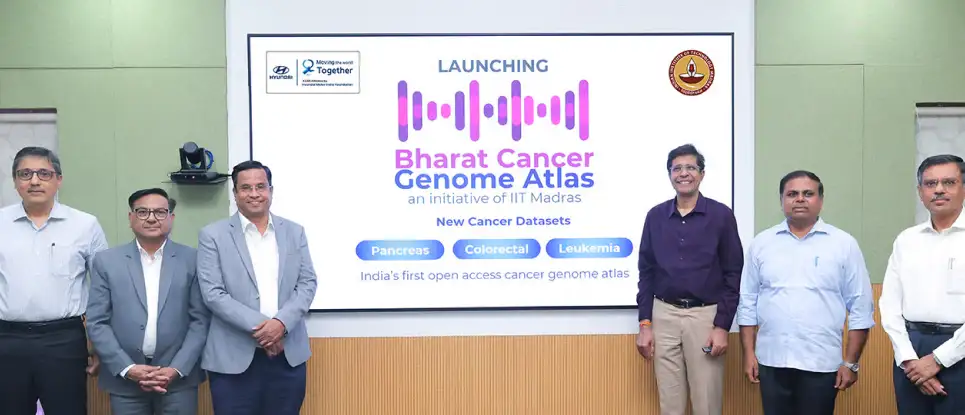
The work has been carried out by the Centre of Excellence on Cancer Genomics and Molecular Therapeutics at IIT Madras, supported under the Government of India’s Institutions of Eminence initiative.
IIT Madras has released India’s first comprehensive genome database focused on paediatric leukaemia, colorectal cancer and pancreatic cancer, expanding access to Indian cancer genome data for researchers and clinicians worldwide.
Cancer continues to be one of the most serious public health challenges globally, and India’s burden is steadily increasing. According to the Indian Council of Medical Research, the number of people living with cancer in the country continues to rise each year.
Data from the National Cancer Registry Programme suggests that nearly one in nine Indians is likely to develop cancer during their lifetime, with around 2.5 million people currently living with the disease. Since 2022, cancer incidence in India has grown by about 12.8 per cent annually, underscoring the urgency for improved prevention, diagnosis and treatment strategies.
Despite this growing burden, Indian patients have historically been underrepresented in global cancer genome studies. As a result, genetic variants specific to cancers prevalent in India have not been adequately captured, limiting the effectiveness of diagnostic tools and drug development for Indian populations.
To address this gap, IIT Madras initiated the Indian Cancer Genome Programme in 2020, focusing on generating whole-genome sequencing data from cancer patients across the country.
Under this programme, genome sequencing has now been completed for samples from paediatric leukaemia, colorectal cancer and pancreatic cancer patients. The work has been carried out by the Centre of Excellence on Cancer Genomics and Molecular Therapeutics at IIT Madras, supported under the Government of India’s Institutions of Eminence initiative.
The initiative involved collaboration with multiple clinical partners, including Karkinos Healthcare in Mumbai, KK Childs Trust Hospital, Institute of Child Health, Government Rajiv Gandhi Hospital and Kumaran Hospital in Chennai. These institutions contributed to data analysis and the creation of anonymised summaries of genetic variants derived from Indian cancer samples.
The genome data have been released through the Bharat Cancer Genome Atlas (BCGA), alongside the Bharat Cancer Genome Grid (BCG2), a clinician-centric initiative designed to support the responsible adoption of whole genome sequencing in routine oncology practice.
Announcing the release, Prof. V. Kamakoti, Director, IIT Madras, said, “This initiative aims to generate deeper insights into the factors driving these deadly diseases and to support their prevention through timely, early interventions. The Atlas fills a critical gap in understanding the genomic landscape of multiple cancers in India.”
Prof. Kamakoti added, “It presents a carefully curated collection of genetic variants from contemporary Indian cancer patients, facilitating the identification of variants important for early diagnosis, tracking disease progression, and guiding therapeutic decisions. We thank Hyundai Motor India for their support in this endeavour.”
Project Coordinator Prof. S. Mahalingam noted, “This database will be an invaluable resource to identify cancer-specific biomarkers in India, which will enable early detection of leukaemia, colorectal and pancreatic cancers. Additionally, it will facilitate the identification of novel therapeutic targets to support the design of more effective, population-specific treatment strategies for India.”
The broader programme also supports screening and vaccination camps, technician training and mobile medical units, alongside financial assistance for cancer treatment among low-income families, reinforcing its focus on equitable access to precision cancer care.
Stay tuned for more such updates on Digital Health News
Follow us