



IIT Jodhpur & ICMR Launch Centre for Collaborative Research to Strengthen AI-Based Diagnostics for Rural Healthcare
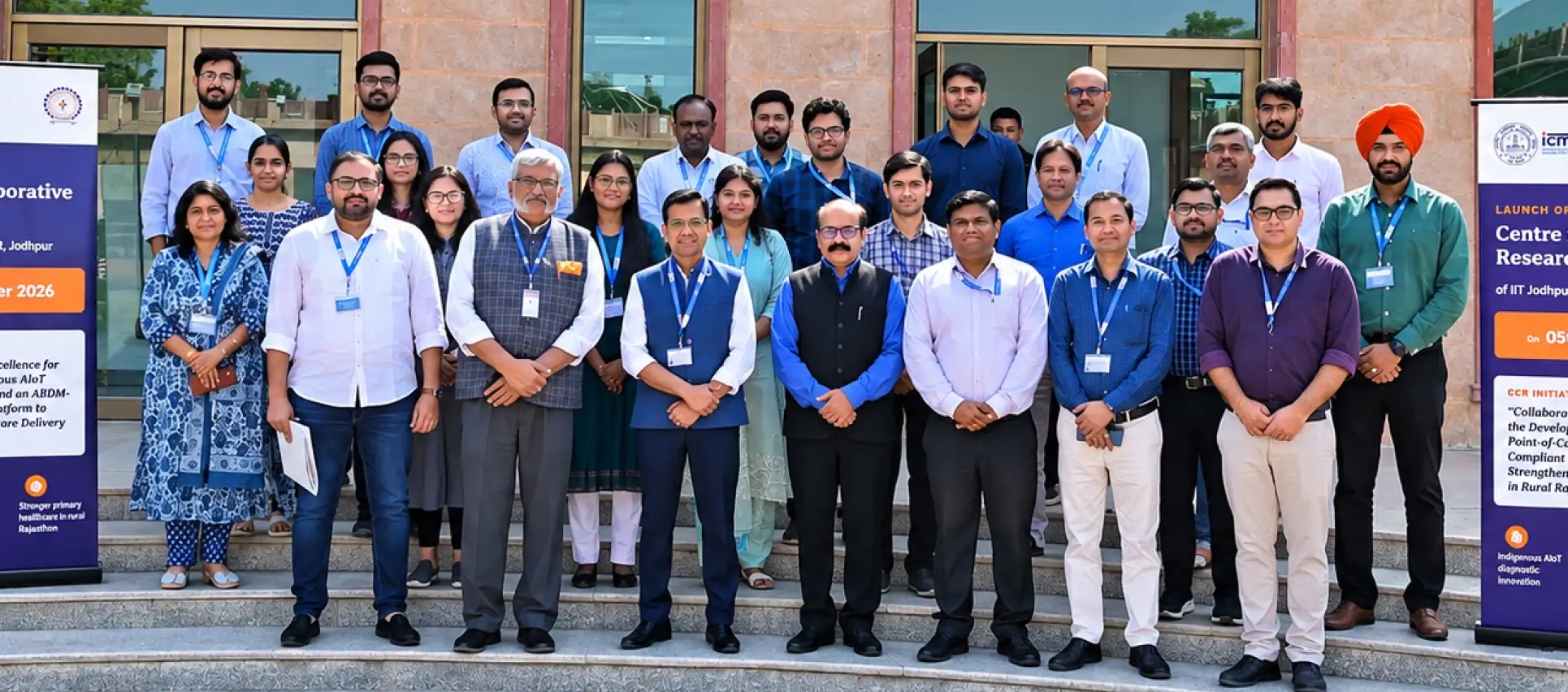
The initiative aims to strengthen primary healthcare through locally developed point-of-care diagnostic technologies and an Ayushman Bharat Digital Mission (ABDM)-compliant digital platform.
The Indian Institute of Technology (IIT) Jodhpur and the Indian Council of Medical Research-National Institute of Health Research (ICMR-NIHR), Jodhpur, have launched a Centre for Collaborative Research (CCR) to develop indigenous Artificial Intelligence of Things (AIoT)-based diagnostic devices and a digital health platform for rural healthcare delivery.
The initiative aims to strengthen primary healthcare through locally developed point-of-care diagnostic technologies and an Ayushman Bharat Digital Mission (ABDM)-compliant digital platform.
The collaboration brings together IIT Jodhpur's technology development capabilities and ICMR-NIHR's public health research expertise to develop indigenous diagnostic solutions for primary healthcare.
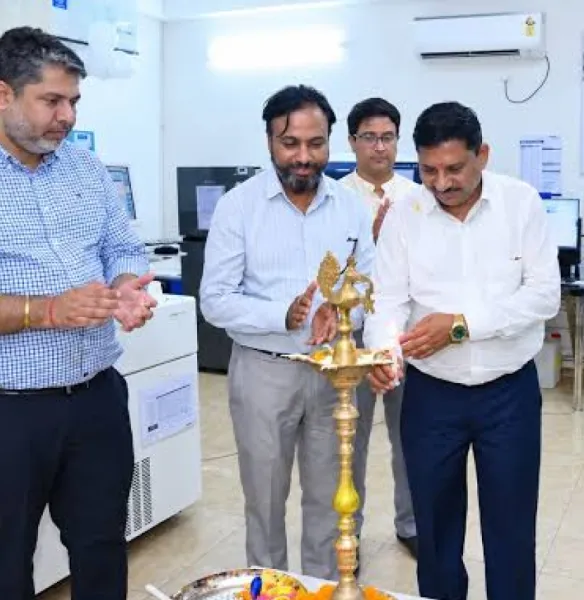
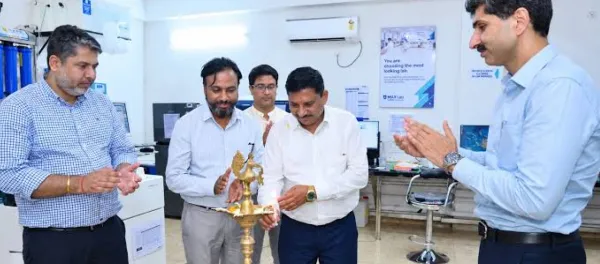
The Centre was inaugurated in the presence of Prof. (Dr.) Pankaj Bhardwaj, Director, ICMR-NIHR Jodhpur, and Prof. Avinash Kumar Agarwal, Director, IIT Jodhpur.
Under the collaboration, the institutions plan to develop 10 AI-enabled diagnostic device prototypes covering multiple clinical parameters, including electrocardiograms (ECG), blood pressure, haemoglobin, blood glucose, glycated haemoglobin (HbA1c), and white blood cell (WBC) testing.
Of these, five to six devices are intended for deployment in rural healthcare settings to support screening and follow-up closer to communities with limited access to diagnostic laboratories and specialist services.
The proposed devices will be integrated with an ABDM-compliant digital health platform designed to support offline functionality.
Further, Health records and diagnostic reports can be synchronised with the platform when internet connectivity becomes available, supporting continuity of digital health information in areas with inconsistent network access.
The AI-enabled system is intended to assist doctors with investigation and treatment guidance; final clinical decisions remain with treating doctors.
The platform will follow a clinician-in-the-loop approach, keeping doctors involved in reviewing AI-generated outputs and retaining clinical responsibility for patient care.
Stay tuned for more such updates on Digital Health News
Follow us