Why Healthcare Is Facing a Cybersecurity Crisis

The Healthcare Cybersecurity Crisis: Why Hospitals Need Stronger Protection
The Healthcare Cybersecurity Crisis: Why Hospitals Need Stronger Protection

Healthcare has become one of the world’s most digitally connected industries. Electronic health records, telemedicine Hospitals are becoming increasingly vulnerable to cyberattacks as healthcare rapidly digitises.

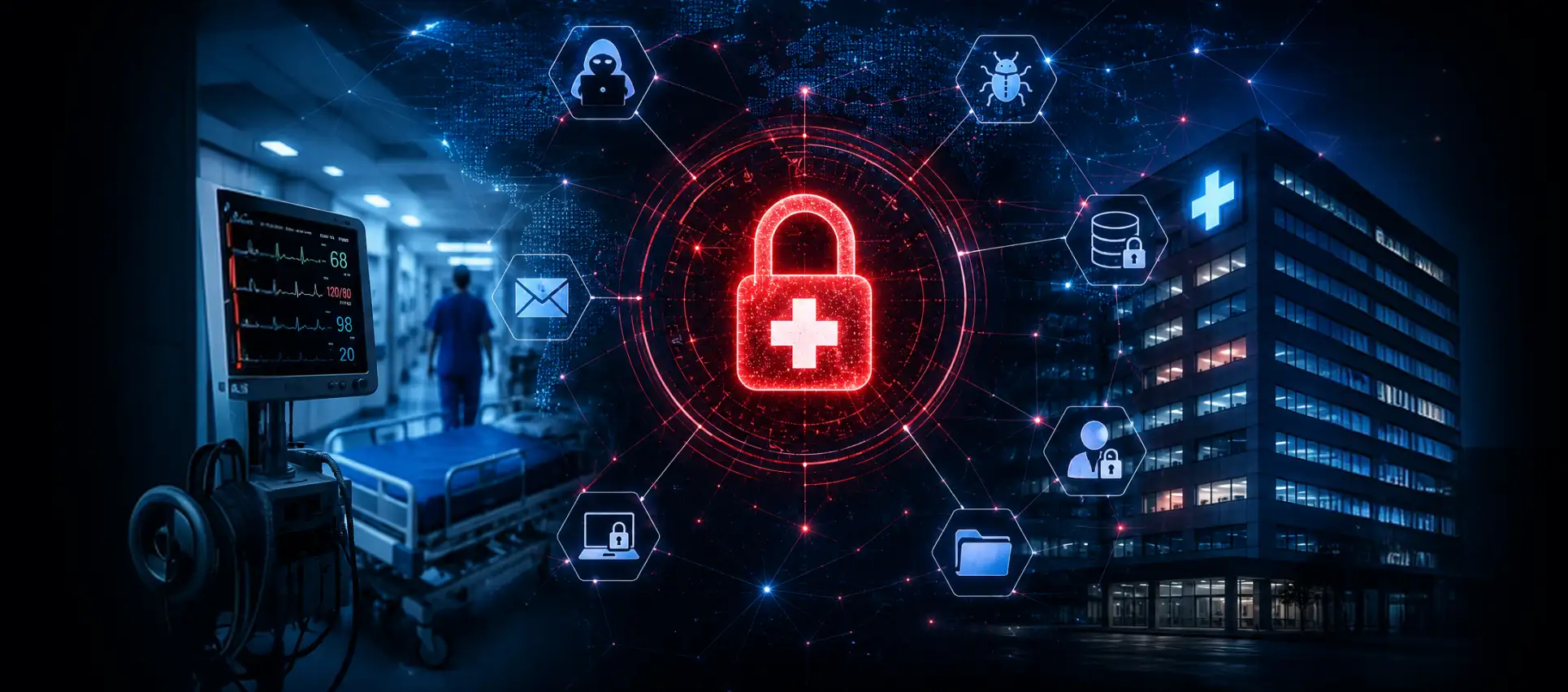
Ransomware, data breaches and AI-powered threats can disrupt critical systems and patient care. Connected medical devices are creating new entry points for attackers.

The article explores the growing threat and why cybersecurity must become part of patient safety. Cloud platforms, connected medical devices, and artificial intelligence are transforming how hospitals deliver care. But this digital shift has created another reality: hospitals are increasingly becoming prime targets for cybercriminals.

Unlike a conventional cyberattack, a breach in healthcare can affect more than data or finances. It can interrupt surgeries, delay diagnoses, disrupt emergency services, and potentially put patients at risk. As healthcare organizations continue to digitize, cybersecurity is becoming an essential part of patient safety.

Why Healthcare?

Hospitals possess something cybercriminals highly value: enormous amounts of sensitive information. Medical histories, diagnostic reports, insurance details, identification documents, and financial information are stored across interconnected systems. Unlike a password or credit card, medical information cannot simply be changed after it has been stolen.

Healthcare organizations are also attractive targets because they operate under constant pressure. A bank may temporarily suspend services during a cyber incident, but a hospital cannot simply switch off its systems. Emergency departments must continue functioning; doctors need access to patient records, and critical medical equipment must remain operational. This urgency makes healthcare particularly vulnerable to ransomware. Attackers can encrypt hospital systems and demand payment for restoring access, knowing that prolonged disruption could have serious consequences.

The growing number of connected devices adds another layer of risk. Hospitals now rely on network-enabled imaging systems, patient monitors, infusion pumps, and other Internet of Medical Things devices. Every connected device can potentially create another entry point if it is not properly secured.

When Systems Fail

The real danger of a healthcare cyberattack becomes clear when digital systems go offline. If doctors suddenly lose access to electronic health records, they may struggle to retrieve medication histories, previous diagnoses, or laboratory reports. Appointment systems can become inaccessible, communication between departments can slow down, and staff may be forced to return to manual processes. Such disruption is not merely inconvenient. It can affect clinical decision-making.


A delayed diagnostic report or missing patient record could influence how quickly treatment is provided. In emergency situations, even small delays can become significant. This is why cybersecurity in healthcare must be viewed as a patient-safety issue rather than simply an information-technology concern.

The financial impact can also be substantial. Hospitals may face recovery costs, legal consequences, regulatory penalties, operational losses, and reputational damage. More importantly, patients may lose confidence in an institution that is responsible for protecting both their health and their personal information.

The AI Threat

Artificial intelligence is opening new possibilities for healthcare, from assisting doctors with diagnosis to automating administrative tasks. But the same technology is also giving cybercriminals more sophisticated tools. AI can help attackers create convincing phishing emails, automate scams, and tailor fraudulent messages to specific individuals. Deepfakes and AI-generated voices could make impersonation attacks harder to recognize, potentially allowing criminals to pose as hospital executives, doctors, or other trusted personnel.

At the same time, hospitals are introducing AI into increasingly sensitive workflows. Clinical decision-support systems, medical imaging tools, and AI-based patient management platforms depend on large volumes of data. If these systems are manipulated, compromised, or fed inaccurate information, the consequences could extend beyond data theft. This creates a new cybersecurity challenge: protecting not only information, but also the integrity of the algorithms and systems increasingly involved in healthcare decisions.

India’s Wake-Up Call

India has already witnessed how cyber incidents can disrupt hospital operations. In November 2022, AIIMS Delhi faced a ransomware attack that affected its e-Hospital application, disrupting services such as registration, appointments, and billing and forcing several processes to continue manually. More recently, in June 2025, servers at Delhi’s NKS Super Speciality Hospital and Sant Parmanand Hospital were reportedly compromised, affecting access to patient and administrative information and prompting a police investigation.

The wider threat is growing too. The India Cyber Threat Report 2026 recorded 3.79 million cyber threat detections targeting India’s healthcare and pharmaceutical sector between October 2024 and September 2025. While ransomware remains a particularly disruptive threat, phishing, credential theft, and vulnerabilities in connected systems are also creating risks for hospitals as they expand their digital infrastructure.

Healthcare providers are therefore strengthening their defences. Apollo Hospitals has reported measures including security simulations, mock-phishing exercises, vulnerability assessments, penetration testing, and a Security Operations Centre, while Fortis Healthcare highlights network security, authentication, internal audits, and automated threat detection. These efforts reflect a broader shift towards treating cybersecurity as an ongoing part of hospital operations and increasingly, as a component of patient safety.

Securing the Future

Healthcare organizations need to move from reacting to cyberattacks toward preparing for them. Strong access controls, multi-factor authentication, encryption, regular software updates, and secure backups should become fundamental components of hospital infrastructure. Network segmentation can also prevent an attacker who gains access to one system from easily moving across the entire network. Technology alone, however, cannot solve the problem. Employees remain an important line of defence. Regular cybersecurity training can help staff recognize phishing attempts, suspicious links, social engineering, and other common attack methods.


Hospitals should also regularly test their incident-response plans. Knowing what to do when systems are compromised can reduce confusion and help essential services continue operating. Governments, technology companies, and healthcare providers will need to work together as the threat landscape evolves. Stronger cybersecurity standards for medical devices, faster information-sharing about emerging threats, and clearer protocols for responding to attacks can help build a more resilient healthcare ecosystem.


The digital transformation of healthcare is unlikely to slow down. If anything, hospitals will become more dependent on connected technologies, cloud infrastructure, and AI. That makes cybersecurity not an optional layer added after innovation, but a fundamental part of responsible digital healthcare. The next major healthcare crisis may not begin with a virus or a disease. It could begin with a compromised password, a vulnerable device, or a malicious piece of code. Preparing for that possibility is no longer simply about protecting hospital networks; it is about protecting the continuity and safety of patient care.

Stay tuned for more such updates on Digital Health News

Follow us

More Articles By This Author


Show All

Sign In / Sign up