Amit Shah Lays Foundation of Gujarat’s INR 362 Cr BSL-4 Bio-Containment Lab
The BSL-4 laboratory will be India’s second high-level bio-containment facility after the National Institute of Virology in Pune, and the first such lab to be constructed by a state government.
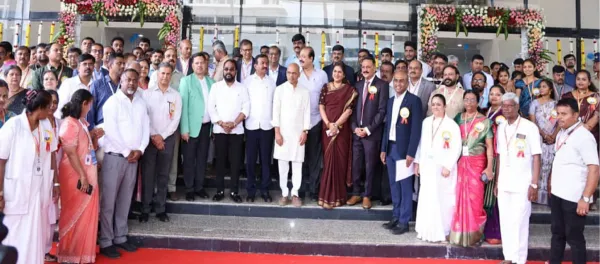
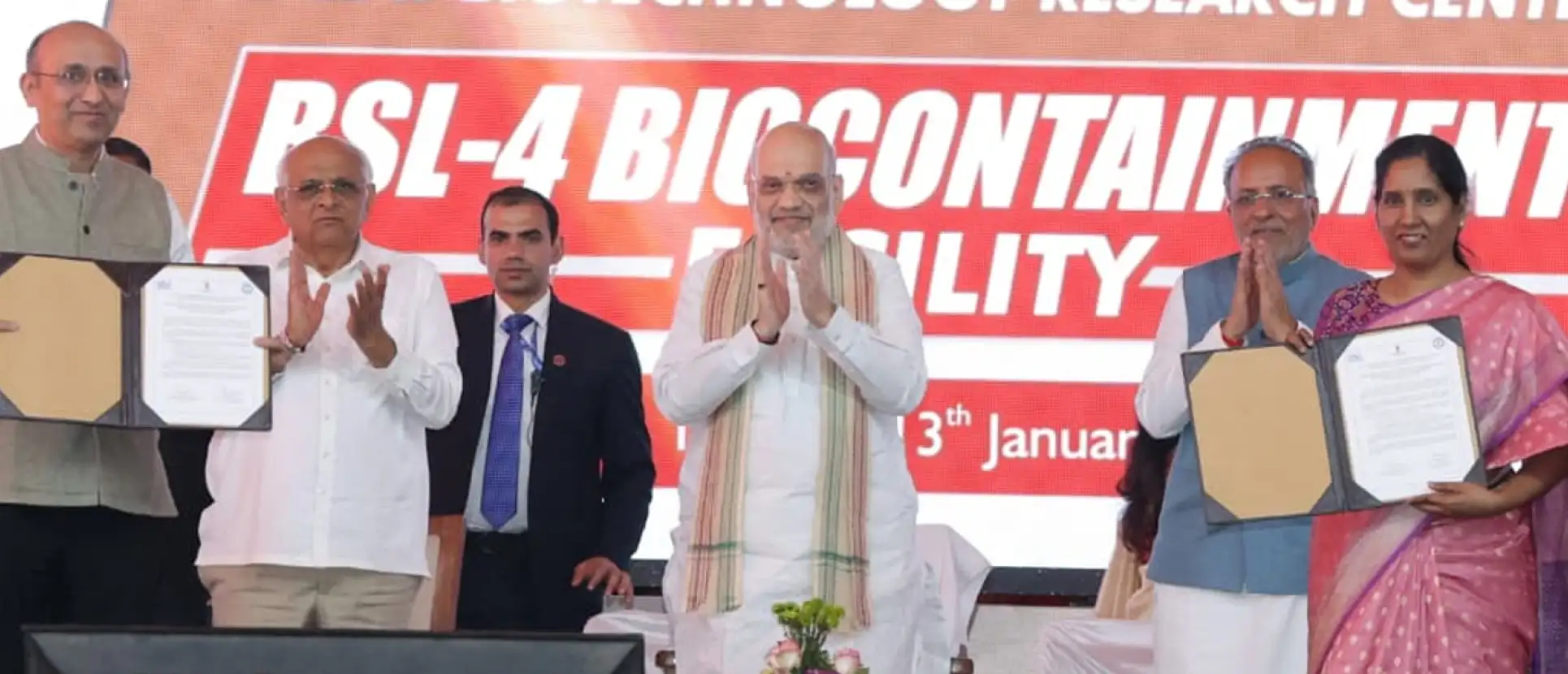
Union Home Minister Amit Shah has laid the foundation stone of India’s first state-built BSL-4 Bio-Containment Facility at the Gujarat Biotechnology Research Centre in Gandhinagar, marking a significant step in advancing the country’s biotechnology research and health security capabilities.
The BSL-4 laboratory, being developed at a cost of INR 362 Cr over 11,000 square metres, will be India’s second high-level bio-containment facility after the National Institute of Virology in Pune, and the first such lab to be constructed by a state government.
Once operational, it will provide Indian scientists with a secure environment to study highly infectious viruses, reducing reliance on foreign laboratories and accelerating testing for dangerous pathogens.
This initiative reflects Prime Minister Narendra Modi’s vision of integrating science and technology into national development, with the Home Minister describing the facility as a “protective shield” for India’s health security.
Amit Shah emphasized, “We need research-based permanent security, and this laboratory will fulfil all our needs.”
The facility is designed with global best practices and world-class infrastructure to study zoonotic diseases, which account for 60-70 per cent of human infections. It aligns with India’s One Health Mission, aimed at safeguarding both human and animal health, and will play a key role in strengthening the country’s bio-safety framework.
India’s biotechnology sector has grown rapidly in recent years, with the bio-economy expanding from USD 10 bn in 2014 to USD 166 bn by 2024. The number of biotech startups has risen from fewer than 500 to over 10,000, while patent filings have increased more than tenfold, reflecting strong engagement from young entrepreneurs. “Our youth have proven they are not just job seekers, but job creators,” Shah remarked.
The country is also a global leader in vaccine production, supplying nearly 60 per cent of the world’s vaccines. India has developed the indigenous cervical cancer vaccine Cervavac and the world’s first DNA-based COVID-19 vaccine, showcasing its growing capacity for cutting-edge biotech innovation.
Shah highlighted broader health challenges, including antimicrobial resistance, which he called a “silent disaster” that requires a clear strategy, timely treatment, and public awareness.
The Gujarat Biotechnology Research Centre, established in 2018, has been central to the state’s biotech journey. With the new BSL-4 facility, Gujarat aims to become a national leader in biotechnology, attracting investment, creating jobs, and fostering innovation in India’s high-end biosciences sector.
Stay tuned for more such updates on Digital Health News
Follow us