AI-Supported Mammography Outperforms Standard Breast Cancer Screening in Sweden Trial

The AI-supported group recorded 1.55 interval cancers per 1,000 women, compared with 1.76 per 1,000 in the standard screening group, translating to a 12% reduction in cancers diagnosed after a negative screening result.
Artificial Intelligence has demonstrated a measurable advantage over conventional mammography screening in Sweden, with a major trial showing higher cancer detection rates, fewer aggressive interval cancers, and reduced radiologist workload, without compromising accuracy.
The Mammography Screening with Artificial Intelligence (MASAI) trial was published in The Lancet, reporting that women screened with AI support experienced earlier detection of clinically relevant breast cancers and fewer diagnoses of aggressive disease in the years following screening.
Breast cancer screening programmes aim to detect and prevent late diagnoses that occur between routine screenings, known as interval cancers. These cancers are often more aggressive and harder to treat. In this context, the MASAI trial was designed to assess whether AI could strengthen screening effectiveness without increasing unnecessary recalls or false positives.
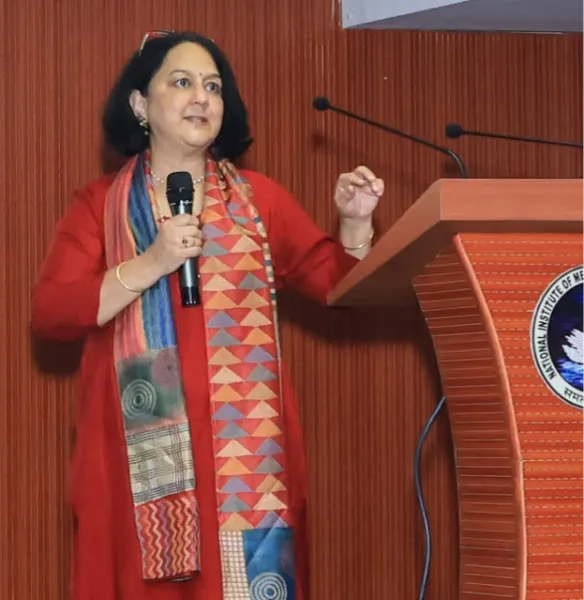
“Our study is the first randomised controlled trial investigating the use of AI in breast cancer screening and the largest to date looking at AI use in cancer screening in general,” said Dr Kristina Lang, a breast radiologist and clinical researcher at Lund University in Sweden. She added, “AI-supported screening improves the early detection of clinically relevant breast cancers, which leads to fewer aggressive or advanced cancers diagnosed in between screenings.”
Dr Lang noted, “Widely rolling out AI-supported mammography in breast cancer screening programmes could help reduce workload pressures amongst radiologists, as well as help to detect more cancers at an early stage, including those with aggressive subtypes.”
Experts unaffiliated with the study have welcomed the results while urging careful implementation. “Using AI to assist in reading mammograms can be more efficient, but there’s a concern that it can lead to missing some cancers. This study helps to address concerns, but the results are from a single centre, so more research will be needed to know for sure if this will help save lives,” said Dr Sowmiya Moorthie of Cancer Research UK.
Between April 2021 and December 2022, more than 105,900 women attending routine mammography at four screening centres in southwest Sweden were randomly assigned to either AI-supported screening or standard double reading by radiologists.
The AI system analysed mammograms, triaged low-risk cases for single reading, flagged high-risk cases for double reading, and highlighted suspicious areas to assist clinicians. The technology was trained and validated using over 200,000 mammograms from institutions across more than ten countries.
During a two-year follow-up, the AI-supported group recorded 1.55 interval cancers per 1,000 women, compared with 1.76 per 1,000 in the standard screening group, translating to a 12% reduction in cancers diagnosed after a negative screening result.
Importantly, 81% of cancers in the AI group were detected during screening itself, compared with 74% in the control group. False-positive rates remained comparable at 1.5% for AI-supported screening and 1.4% for standard reading.
Stay tuned for more such updates on Digital Health News
Follow us