Oscar Health Unveils GPT-5 Powered AI Superagent for Healthcare Support

Built over the last eight months, the AI superagent leverages large language models (LLMs) and internal APIs to handle tasks ranging from prior authorization to benefit cost inquiries and procedure types.
Oscar Health has introduced an artificial intelligence “superagent” designed to assist its Care Guides by streamlining administrative processes and improving member support, the company detailed in a blog post recently.
Built over the last eight months, the AI superagent leverages large language models (LLMs) and internal APIs to handle tasks ranging from prior authorization to benefit cost inquiries and procedure types.
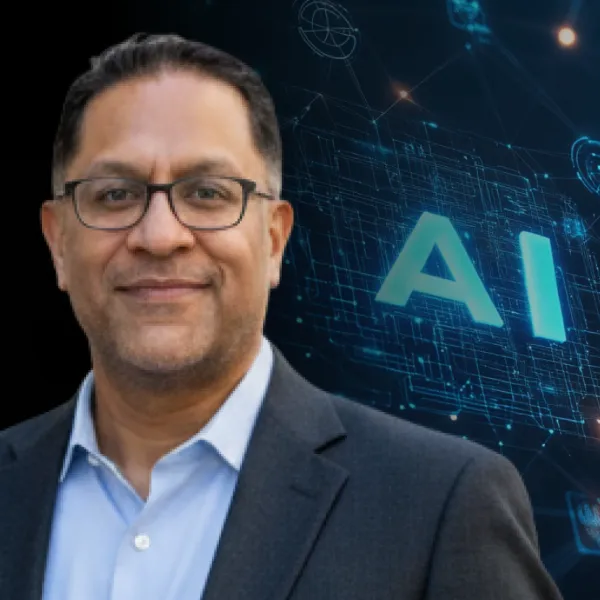
Pal Takacsi-Nagy, vice president of AI at Oscar, highlighted the development in a separate post, noting that initial employee testing yielded an 82.6% satisfaction rate.
“Our superagent is an orchestration of language models and internal APIs,” engineers wrote in the blog post. “We layer intent classification, targeted information retrieval, calls to internal endpoints, and answer synthesis, so that the system can produce responses with supporting citations even when source data comes from different systems.”
The technology has already been used to issue new ID cards and renew prescription drugs. Oscar is also exploring voice-activated interactions for members and is incorporating OpenAI’s latest GPT-5 model to expand its capabilities.
The superagent employs an agentic AI structure, with individual subagents managing specific functions such as provider networks, benefit categories, taxonomy, plans, prescription coverage, preventive care, and prior authorization. According to the researchers, “Each sub-agent runs independently. If a sub-agent is not confident in its response (e.g., it finds no relevant information), it removes itself from the flow, ensuring that only high-confidence data moves forward.”
Oscar’s development follows a growing trend in healthcare companies deploying agentic AI to reduce administrative burden and enhance efficiency. Related developments include Oracle Health’s AI-powered electronic health record featuring voice capabilities, and Microsoft’s agentic AI orchestrator for cancer care.
By integrating these tools, healthcare providers aim to improve operational efficiency while maintaining accurate and complete information for patient care.
Stay tuned for more such updates on Digital Health News
Follow us