Maha Health Dept Studies Kerala’s Digital Health Model to Improve Public Healthcare

The Maharashtra team assessed how eHealth Kerala, the state's integrated digital health platform, supports continuity of care, strengthens referral pathways, and improves patient follow-up.
Maharashtra has explored Kerala’s healthcare delivery and digital health ecosystem to identify practical approaches that could strengthen public health services, improve continuity of care, and modernize primary healthcare across the state.
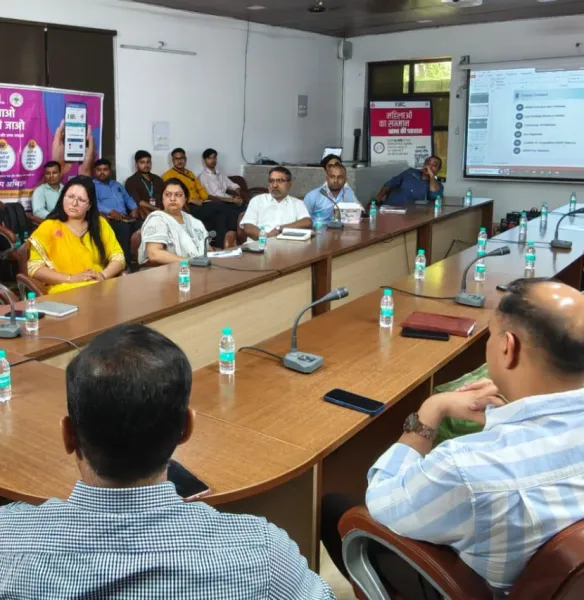
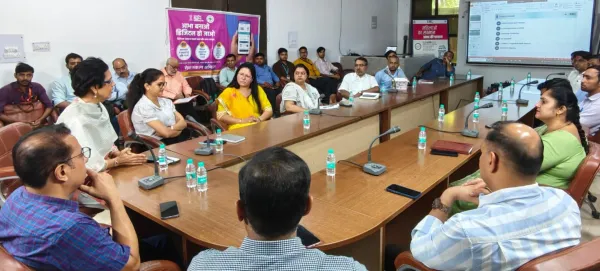
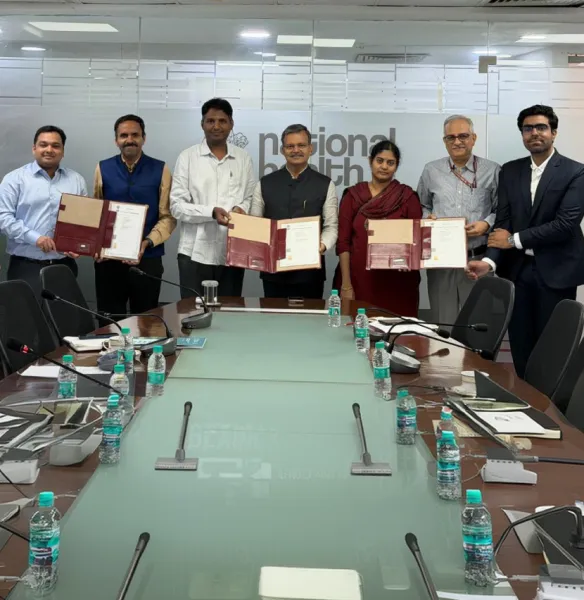
A Maharashtra health department delegation conducted a three-day study visit from August 6 to 8 to study Kerala’s Family Health Centre model, eHealth Kerala platform, and public health systems, with the aim of adapting practical solutions to strengthen healthcare delivery across Maharashtra.
The delegation was led by E. Ravindran, Secretary-II, Public Health Department, and Sanjay Shripatrao Katkar, Commissioner, Health Services, and Mission Director, National Health Mission, Maharashtra. Senior officials and technical experts from the Health Services Commissionerate also participated in the visit.
Rather than replicating Kerala’s system, the state is assessing which practices can be adapted to its own healthcare landscape.
Family Health Centre Model Under Study
One of the key focus areas was Kerala’s Family Health Centre (FHC) model, which expands the role of primary health facilities by delivering preventive, promotive, diagnostic, curative, and follow-up services through a single platform.
Officials examined how these centres integrate screening and management of non-communicable diseases, maternal and child healthcare, counselling services, and routine follow-up.
The delegation also reviewed the functioning of Ayushman Arogya Mandirs and their contribution to comprehensive primary healthcare at the community level.
Focus on Digital Health Integration
Another major area of interest was eHealth Kerala, the state's integrated digital health platform that connects healthcare facilities and enables digital management of patient records, referrals, and clinical information.
The Maharashtra team assessed how the platform supports continuity of care, strengthens referral pathways, and improves patient follow-up.
The visit also included detailed discussions on population-based screening for non-communicable diseases among individuals aged 30 years and above, cancer prevention and care, maternal and newborn health, tuberculosis elimination, antimicrobial resistance, public health laboratory services, emergency medical services, palliative care, integrated disease surveillance, and medicine procurement and supply-chain management.
Potential Reforms for Maharashtra
Key areas identified for further consideration include conversion of selected primary health centres into Family Health Centres, fixed-day service delivery, digital referral and patient follow-up, strengthening of public health laboratories, confidential review of maternal deaths, rational use of antibiotics, integrated disease surveillance, palliative care, and smart procurement and supply-chain systems.
These interventions may first be implemented on a pilot basis, followed by systematic evaluation.
Successful and locally adaptable models can then be considered for phased expansion across Maharashtra.
Stay tuned for more such updates on Digital Health News
Follow us