



Eli Lilly Partners with Nvidia to Build AI Supercomputer for Faster Drug Discovery

Using the supercomputer, Lilly scientists will train AI models on millions of experimental datasets to identify and test potential drug candidates more effectively.
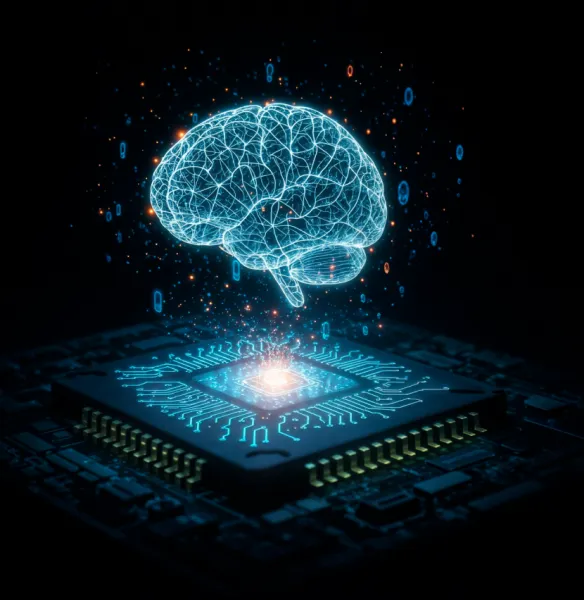
Eli Lilly has announced its partnership with Nvidia to build a high-performance supercomputer designed to advance drug discovery and development.
The collaboration aims to reduce the time required to bring new medicines to market while improving research efficiency. Using the supercomputer, Lilly scientists will train AI models on millions of experimental datasets to identify and test potential drug candidates more effectively.
According to the company, several of these proprietary AI models will be accessible through Lilly TuneLab, a federated artificial intelligence and machine learning platform that allows biotech firms to use drug discovery models trained on years of Lilly’s research data.
The federated system ensures privacy by enabling companies to leverage Lilly’s AI capabilities without directly sharing proprietary data. Beyond discovery, Lilly plans to apply the supercomputer in drug development, manufacturing, medical imaging, and enterprise AI operations.
“Lilly is shifting from using AI as a tool to embracing it as a scientific collaborator,” said Thomas Fuchs, senior vice-president and chief AI officer.
The supercomputer, built on Nvidia’s DGX SuperPOD with DGX B300 systems, will be owned and operated by Lilly. The company said the technology is expected to significantly accelerate the development of new treatments by combining computing power with advanced machine learning.
Industry experts note that pharmaceutical companies are increasingly integrating AI into discovery and safety testing processes, aligning with the U.S. Food and Drug Administration’s initiative to reduce animal testing in the future.
Analysts from Jefferies earlier projected that AI-related research and development spending could reach between $30 billion and $40 billion by 2040, reflecting the growing reliance on artificial intelligence in healthcare innovation.
Stay tuned for more such updates on Digital Health News
Follow us