Beyond the Hype: DHNFD Panel Unpacks What’s Working with AI in Indian Healthcare

At DHN Forum Delhi, digital health leaders move beyond the AI hype to dissect what’s real, what works, and what needs fixing.
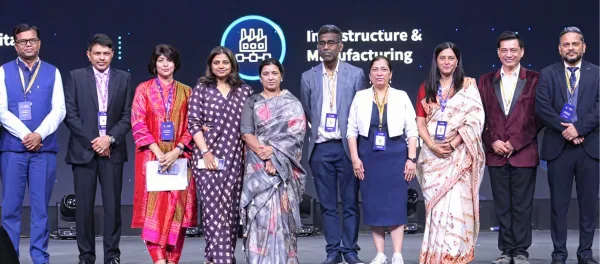
In a space increasingly crowded with buzzwords and breakthrough claims, artificial intelligence (AI) in healthcare risks becoming more hype than help. But at the DHN Forum Delhi, a grounded and sharply focused panel titled “The Race of AI in Healthcare – Best AI Use Cases to Transform India’s Healthcare” did something rare—it pushed past the promises. It laid bare the operational, clinical, and ecosystem realities defining AI’s impact on Indian healthcare.
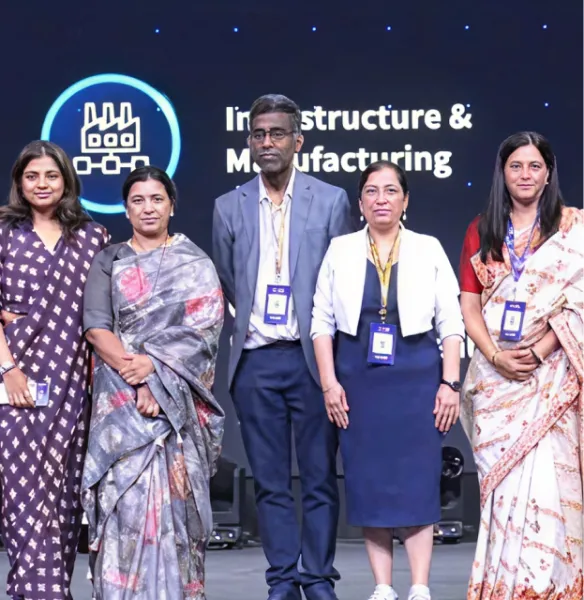
Moderated by Dr. Nandagopal Gopinathan, Partner – Healthcare at Mavin Ventures, the panel featured Swapan Agarwal (IBM Consulting), Vinay Mehta (iHub Anubhuti, IIIT Delhi), and Arun Goyal (Sir Ganga Ram Hospital), each representing a different node of India’s digital health engine—from enterprise and startups to clinical innovation. What followed was not a celebration of AI’s potential but a candid unpacking of the conditions, use cases, and culture changes needed to move from idea to impact.
Startups Are Solving. Corporates Are Cautious. The Two Need to Meet Sooner
The first fault line the panel addressed was a familiar one: startups often build, but corporates don’t always catch on. Vinay Mehta, who supports over 30 AI-driven startups at IIIT Delhi’s innovation hub, underscored a disconnect slowing down scalable success.
“We still see the startup ecosystem and corporate ecosystem running in parallel. Most hospitals don’t engage with startups until much later, if at all. But if we start co-developing with them from the beginning, we can build faster, better, and more locally relevant solutions.”
This wasn’t just theoretical. Mehta cited examples of AI-powered voice bots and OCR systems successfully bridging data gaps in EMRs. Still, these wins remain isolated unless corporations open the door earlier in the lifecycle.
Dr. Nandagopal echoed the need for synergy, pointing out that India has grown its EMR adoption and AI pilots even without incentive programs like those in the US. The opportunity now is to formalize and accelerate those pathways.
Before the AI, Comes the Data: The Unsexy Truth That Powers It All
If there was one resounding theme from the panel, it was this: AI is only as strong as the data that feeds it. And right now, India’s hospitals are dealing with fragmented, inconsistent, and often unusable data for AI modeling.
Arun Goyal laid it out plainly:
“We can’t implement AI unless our data is clean, standardized, and structured. We’re just layering tech on top of noise without data hygiene.”
But the problem goes beyond EMRs. Swapan Agarwal noted that more than 70% of healthcare data is unstructured, making it hard to validate and even harder to deploy in sensitive areas like clinical decision support.
“It’s not just about protecting data. It’s about knowing whether the data is even valid, safe, and fit for purpose. Without governance layers, we’re building models on sand.”
Fortunately, the tide is turning. Service providers are beginning to integrate platforms that manage ingestion, tagging, and governance. The panelists agreed that the next step is for hospitals and startups to align on shared data standards and interoperable tools.
Ground-Level Innovation: Why Tier 2 and 3 Cities Could Leapfrog with AI
While metros often dominate conversations on health tech adoption, the panel made a compelling case for India’s next wave of AI to originate from Tier 2 and 3 cities, not in spite of challenges but because of them.
Vinay Mehta offered a glimpse into what's already unfolding:
“We’re seeing startups build tools for early cardiac risk detection, AI-enabled screening, and smart diagnostics—all tailored for rural clinics. But to scale, we need policy incentives that nudge startups to go rural, just like we do with doctors.”
The panel argued that rural innovation isn’t just charity—it’s strategy. Building robust AI systems in resource-constrained areas forces better design, usability, and localization. Dr. Nandagopal highlighted tools like Unnathy AI and Sarvam, which are already leveraging multilingual datasets from rural India to push the boundaries of Gen-AI.
Ease > Innovation: How Adoption Hinges on Not Disrupting Clinicians
In a standout moment, Arun Goyal shared a success story from Sir Ganga Ram Hospital that captured what AI adoption should look like—invisible, intuitive, and behaviorally aligned.
“We tried voice-to-text EMRs. We tried OCR. We failed. Every doctor had a different way of speaking or recording data. What finally worked was a tool that scanned handwritten prescriptions, digitized them in 30 seconds, and sent them to the patient’s WhatsApp—no change in the doctor’s workflow.”
That simple insight—don’t force clinicians to change to suit the tech—resonated across the panel. In an industry where time and trust are critical, success hinges on AI that works quietly in the background, not AI that demands center stage.
Top Use Cases: What India Should Focus On Next
As the session neared its close, panelists were asked to identify three AI use cases that could have the most significant near-term impact in Indian healthcare. Their answers were refreshingly grounded:
Clinical Ambient Listening: Swapan Agarwal spotlighted tools that record doctor–patient conversations and convert them into SOAP notes, preserving crucial clinical context and enabling smarter follow-ups.
Pre-consultation Triage: Arun Goyal recommended kiosks or bots that gather patient history before a doctor consultation, saving time and enhancing diagnostic quality.
Diagnostics & Decision Support: Vinay Mehta emphasized the continued focus on radiology, pathology, and pre-consultation screenings as low-hanging fruit for AI, especially in rural areas.
Conclusion: Focus on the “Why,” Not Just the “Wow”
The panel ended pragmatically—AI in Indian healthcare is no longer theoretical. However, its success will depend less on technology and more on intentionality.
“We must begin with the use case. That’s where the value lies,” Dr. Nandagopal summed up. “It’s not just about having data or running models. It’s about solving something real, accepting failure, and being bold enough to try again.”
In short, India doesn’t need more AI. It needs better reasons to use it. And if this panel is any indication, those reasons are already emerging—one use case at a time.
Stay tuned for more such updates on Digital Health News
Follow us