



Beyond Digital Adoption: How Kauvery Hospitals is Building a Connected, Secure and AI-Enabled Healthcare Network

Technology is increasingly reshaping how healthcare organisations deliver care, manage clinical operations and connect with patients. From digital health records and secure communication systems to artificial intelligence and data-driven decision-making, hospitals are exploring ways to make healthcare delivery more connected, efficient and responsive. The challenge, however, lies in ensuring that technology strengthens clinical capabilities while keeping patient safety, data security and quality of care at the centre.
At Kauvery Hospitals, this shift is reflected in its expanding digital health initiatives. In September 2026, the hospital group deployed the NetSfere Secure Communications Platform across its network, becoming the first hospital group in India to implement a secure, enterprise-controlled clinical communication system. The three-year deployment is expected to support more than 12,000 users across over 100 teams, strengthening clinical coordination, information security and data governance.
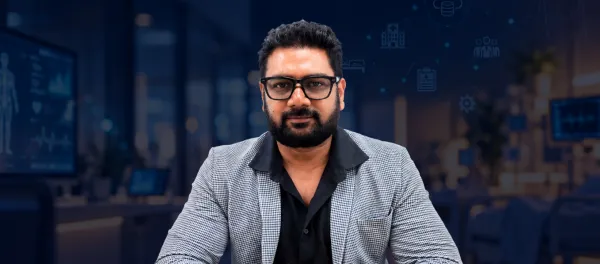
As Kauvery continues to expand its hospital network and digital capabilities, we spoke with Dr. Manivannan Selvaraj, Founder and Managing Director, Kauvery Group of Hospitals, about the organisation's digital transformation priorities, the growing role of AI in healthcare, cybersecurity, clinical communication and how technology can support more connected, accessible and patient-centric care.
1. Kauvery Hospital has grown to 12 hospitals across six locations, with a large and distributed clinical workforce. As the network continues to scale, how do you envision technology shaping the next phase of Kauvery’s growth and care delivery?
Technology has been an important enabler of Kauvery's growth, and I believe it will become even more critical as we expand.
Our vision has always been to bring metropolitan-quality healthcare closer to people's homes, particularly in Tier 2 cities. Technology allows us to achieve this without compromising clinical quality.
We are building an integrated digital ecosystem connecting our hospitals, clinicians, patients, and administrators. Electronic medical records, digital ICUs, centralized command centres, clinical dashboards, and communication platforms will enable us to operate as one connected healthcare network.
Our objective is simple: regardless of which Kauvery hospital a patient visits, they should receive the same quality of care, supported by the same clinical standards and expertise.
Technology should help us scale quality, not merely scale infrastructure.
2. Kauvery is moving away from consumer messaging platforms toward an enterprise-controlled communication environment. What were the key gaps you identified in the earlier communication model, and what changes do you expect this transition to bring to day-to-day clinical collaboration?
Communication is one of the most underestimated aspects of patient safety.
In hospitals, hundreds of decisions are made every hour through communication between doctors, nurses, technicians, and administrators.
Consumer messaging platforms are convenient, but they were never designed for healthcare. Information gets scattered across multiple groups, important messages can be missed, and there is limited organizational control over sensitive patient information.
We wanted a communication system that belongs to the organization rather than individual employees.
With an enterprise communication platform like Netsfere, we expect better information security, structured communication, accountability, and continuity when employees change roles or leave the organization.
More importantly, we want to reduce unnecessary phone calls, communication gaps, and delays in clinical decision-making.
The ultimate measure of success will not be the number of messages exchanged, but how effectively communication improves patient care.
3. Kauvery has achieved NABH Digital Health Platinum certification and is now further strengthening its communication infrastructure. How do you see digital maturity and cybersecurity becoming increasingly intertwined with clinical quality and patient safety?
I strongly believe cybersecurity is no longer just an IT responsibility. It is a patient safety responsibility.
Today, almost every aspect of hospital functioning depends on digital systems, including medical records, laboratory reports, imaging, medication administration, and clinical communication.
A cybersecurity incident can disrupt clinical workflows and potentially affect patient care.
Digital maturity therefore requires more than implementing software. It requires robust cybersecurity, data governance, access controls, business continuity planning, and continuous staff education.
At Kauvery, we are strengthening our digital infrastructure while improving cybersecurity awareness and organizational accountability.
A digitally advanced hospital must also be a digitally secure hospital.
Patient trust depends not only on how well we treat them but also on how responsibly we protect their information.
4. In a large hospital network, doctors, nurses, administrators, and care teams need to coordinate across departments and locations in real time. How can technology help make this coordination faster and more seamless without compromising the human element of healthcare?
Healthcare is fundamentally a team activity.
A patient admitted to an ICU may require coordination among intensivists, nurses, laboratory teams, radiologists, pharmacists, and several specialists.
Technology can make this coordination significantly more efficient.
For example, digital clinical records, real-time patient information, structured communication, and automated alerts can reduce delays and eliminate unnecessary follow-up calls.
We are also developing centralized monitoring and command centre capabilities to improve operational visibility across our hospitals.
However, technology should never replace human interaction.
My philosophy is that technology should reduce the administrative burden on healthcare professionals so they can spend more time with patients.
The best technology is often the one that works quietly in the background, allowing clinicians to focus on clinical care.
5. Patient experience is increasingly influenced by what happens beyond the consultation room. How is Kauvery thinking about technology as a tool to create a more connected and patient-centric care journey?
Traditionally, hospitals have focused on what happens during a patient's visit. But the patient journey begins much earlier and continues long after discharge.
We want to create a connected experience covering appointment scheduling, registration, consultation, investigations, admission, discharge, and follow-up care.
At Kauvery, we are working on patient-facing applications, digital medical records, post-discharge communication, and structured follow-up systems.
One important area is ensuring that patients do not get lost to follow-up, particularly those with chronic illnesses who require long-term care.
We are also exploring how technology can simplify communication between patients and care teams.
A good digital patient experience should mean fewer queues, less paperwork, fewer repeated questions, better information, and more personalized care.
Ultimately, patients should experience the hospital as one coordinated system rather than multiple disconnected departments.
6. As AI becomes increasingly embedded in healthcare operations, where do you see the greatest opportunities for AI at Kauvery over the next few years — whether in clinical workflows, patient engagement, operational efficiency, or decision support?
I see tremendous potential for AI in healthcare, particularly in reducing repetitive work and improving operational efficiency.
At Kauvery, we are exploring several practical applications.
These include AI-assisted clinical documentation, voice-to-text solutions, automated patient communication, call centre quality monitoring, post-discharge follow-up, and operational analytics.
Another major opportunity is using AI to analyse electronic medical records and identify patients requiring additional attention or follow-up.
AI can also support clinical decision-making by bringing relevant information to the clinician at the right time.
However, I believe we should be cautious about allowing AI to make independent clinical decisions.
AI should function as an intelligent assistant to healthcare professionals, not as a replacement for clinical judgement.
My priority is to implement AI solutions that solve real problems, demonstrate measurable outcomes, and improve either patient care or staff productivity.
7. Healthcare organizations are generating and exchanging unprecedented volumes of sensitive data. Beyond regulatory compliance, what does responsible data governance mean to you as a hospital leader, and how do you ensure that security remains aligned with innovation?
Patient information is entrusted to us, and protecting it is both an ethical and organizational responsibility.
Responsible data governance means ensuring that information is accurate, secure, accessible only to authorized individuals, and used for legitimate purposes.
As hospitals become more digitally connected, we need strong controls over who can access information, how it is shared, and how long it is retained.
At Kauvery, we are focusing on role-based access, cybersecurity controls, data loss prevention, and better governance of digital applications.
We also recognize that technology alone cannot ensure security. Employee behaviour, awareness, and accountability are equally important.
At the same time, security should not become an obstacle to innovation.
The right approach is to build security into the design of every digital solution rather than treating it as an additional requirement later.
Innovation and information security must progress together.
8. Looking ahead five to seven years, what would you like Kauvery’s digital health ecosystem to look like? Are there particular technologies or models of care that you believe could fundamentally change how healthcare is delivered across the network?
My vision is for Kauvery to function as a truly integrated healthcare network rather than a collection of individual hospitals.
A patient's medical information should move seamlessly across our hospitals, allowing clinicians to access relevant records wherever the patient receives care.
We should have centralized clinical monitoring, predictive analytics, AI-assisted workflows, and standardized digital clinical pathways.
I also see significant opportunities in remote monitoring, home healthcare, and digitally supported chronic disease management.
For example, a patient discharged after cardiac surgery should be able to remain connected with the care team through structured digital follow-up and monitoring.
We also want to use data more effectively to measure clinical outcomes, identify variations in care, and continuously improve quality.
In the future, healthcare will increasingly move beyond hospital buildings. Our digital ecosystem should allow Kauvery to care for patients wherever they are.
9. As Kauvery expands geographically and technologically, how do you balance investments in advanced digital infrastructure with the need to keep healthcare accessible, efficient, and patient-focused?
Technology investments must ultimately create value for patients and the organization.
I do not believe in adopting technology merely because it is fashionable or new.
Every major digital investment should answer three questions:
Does it improve patient safety or clinical outcomes?
Does it make healthcare delivery more efficient?
Does it improve the experience of patients or healthcare professionals?
If technology can reduce duplication, prevent errors, improve productivity, or enable better utilization of resources, it can actually help make healthcare more affordable.
One advantage of operating a hospital network is that digital solutions developed centrally can be implemented across multiple units, allowing us to benefit from scale.
This is particularly important for our hospitals in Tier 2 cities.
Our goal is not to build the most technologically expensive hospitals. It is to build hospitals that use technology intelligently to deliver high-quality healthcare at an accessible cost.
10. What is the larger vision behind Kauvery’s digital transformation, and what would you like patients and clinicians to experience differently as the hospital becomes a more connected, technology-enabled healthcare organization?
For me, digital transformation is not about computers, applications, or software.
It is about fundamentally improving the way healthcare is delivered.
I would like our doctors and nurses to spend less time searching for information, making unnecessary phone calls, entering repetitive data, and coordinating routine administrative activities.
Instead, they should have the right information available at the right time, enabling them to focus on clinical decisions and patient care.
For patients, I want the experience to be simpler, safer, more transparent, and more connected.
They should not have to repeatedly provide the same information or navigate disconnected departments.
I also believe digital transformation should create a culture of measurement and continuous improvement. We should be able to measure outcomes, identify gaps, and improve our processes using reliable data.
My larger vision is to make technology almost invisible to the patient, while making its benefits visible in every aspect of care.
At the end of the day, technology is only an enabler.
What matters is better clinical outcomes, happier healthcare professionals, improved patient experiences, and more accessible healthcare.
Stay tuned for more such updates on Digital Health News
Follow us