Redcliffe Labs, Skyroot Aerospace Partners to Test Diagnostic Technology in Space

The first mission, DRIFT-1, will send Redcliffe Labs' dry reagents into orbit for 90 days, while an identical control sample remains on Earth.
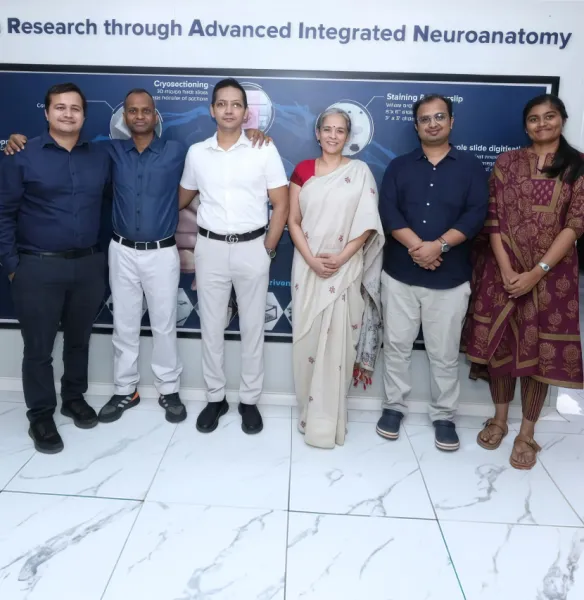
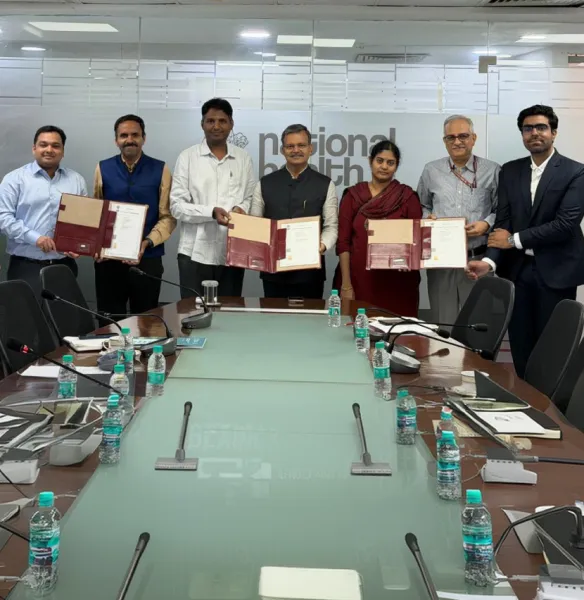
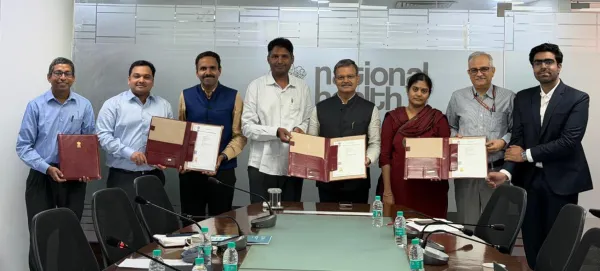
Redcliffe Labs, a diagnostics service provider headquartered in Noida, and Skyroot Aerospace, a private Indian space company, have partnered to test diagnostic technology in space, using a 90-day Low Earth Orbit experiment, DRIFT-1, to study how diagnostic reagents respond to orbital conditions.
The collaboration could generate insights for healthcare in both space and difficult-to-reach environments on Earth.
The first mission, DRIFT-1, will send Redcliffe Labs' dry reagents into orbit for 90 days, while an identical control sample remains on Earth.
Once the 90-day experiment is completed, the space-flown and ground samples will be compared to assess changes in reagent stability, performance, and reliability.
The resulting data are expected to provide an early evidence base for understanding how diagnostic materials respond to the space environment.
“The most transformative breakthroughs often happen at the intersection of disciplines that rarely come together. By bringing together Redcliffe Labs' expertise in diagnostics and Skyroot Aerospace's leadership in space technology, we are opening a new frontier for scientific research and innovation. More importantly, this partnership reflects the growing confidence that India's scientific and innovation ecosystem can bring together diverse capabilities to solve complex global challenges," Dheeraj Jain, Chairman and Co-Founder, Redcliffe Labs, said.
Skyroot Aerospace recently launched its Vikram-I rocket from the Satish Dhawan Space Centre in Sriharikota.
The company has positioned Vikram-I as a small-satellite launch vehicle capable of carrying payloads of up to 350 kg to Low Earth Orbit.
The companies said the findings could eventually contribute to space-enabled diagnostics, astronaut healthcare, life sciences research, and point-of-care technologies for future human spaceflight missions, including India’s Gaganyaan programme and the proposed Bharatiya Antariksh Station.
"A diagnostics leader taking its expertise to orbit is exactly the kind of use case we want to open up by opening space for all. Skyroot's partnership with Redcliffe Labs is a first step towards keeping astronauts healthier in orbit," Pawan Kumar Chandana, Co-Founder and CEO, Skyroot Aerospace, said.
The research could also have implications for Earth.
Diagnostic reagents that remain stable under demanding conditions may be useful in locations where laboratory infrastructure, refrigeration, or cold-chain systems are limited.
This could be relevant to remote healthcare settings, emergency response, and other environments where maintaining conventional diagnostic supply chains is challenging.
Stay tuned for more such updates on Digital Health News
Follow us