A Non-invasive Vitals Monitor Turns Hospital Bed into Step-Down ICU
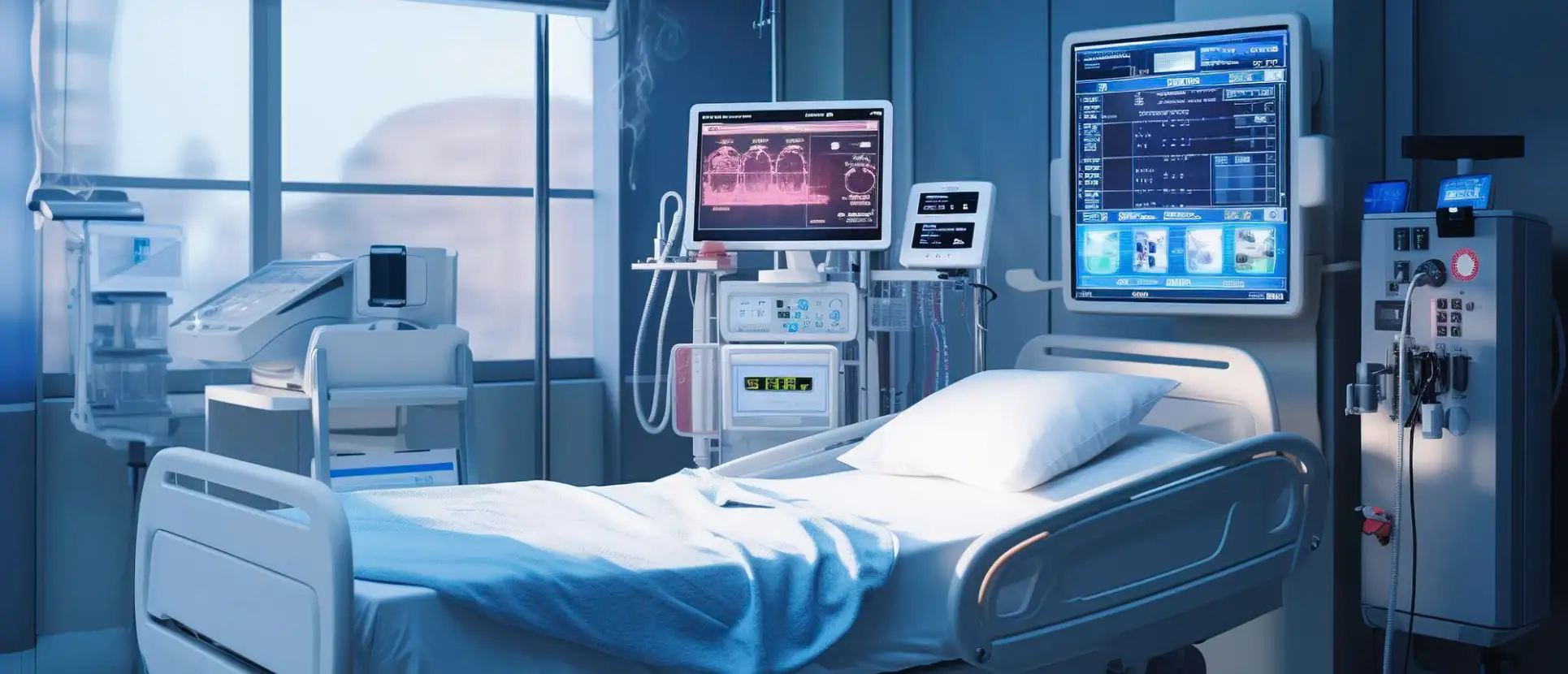
The non-invasive vitals monitor offers continuous, real-time tracking of critical health parameters, allowing patients to be safely monitored in regular hospital beds, freeing up ICU resources for more critical cases.
VitalTech Innovations, a leading healthcare technology company, has introduced a non-invasive vitals monitoring system, transforming regular hospital beds into step-down ICUs.
This groundbreaking system offers continuous monitoring of critical health parameters like heart rate, oxygen saturation, blood pressure, and respiratory rate, without the need for invasive procedures.
The non-invasive monitor has been developed by VitalTech Innovations, which aims to reduce the burden on overburdened hospital ICUs by allowing patients in need of less-intensive monitoring to receive care in a regular hospital room.
Dr. Arvind Kumar, Chief Medical Officer at VitalTech Innovations, explained, “This technology allows hospitals to free up ICU beds for the most critical patients by enabling high-risk patients to be monitored effectively in less resource-intensive settings.”
The non-invasive vitals monitor continuously tracks vital signs and alerts healthcare providers when critical changes occur, ensuring timely intervention.
This technology has been integrated into hospitals existing workflows, allowing for seamless monitoring of step-down patients who do not require constant ICU-level attention.
Dr. Priya Verma, a senior consultant in ICU care, mentioned, “We have seen remarkable results with this system, especially for patients transitioning out of intensive care. It provides real-time data that allows us to monitor patients effectively and act swiftly if needed, without placing them in a high-stress ICU environment.”
The monitor’s real-time alert system ensures that healthcare professionals can act proactively if vital signs begin to deviate from safe parameters, offering a significant advantage in terms of patient safety and early intervention.
As the healthcare industry grapples with the challenge of limited ICU resources, this non-invasive monitoring system stands out as a valuable tool that ensures high-quality care while optimizing hospital resource utilization.
The technology is expected to be deployed in a wide range of healthcare settings, from large hospitals to smaller clinics, where it can provide critical care without the need for expensive and invasive procedures.
This will enable healthcare providers to predict potential complications and intervene even before clinical signs are detected, further enhancing patient outcomes and reducing the strain on healthcare systems.
Stay tuned for more such updates on Digital Health News
Follow us