Noah Medical Launches Galaxy II Software to Advance Robotic-Assisted Bronchoscopy
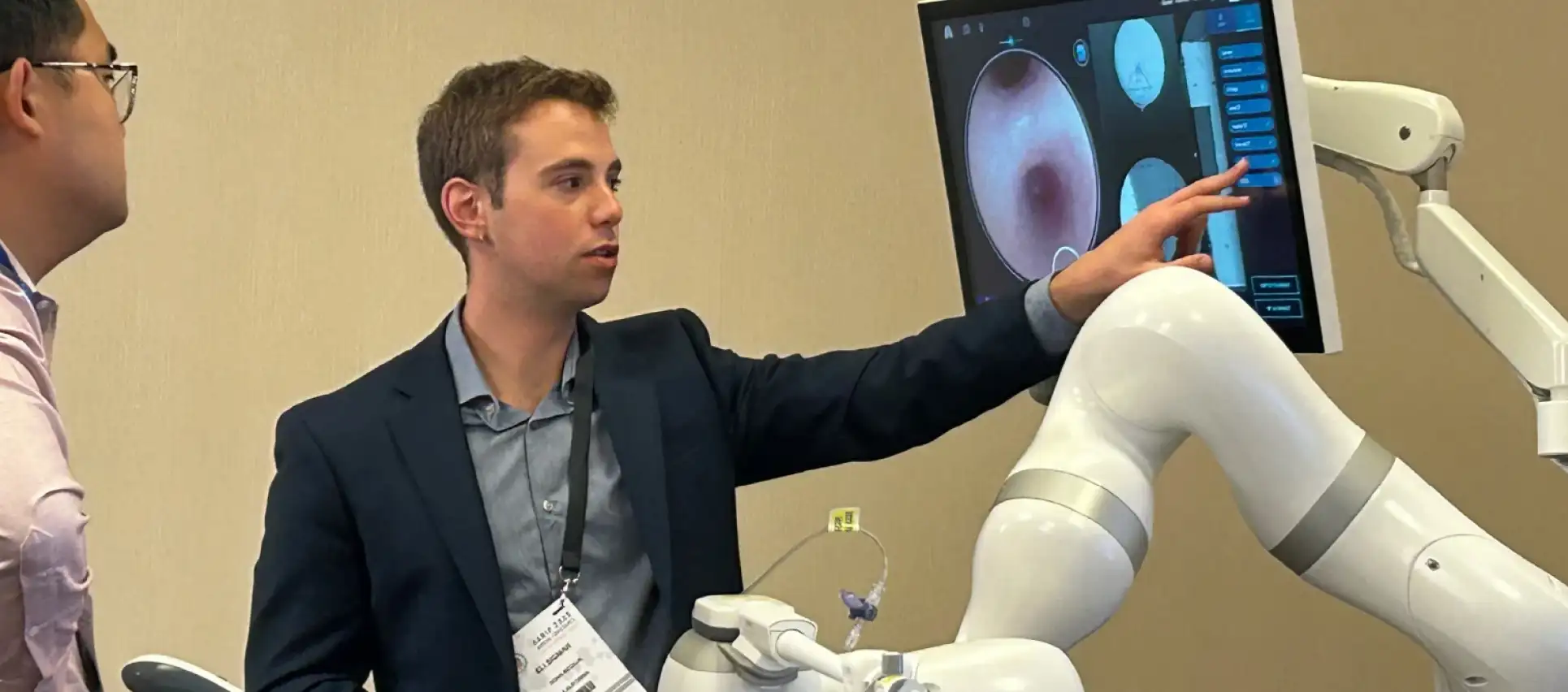
Galaxy II’s main addition is Dual-Mode Imaging, which allows physicians to switch between High-Definition Digital Tomosynthesis (HD-DT) and Cone-Beam CT (CBCT) during a procedure.
Noah Medical, a California-based medical robotics startup, has launched Galaxy II software, the latest evolution of its robotic-assisted bronchoscopy platform, with new imaging and navigation capabilities while giving physicians greater control over imaging during procedures.
“Galaxy II software puts physicians in control of their imaging strategy for every procedure,” said Jian Zhang, Founder & CEO of Noah Medical. “By bringing HD-DT, CBCT, and advanced robotic control together in one platform using the Galaxy II software, we let physicians choose what each case requires, enabling them to adapt to each patient’s anatomy and reduce radiation exposure while maximizing procedural efficiency.”
Galaxy II’s main addition is Dual-Mode Imaging, which allows physicians to switch between High-Definition Digital Tomosynthesis (HD-DT) and Cone-Beam CT (CBCT) during a procedure.
Noah Medical said HD-DT can support the majority of procedures at a lower radiation dose, while CBCT can be used when additional imaging is needed.
The software also introduces Lesion Focus, designed to reduce disruptive imaging artifacts and improve visibility of the targeted lesion.
The startup said Galaxy II addresses CT-to-Body Divergence, where preoperative CT images may no longer accurately represent anatomy during the procedure, as well as Tool-Tissue Divergence, where the biopsy tool can move away from its intended trajectory despite correct catheter positioning.
According to Noah Medical, the multicentre MATCH II study recorded a 96.7% diagnostic yield using ATS strict definitions, while an evaluation of 100 consecutive patients at Cleveland Clinic reported a 90% diagnostic yield in routine clinical practice.
Stay tuned for more such updates on Digital Health News
Follow us