MedGenome Launches OncoTrack MRD to Advance Precision Cancer Care in India
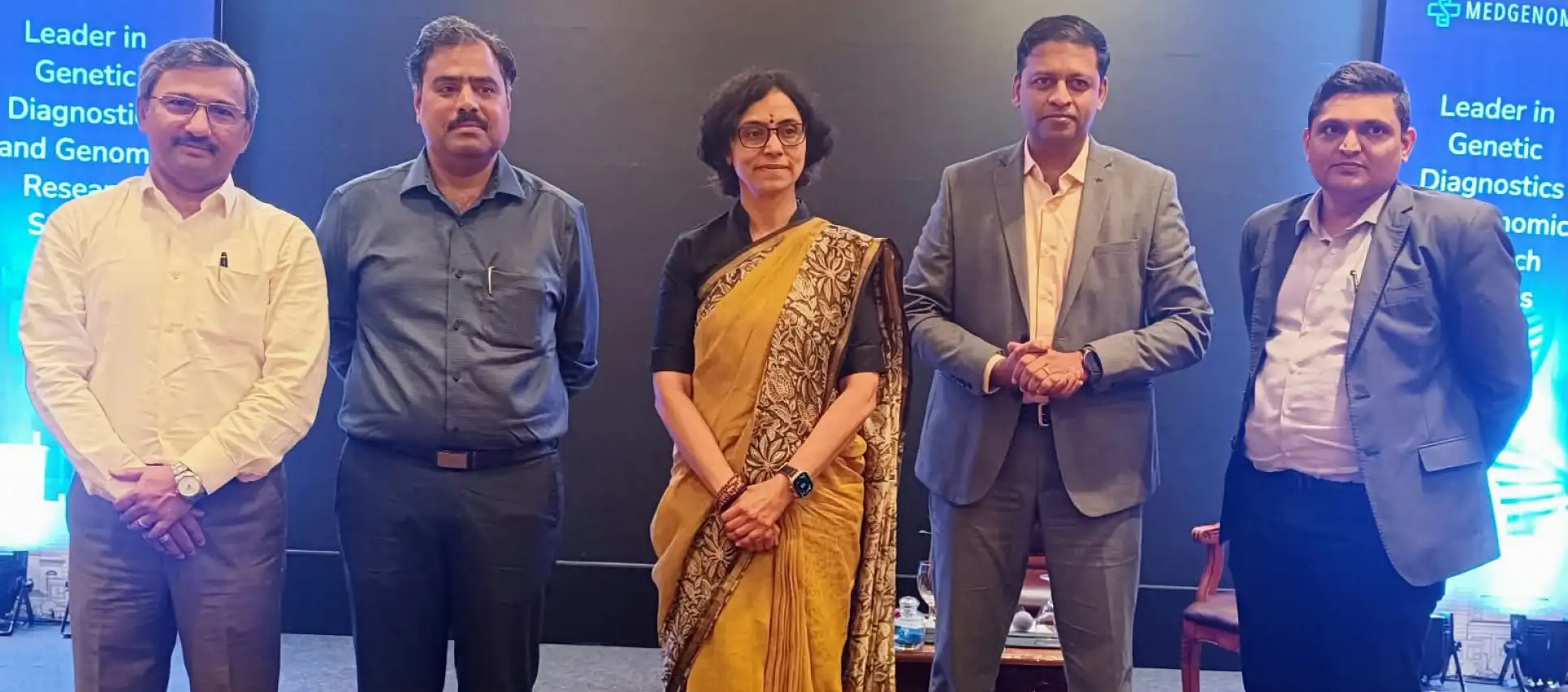
OncoTrack MRD has been developed as an in-house genomic testing platform that creates a personalised molecular profile for an individual patient using tumour tissue and blood samples collected at baseline.
MedGenome, a Karnataka-based genetic testing lab, has launched OncoTrack MRD, a personalised and ultra-sensitive Next-Generation Sequencing (NGS)-based tumour-informed Molecular Residual Disease test designed to help clinicians monitor residual cancer and assess recurrence risk alongside conventional imaging and clinical evaluation.
OncoTrack MRD has been developed by MedGenome as an in-house genomic testing platform that creates a personalised molecular profile for an individual patient using tumour tissue and blood samples collected at baseline.
Subsequent monitoring can then be carried out through a blood test to track circulating tumour DNA (ctDNA) associated with the patient’s cancer.
Unlike tests that rely on a standardised panel of mutations, the tumour-informed approach is tailored to the molecular characteristics of each patient’s tumour.
Changes in tumour-specific DNA over time can provide clinicians with additional information on residual disease, treatment response, and potential recurrence risk.
“The cancer burden has been steadily increasing in India with roughly about 1.5 million new cases annually, and one of the biggest challenges for oncologists is identifying patients who may be at risk of recurrence even when there are no visible signs of disease. For many cancer survivors, the wait between scans can be filled with uncertainty. The possibility of recurrence remains a concern. Did the treatment work? Is there any cancer left? Could it be coming back? Our personalised and ultrasensitiveNGS-basedd tumour-informed MRD test answers these questions by adding an important layer of molecular insight to complement existing clinical assessment and imaging," Vedam Ramprasad, CEO, MedGenome, said.
“OncoTrack MRD reflects our continued commitment to Make in India for the world by making global quality advanced precision oncology affordable and accessible to patients and clinicians across the country," he added.
According to MedGenome, OncoTrack MRD can be used across several solid tumours, including breast, colorectal, lung, ovarian, and other gynaecological cancers, as well as pancreatic, oesophageal, gastric, hepatocellular, and thoracic cancers, and melanoma.
MedGenome has also identified potential use cases in patients with resected Stage II/III colorectal cancer, early-stage non-small cell lung cancer, and early or locally advanced breast cancer following curative-intent treatment.
The test is designed for repeat monitoring during follow-up, with testing frequency determined by the patient’s clinical circumstances and the treating oncologist.
Home sample collection and nationwide availability are intended to make longitudinal molecular monitoring more accessible.
However, MRD testing is intended to complement rather than replace established clinical assessment and imaging, with its interpretation and use depending on the cancer type, treatment history and individual patient context.
Stay tuned for more such updates on Digital Health News
Follow us