



Noom Launches Noom Band to Expand Its Metabolic Health Platform
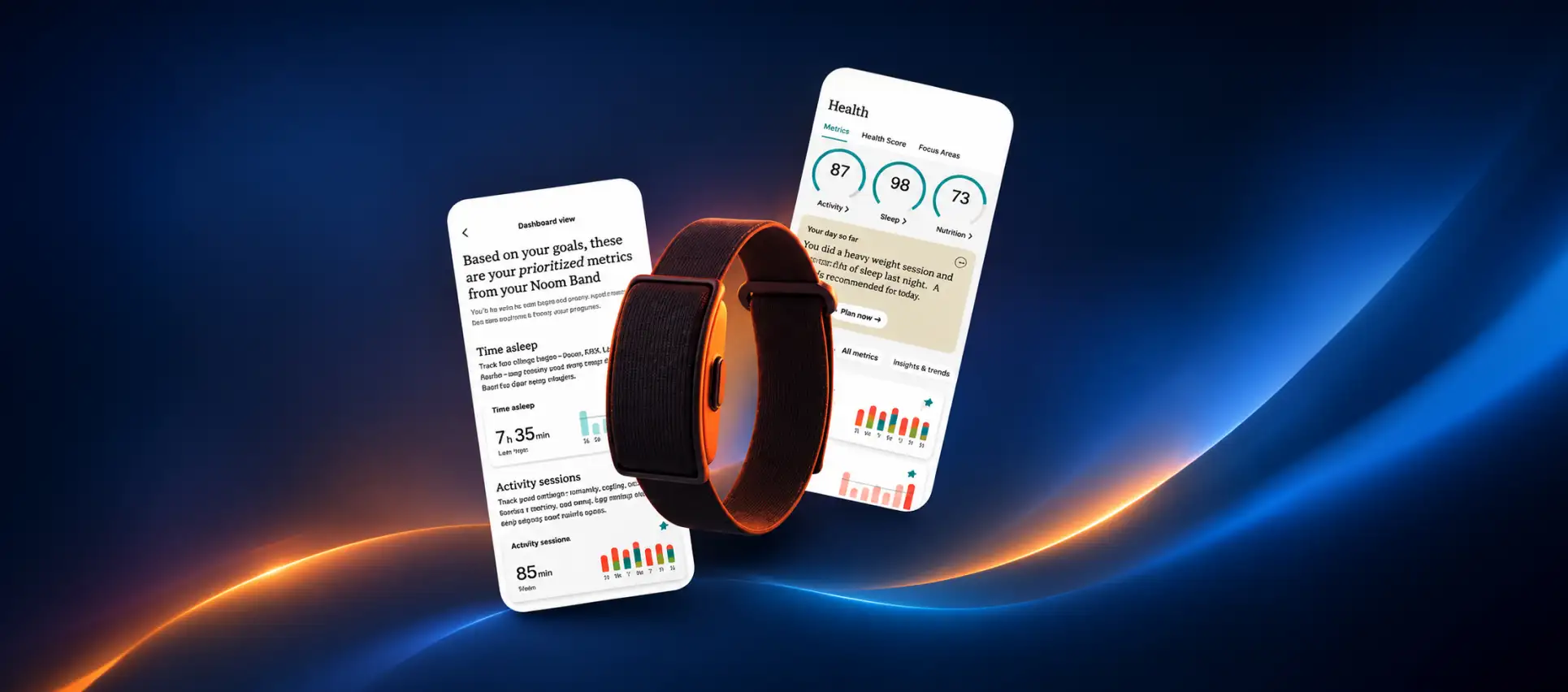
The device will track heart rate, heart rate variability, blood oxygen saturation (SpO2), sleep and physical activity.
Noom has launched Noom Band, a wearable device designed to integrate continuous health data, including sleep, activity, and cardiovascular metrics, into its metabolic health platform. The company plans to offer the wrist-worn device to its employer and health plan customers at no additional upfront cost, beginning in early 2027.
Powered by Sensor Bio, Noom Band will be fully integrated into the Noom app, allowing health data to feed directly into the company's behavior change programs. The device will track heart rate, heart rate variability, blood oxygen saturation (SpO2), sleep and physical activity.
The launch is part of Noom's broader strategy to combine behavior change, virtual care, diagnostics, prescription medications and continuous health monitoring within a single metabolic health platform.
Speaking to Fierce Healthcare, Noom CEO Geoff Cook said the wearable would help address gaps in the physiological data available through the company's existing programs, particularly around sleep and activity. He noted that fewer than 10% of Noom members currently use connected devices such as Oura Ring, Whoop or newer Fitbit models.
"We are getting outcomes-based payments, so we believe we will have more people hitting their 5% weight loss goals or 10% weight loss goals, if they have the wearable, than if they don't," Cook said.
Noom has expanded beyond its original weight management app through Noom Med, which provides telehealth services and prescription weight loss medications, and its at-home Biomarkers Test Kit. The addition of a wearable is intended to provide continuous physiological information that can inform personalized interventions.
According to company data, an analysis of 144,000 Noom Med members taking GLP-1 medications found that those using connected wearables were 34% more likely to lose 20 pounds by the fourth month of the program.
A separate sleep analysis found that members taking GLP-1 weight loss medications who used Noom Band slept an average of 90 additional minutes per week after two months. Members who initially had a sleep deficit added 150 minutes of sleep per week, the company reported.
Noom developed the device with Sensor Bio rather than integrating an existing wearable brand. While Sensor Bio provides the validated sensors and underlying physiological data, Noom will control how the information is interpreted and incorporated into its health interventions.
The company also plans to use the wearable as an engagement incentive, allowing members to unlock the device after achieving early program milestones.
Noom is also preparing to participate in the Centers for Medicare and Medicaid Services' Advancing Chronic Care with Effective Scalable Solutions (ACCESS) Model under the cardio-kidney-metabolic clinical track, focusing on conditions including obesity, prediabetes and diabetes.
Under the model, Noom plans to bundle its behavior change program with the wearable and a blood pressure cuff to support measurable outcomes such as improvements in weight, blood pressure and A1C.
Stay tuned for more such updates on Digital Health News
Follow us