Exclusive: Alyve Health Launches ‘Alyve Pay’, India’s First UPI-Based OPD Payment System for Cashless Doctor Visits
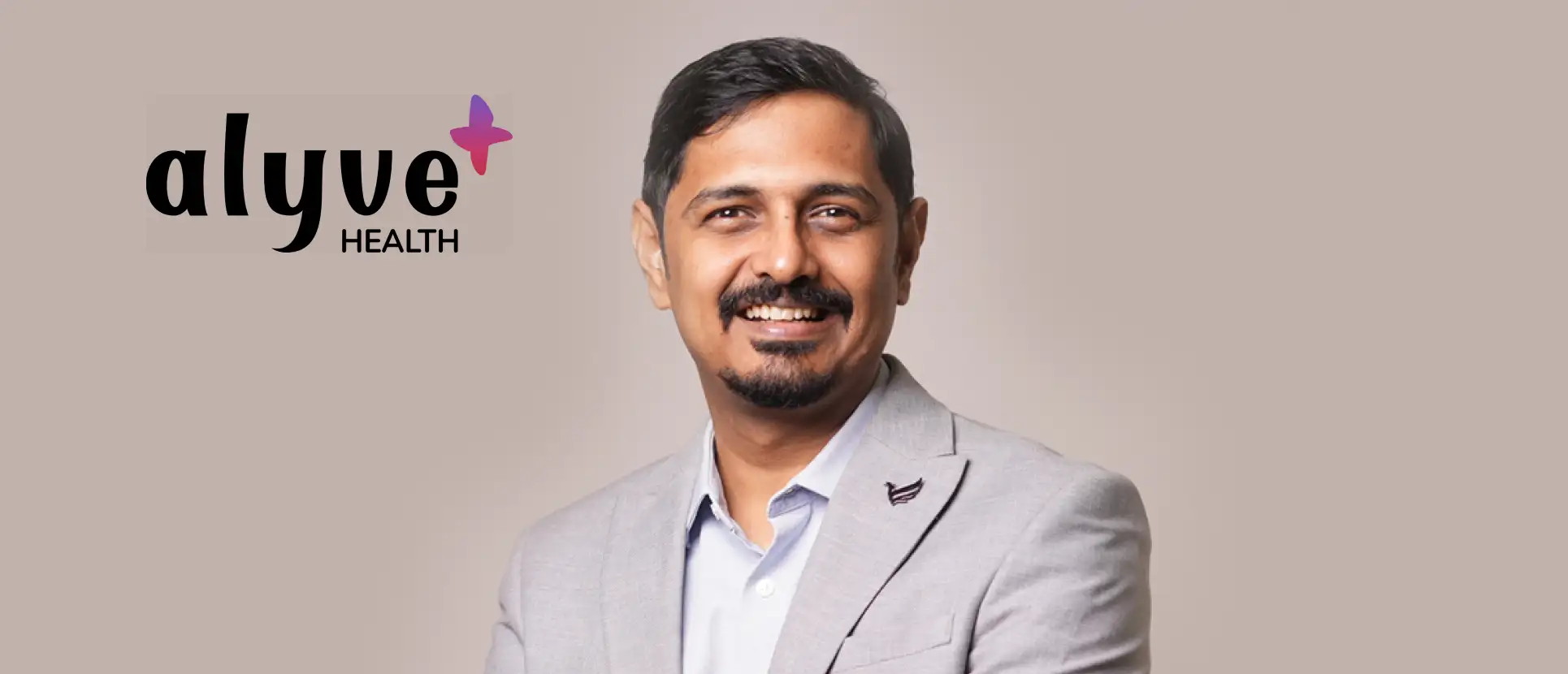
New feature aims to eliminate reimbursements and bring real-time OPD payments to India’s fragmented outpatient ecosystem
Alyve Health has introduced ‘Alyve Pay’, India’s first UPI-based OPD payment system designed to make doctor visits cashless. With this launch, the healthtech startup aims to eliminate cumbersome reimbursements and bring real-time outpatient payments into India’s fragmented OPD ecosystem.
Founded in 2020, Alyve Health is one of India’s fastest-growing health tech platforms, serving over one million members and 400+ corporates with personalized health plans, preventive care programs, and a vast network of doctors, hospitals, and diagnostic centers across 17,000+ pincodes.
In an exclusive conversation with Digital Health News, Sushant Roy, Co-Founder, CBO, and COO at Alyve Health. shared insights into the launch of Alyve Pay and its impact on India’s outpatient care system.
OPD care makes up the majority of India’s out-of-pocket health spending, yet it’s rarely part of structured coverage. Why do you think this part of the system stayed broken for so long?
The main reason OPD insurance stayed broken for so long is because of its very nature; it’s high-frequency, low-ticket, and extremely fragmented.
Unlike hospitalization, which has a clearly defined process and larger claim amounts, OPD involves multiple touchpoints: general physicians, diagnostics, pharmacy bills, and follow-ups. There was no standardized system.
In addition to that, there is a lack of a digital-first cashless infrastructure, and it simply wasn’t viable for traditional insurers to process hundreds of claims efficiently. Unless you have a tech-powered system that connects all types of OPD spends under one umbrella and makes the experience cashless, the puzzle never really fits. That’s the gap we’re solving.
UPI has transformed digital commerce, but why hasn’t it touched outpatient healthcare till now? What was the resistance or gap?
The fundamental issue is that healthcare isn’t like a regular marketplace. Clinics and hospitals aren’t just merchants; you can’t just scan and pay. There are additional checks: is this person eligible, is this treatment covered, are the claims being misused? That’s why UPI hadn't touched outpatient care meaningfully. With Alyve Pay, we’ve built a layer that handles these complexities; eligibility, approvals, fraud checks, all while keeping the UPI flow seamless. We're not just enabling payments, we're enabling trust.
Everyone talks about hospital cashless. You’re now enabling OPD cashless. What does that really change for the average Indian patient?
It’s a massive shift. Imagine this: no more upfront payments, no storing physical bills, no filling out forms or chasing claims. You walk into a clinic, consult a doctor, scan a UPI QR through the Alyve app, and walk out; no out-of-pocket expenses.
Everything happens seamlessly with backend support. Money is deducted from the Alyve Health Plan wallet, with instant review of uploaded bills and prescriptions.
For a country where OPD costs hit people month after month, this changes how accessible and stress-free healthcare becomes. It’s convenient, with dignity.
How does Alyve Pay ensure real-time eligibility checks, treatment coverage limits, and fraud prevention, all at the point of service?
It’s a combination of AI and human oversight. Our platform performs real-time eligibility checks using a rules engine that flags anomalies or coverage mismatches instantly.
The moment a transaction is initiated, prescriptions are uploaded, invoices get digitized, and our system runs multiple checks. If something feels off, a human agent steps in. This hybrid approach allows us to be fast, but also precise and trustworthy.
Most digital health wallets still rely on reimbursement. You’ve eliminated that. From a patient’s perspective, what does that solve?
Reimbursement is exhausting; it adds friction, uncertainty, and delays care. By eliminating it, we’ve essentially freed people from the mental burden of “Will I get my money back?”
Instead, they get peace of mind. It also encourages people to seek early care; they no longer wait for things to worsen. And it’s not just financial coverage, we assign care guides to assist users, track their journey, and nudge for medicine adherence. That support system builds trust and better health outcomes.
How hard was it to integrate your wallet logic with clinic-level infrastructure, many of which are offline?
Honestly, this has taken us years. Healthcare infrastructure is extremely heterogeneous; every clinic has its own SOP.
So, we had to build a platform flexible enough to work with varied workflows and modular enough to plug into missing systems. We've used tech like real-time invoice uploads and UPI integration to streamline payments, even where clinic systems are offline.
What’s your view on the future of cashless OPD? Will this become a standard like swipe-ins at pharmacies and labs?
Absolutely. This is where we’re headed.
OPD visits, lab tests, prescriptions; these are recurring, day-to-day health interactions. And the ability to digitize this entire journey, right from a prescription to a diagnostic booking to medicine delivery, will soon become the default.
It’ll be as normal as tapping your phone to pay for coffee. Once users experience how seamless it can be, there’s no going back.
What does Alyve Pay offer that even insurers weren’t building yet?
What sets Alyve Pay apart is the experience layer; it’s not just about financial coverage. We’ve focused on accessibility, compliance, and above all, user empathy. Many insurers focused purely on risk and underwriting, but didn’t build for the user journey. We’ve done both.
Every transaction is clear, transparent, and patient-first. We’re giving people the confidence that “healthcare can actually work for me.”
What’s the process of onboarding doctors or clinics into your UPI flow?
It’s built to be frictionless. As long as the doctor or clinic has a UPI ID with a proper merchant code, we can plug them in. We’re not asking them to change how they operate; we’re just making it easier for them to receive payments and easier for users to experience cashless care at the service providers of members' choice. Based on actual transactions, we verify and identify providers to organically build a user-preferred network.
Can you give us a sense of volume or adoption?
It’s growing every day. Our focus is user first, wherein we’re seeing high adoption for doctor consultations, pharmacy, diagnostic, and dental treatments. These are expenses that used to be out-of-pocket, but now they’re seamlessly covered, tracked, and guided. This results in users shifting from reimbursements to cashless usage.
Based on user transactions, we are building a user-preferred network that is then driving more cashless transactions. That’s the real impact.
When we talk about scaling Alyve Pay, do you see it as more of a B2B health infra layer or a consumer-facing health wallet?
Honestly, it’s both, and that duality is what makes it powerful. On the surface, for the user, Alyve Pay feels like a simple, intuitive health wallet. But for insurers or corporates managing group plans, it functions as a robust health infrastructure layer. That’s the magic.
We’re not just enabling transactions, we’re nudging users to proactively plan their care, pre-book appointments, and engage earlier. That small behavioral shift can lead to massive improvements in health outcomes.
How does Alyve Pay stitch together the scattered pieces like clinics, labs, tele-consults, and insurers?
We’ve built Alyve Pay to be more than just a feature; it’s embedded in the overall Alyve Health experience.
Everything starts from a unified portal. Our Care Guides, backed by a human + tech layer, help users navigate the chaos. We bring all those pieces together so that it doesn’t feel fragmented for the user. It’s healthcare, simplified.
How does this connect to India’s broader digital health mission (like ABDM)? Are you plugging into NDHM pipes yet?
Not yet, but we’re actively exploring it. It’s definitely on our roadmap.
Our vision aligns closely with the goals of the ABDM: seamless interoperability, better health data access, and stronger outcomes. As India’s health stack matures, the impact of Alyve Pay would grow disproportionately. We want Alyve Pay to be fully future-ready for that ecosystem.
Absolutely. When someone pre-books through Alyve Pay, there’s complete clarity on what’s included. No guesswork, no surprises. And even if someone walks into a clinic directly, Alyve Pay still allows them to use their plan up to the transaction limits, via UPI or wallet. Transparency isn’t a feature here; it’s the foundation.
You’re operating at the intersection of health, payments, and policy. Are there any regulatory gaps you're still watching?
We work strictly within the terms and conditions of the insurance partners we onboard, including all sub-limits, inclusions, and exclusions. That said, as the ecosystem matures, greater clarity around OPD-specific regulations and interoperability norms would be welcome. We’re watching that space closely.
Is this interoperable? Could Alyve Pay work across insurers or health plans, or is it proprietary for now?
It’s already built to be interoperable. That’s one of our biggest strengths. Alyve Health can work across insurers and handle multiple plan designs, however complex, covering everything from doc consults to mental health and fitness subscriptions. It’s not a closed loop; it's a plug-and-play infra layer.
Looking ahead, what other payment-linked innovations do you see coming to healthcare?
We’re heading towards a future where healthcare becomes truly proactive. Think subscription-based chronic care plans, bundled packages for regular diagnostics, and yes, simplified EMIs for larger treatments. Payments will become invisible and intuitive, just like in e-commerce. That’s the shift we’re excited about.
Are you seeing different usage behaviors across cities or income groups? Who’s adapting faster to cashless OPD?
Adoption has been strong across the board, especially in urban and semi-urban areas. What’s heartening is how quickly people are adapting to the idea of prepaid OPD because it brings convenience and comfort.
In rural zones, we’re still at an early stage, but we’re building for them too with voice inputs in local languages and guided support. Access shouldn’t be a privilege; it should be a default.
What should founders or insurers stop underestimating about India’s OPD market?
Its sheer size and frequency. Unlike hospitalization, OPD is high-volume and high-frequency, and it holds the key to better preventive care. Yet, many still underestimate its role in long-term health outcomes. If India wants to move from reactive to proactive healthcare, OPD has to be at the center.
Lastly, what’s next? Could this evolve into a full-stack health payment layer, powering all non-hospital care in India?
That’s exactly where we’re headed. Whether it’s doctor consults, fitness, diagnostics, or mental health, Alyve Pay is designed to power all OPD and well-being spends. Wherever possible, it enables pre-booked, cashless access. And wherever not, it acts as a flexible payment layer. Think of it as the supercharged health wallet India deserves.
Stay tuned for more such updates on Digital Health News
Follow us