Pune Study Finds Smartphone-Based AI Accurate in Detecting Major Eye Diseases
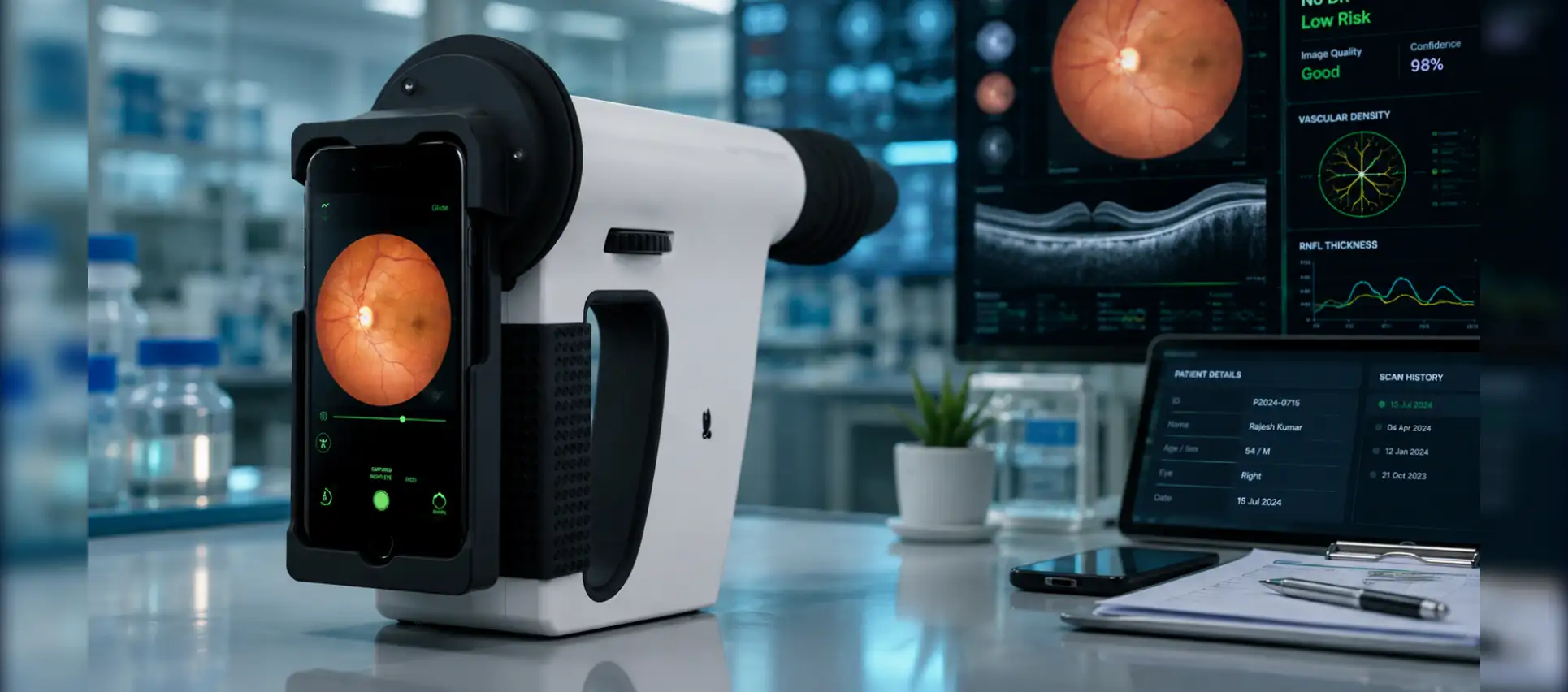
Published in the European Journal of Ophthalmology, the study evaluated the diagnostic performance of Medios AI Multi-Disease (MAI), an offline AI system integrated with the Remidio Fundus on Phone (FoP) platform.
A Pune-based study has found that a smartphone-integrated, offline artificial intelligence (AI) system can accurately screen for major eye diseases, including diabetic retinopathy (DR), glaucoma and age-related macular degeneration (AMD).
The findings could support wider eye disease screening in rural and resource-limited areas where access to specialist care and internet connectivity remains limited.
Published in the European Journal of Ophthalmology, the study evaluated the diagnostic performance of Medios AI Multi-Disease (MAI), an offline AI system integrated with the Remidio Fundus on Phone (FoP) platform.
The study involved 193 adults and examined 371 eyes in Pune. Researchers assessed the system's ability to screen for DR, glaucoma and AMD using retinal images captured through the smartphone-based fundus camera.
Unlike AI screening systems that depend on cloud connectivity, the Medios AI platform operates offline. Researchers said this could make it suitable for outreach screening camps and teleophthalmology initiatives in areas with limited digital and diagnostic infrastructure.
The Remidio Fundus on Phone is an external optical fundus camera attachment designed to work with validated and compatible smartphones approved by Remidio Innovative Solutions. The setup is intended to provide standardized image quality for AI-based screening.
Dr. Aditya Kelkar, Director, NIO Super Specialty Hospital and a study author, said the system is currently validated for DR, glaucoma and AMD. He added that expanding the technology to other retinal conditions would require separate algorithm development, validation and regulatory approval for each condition.
The Medios AI system has received regulatory approval from the Central Drugs Standard Control Organisation (CDSCO) in India for clinical use and holds European Class II medical device certification.
Dr. Jai Kelkar, Director, NIO Super Specialty Hospital, said smartphone-integrated AI systems can enable faster screening and help address diagnostic gaps in rural and remote areas where conventional infrastructure and reliable internet connectivity may be unavailable.
The study was co-authored by Dr. Aditya Kelkar, Dr. Jai Kelkar, Dr. Yash Garg, Dr. Harsh Jain and Dr. Sabyasachi Sengupta from NIO Super Specialty Hospital.
Stay tuned for more such updates on Digital Health News
Follow us